

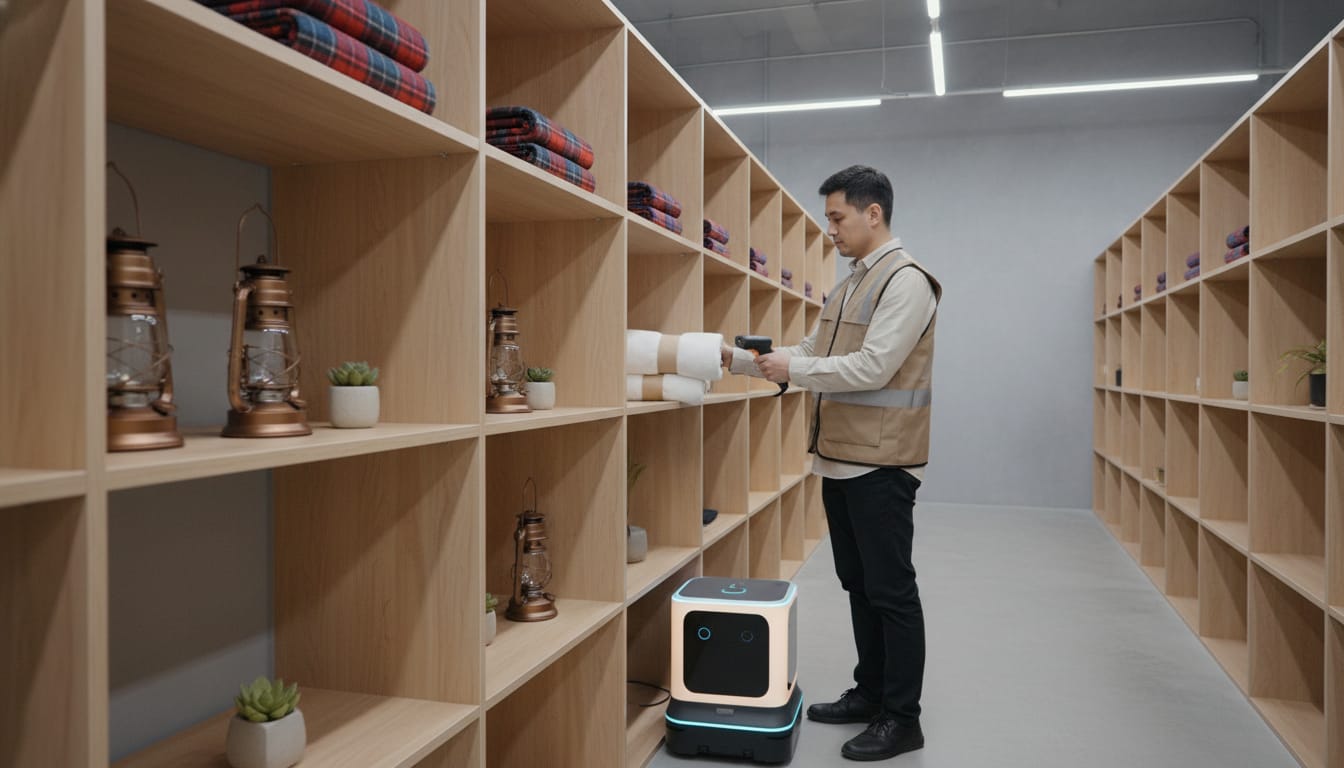
Guests are now paying $251 a night and staying nearly half a day longer than they did last season—yet nothing shatters that premium mood faster than an empty s’mores kit or a missing bundle of towels. Still, over-stocking every SKU ties up cash and crams storerooms with slow movers. How do you hit the sweet spot?
Imagine a dashboard that predicts, down to the day, exactly when Cabin 7 will need firewood, which RV pad will run out of propane, and how many lavender-mint bath products to reorder before the wedding party checks in—then dispatches a robot to deliver it all while your staff focuses on upselling late check-outs. That’s not sci-fi; it’s demand-forecasting plus automation, and operators using it are already slashing stock-outs, trimming carrying costs, and winning five-star reviews. Keep reading to see how you can turn your amenity closet into a profit center.
Key Takeaways
The next ten minutes will give you a playbook for matching premium guest expectations with pinpoint supply levels, using the same data science that retailers rely on to keep shelves full without drowning in inventory. You’ll see how clean data, automated dashboards, and small delivery robots link together to protect five-star reviews, lower costs, and free staff for revenue-generating moments.
Scan the bullets below, then dive into the details that follow. Each takeaway appears later in the article, backed by industry stats and real-world pilot results you can replicate this season.
• Guests pay about $251 per night and stay longer, so running out of supplies hurts reviews fast
• Buying too much fills closets and ties up cash you could use elsewhere
• Smart computer tools (AI) can predict the exact day each cabin will need more firewood, towels, or soap
• Clean, tidy data—same item names everywhere and at least a year of history—makes the AI work well
• A simple color-coded dashboard tells staff when to reorder, and can even send purchase orders by itself
• Small delivery robots can bring items to tents and RV pads, letting workers focus on guest upsells
• The system can stock special items for weddings, family trips, or solo travelers before they arrive
• Better planning cuts waste and helps the planet by using fewer one-time products and fuel trips
• Pilot tests show about 18% fewer stock-outs and 10-15% lower storage costs, plus more five-star reviews.
Why Overstocking and Stock-Outs Both Hurt $251 Guests
ADR at US glamping resorts has jumped to roughly $251 per night—an 11 percent hike since last year—while average stays now stretch 2.7 nights, according to data shared at Glamping Show Americas 2025 (moderncampground report). Longer visits amplify amenity burn rates; one forgotten reorder can snowball into negative reviews that jeopardize those premium rates. Operators feel the squeeze: guest expectations climb, storage space remains finite, and inflation keeps suppliers raising minimum order quantities.
Traditionally, managers hedge by buying “just-in-case” pallets of firewood or cases of shampoo. Cash sits on shelves, expiration dates creep closer, and staff still jog between central storage and remote tents because they can’t predict sudden spikes. Breaking this cycle requires tighter alignment between real demand signals and replenishment actions, not bigger closets.
Borrowing AI Forecasting From Retail Warehouses
Retail chains solve the same balancing act with machine-learning forecast engines that sift thousands of demand signals in real time. Enhanced Transformer models now push forecast accuracy beyond 18 percent gains versus legacy approaches (AI research), and the same math works wonders for campgrounds. Feed the algorithm reservations on the books, historic pick lists, cancellation patterns, weather forecasts, and local event calendars, and it spots patterns humans miss—like the way shoulder-season weddings spike towel usage or how full-moon weekends drive s’mores consumption.
Clean data unlocks those results. Start by standardizing SKUs across PMS, POS, and spreadsheets so “Towel-Bath-White” doesn’t masquerade as three different items. Pull at least 12–18 months of consumption history; if data are thin, combine similar SKUs to create proxy volume the model can learn from. Then schedule monthly exception reports that flag outliers—say, a cabin that allegedly used 40 propane bottles overnight—so staff can correct errors before they poison future forecasts. A reliable data foundation is the runway every AI demand-forecasting project needs.
Turning Predictions Into Simple Daily Tasks
Great numbers still die in spreadsheets unless they blend into existing rhythms. Convert the model’s daily or weekly output into clear reorder points and par levels inside one replenishment dashboard. Managers glance at color-coded alerts—green is good, yellow cues reorder, red means act now—and know exactly when to top up linen closets or order eco-friendly fire starters.
Automating the paperwork closes the loop. Because the forecast already incorporates supplier lead times, a seven-day soap delivery window triggers a draft purchase order seven days before stock runs dry. Integrations with popular PMS and inventory tools mean a supervisor only needs to tap “approve.” The same forecast can sync with housekeeping and groundskeeping schedules: if towel turnover is predicted to jump 35 percent for a holiday weekend, staffing rosters adjust weeks in advance rather than hours.
Let Robots Handle the Last Mile
Once the system knows precisely what to restock and when, fulfillment becomes a logistics problem—one increasingly solved by automation. The outdoor-delivery-robot sector is projected to grow nearly 20 percent annually through 2033 (robot market study), thanks in part to resorts deploying autonomous vehicles that navigate gravel paths and deliver amenities to dispersed sites. Robots close the “final 500 feet” gap without pulling staff away from high-touch guest interactions.
Rolling out autonomy calls for deliberate change management. Begin with one loop of RV pads or a single glamping village so employees can learn robot routes, charging routines, and emergency stop procedures without overwhelming the whole property. Create picture-based SOP cheat sheets showing how to load towel bundles or scan a QR code handoff. Hold quick daily huddles comparing what the AI predicted versus what actually happened, then celebrate minutes saved—staff love seeing hard numbers on reclaimed time.
Data-Driven Personal Touches Guests Remember
Forecasts aren’t just about avoiding empty shelves; they also fuel personalization that converts nice stays into memorable stories. Pre-arrival questionnaires capture intent—campfire chefs need extra charcoal, anniversary couples crave premium bath salts—and feed those preferences into the model. Stock arrives at the unit before the guest does, so the welcome feels bespoke rather than generic.
Segmenting by stay type sharpens the edge. Multi-family reunions historically burn through extra paper plates and marshmallows, while solo digital nomads value high-quality coffee pods. Push one-tap nudges through the guest app when the system predicts that a cabin’s ice will run low by 5 p.m.; upsell revenue climbs, and reviews glow because the resort anticipated needs without being intrusive.
Less Waste, More Margin, Happier Planet
Smarter replenishment also trims the landfill pile. When forecasts show occupancy stability, operators can shift from individually wrapped toiletries to refillable dispensers, reducing both packaging waste and per-use cost. Pairing demand data with weather forecasts prevents spoilage: if an unexpected cold snap looms, the system scales back meal-kit orders that would otherwise sit unsold.
Robots can run circular routes, dropping clean linens and retrieving used ones in a single trip—fewer gasoline runs, lower carbon footprint. Resorts that publicize these wins through signage or pre-stay emails find eco-minded travelers willing to pay a sustainability premium. In a competitive market, green credibility translates straight into RevPAR lift.
Fast-Track Roadmap and Payoff Numbers
Start by baselining your current state: record stock-out frequency, inventory carrying costs, and labor minutes spent on amenity runs during a normal week. A two-to-four-week data audit cleans up SKUs and backfills demand history. Over the next month, plug that history into a forecasting engine and test its accuracy against real consumption.
Launch a pilot zone for eight weeks with automated reorder and, if feasible, robotic delivery. Track savings and guest-satisfaction scores, then refine reorder points before scaling property-wide. Resorts following this sequence routinely report 18 percent fewer stock-outs, 10–15 percent lower inventory holding costs, and staff time reallocated to revenue-generating upsells—not to mention a bump in five-star reviews.
The next level of outdoor hospitality isn’t a bigger storeroom—it’s a smarter one. When algorithms predict demand and robots close the last mile, you unlock staff hours for upsells, shrink waste, and give guests that effortless “they thought of everything” feeling. If you’re ready to trade stock-out stress for five-star certainty, Insider Perks can help. Our team weaves AI forecasting, marketing know-how, and hands-free automation into your existing tech stack, so every s’mores kit, towel, and propane tank arrives right on cue. Tap here to schedule a quick strategy call and see how easily your resort can start replenishing itself—while you focus on the experiences that keep travelers coming back.
Frequently Asked Questions
The questions below surface most often when campground and glamping operators explore AI-driven replenishment for the first time. Read through them to gauge fit, budget, and roll-out speed before you engage vendors or spin up an internal pilot.
Remember, the numbers and timelines here come from real-world case studies; your mileage may vary, but the principles hold across property sizes, climates, and guest profiles.
Q: We only run a 50-site campground—does demand-forecasting tech make sense at our size?
A: Yes; the algorithms scale down because they learn from the shape of your bookings rather than your volume, and most vendors price by SKU count or cabin/site count, so even small parks recoup costs quickly through fewer emergency supply runs and reduced dead stock.
Q: How much historical data do we need before an AI model is accurate?
A: Twelve months of reservations and consumption is ideal, but you can start with six months by grouping similar SKUs (e.g., all towel colors) so the model sees enough patterns; accuracy improves every week as fresh transactions flow in.
Q: What if our POS and PMS don’t talk to each other yet?
A: Most forecasting platforms include middleware or lightweight APIs that pull reservations from your PMS and sales from your POS, then map them to a single SKU catalog; a one-time data-mapping session typically takes a few hours and doesn’t disrupt current workflows.
Q: How expensive is the software and hardware to get started?
A: Expect cloud-based forecasting dashboards to run $200–$600 a month for properties under 100 units, with optional delivery robots leasing for $800–$1,200 monthly; both costs are normally offset within the first season by lower carrying costs and higher ancillary sales.
Q: Do we have to buy robots on day one?
A: No; you can phase in automation by first using the forecasts to trigger manual restocks, then add autonomous carts once staff are comfortable and ROI projections justify the lease or purchase.
Q: How accurate are the predictions during unusual weather or special events?
A: Because the model ingests live weather feeds and your local event calendar, it adjusts reorder points in near real time, typically keeping forecast error under 10 percent even during heat waves, music festivals, or holiday weekends.
Q: Our Wi-Fi is spotty in the back forty—will robots or dashboards still work?
A: The dashboard runs in the cloud but caches data locally, and most outdoor delivery robots use LTE or private LoRa networks with auto-resume protocols, so a temporary signal drop won’t stall a delivery or corrupt your inventory records.
Q: Will staff worry about robots taking jobs?
A: Operators find that robots handle repetitive hauling while freeing people for guest interaction and upselling; sharing metrics on time saved and tips earned usually turns skepticism into support within a few weeks.
Q: What’s the typical payback period for the full system?
A: Properties that track baseline costs generally see the forecasting software pay for itself in two to four months, and if robots are added the combined payback averages nine to twelve months thanks to labor reallocation and higher guest spend.
Q: How do we protect guest privacy when feeding data into the AI?
A: Reservation data are anonymized before modeling; the system only needs stay dates, party size, and amenity purchases, and reputable vendors comply with GDPR/CCPA standards plus offer signed data-processing agreements.
Q: What happens if a forecast is wrong and we run out anyway?
A: The dashboard flags variances daily, so you can trigger an expedited reorder or shift inventory from lower-demand zones; the model then retrains on that exception, reducing the odds of a repeat miss.
Q: Can this help us hit sustainability goals?
A: Absolutely; tighter forecasting means fewer perishable items expiring, smaller safety-stock piles, and opportunities to switch to bulk dispensers, all of which lower waste tonnage and boost your eco-branding with guests.
Q: How do we start without overwhelming the team?
A: Pilot one high-turn SKU—firewood or towels—in a single loop of cabins for 60 days, measure stock-out reductions and labor minutes saved, then expand SKU coverage and delivery zones once the team sees concrete wins.