

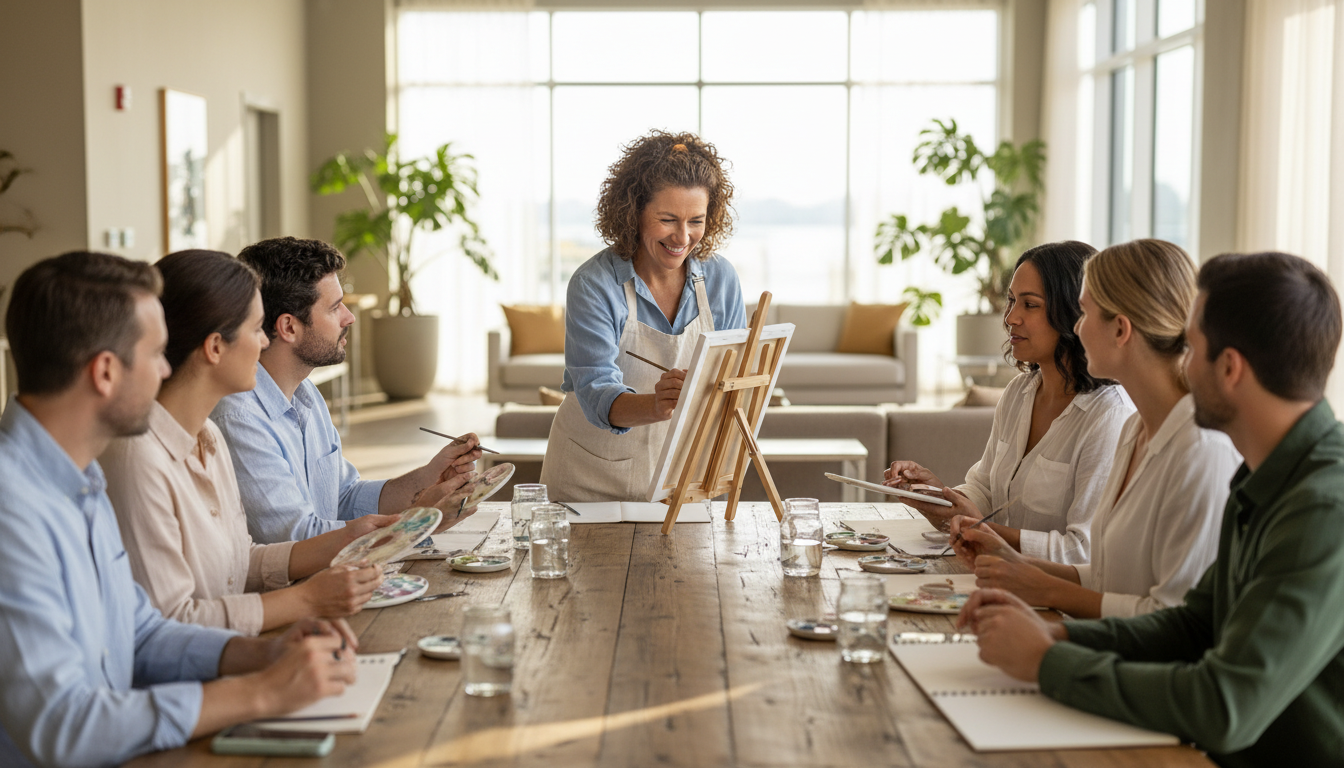
Imagine your Saturday check-in line buzzing—not with the usual “What time is quiet hours?”—but with chatter about weaving sea-grass baskets at 10, watercoloring redwoods at 2, and a sunset block-printing session before the s’mores. Campers leave with handmade souvenirs, Instagram feeds light up with your location tag, and you’ve filled shoulder-season sites without discounting a single night.
Ready to swap one-off tie-dye kits for a turnkey artist residency that drives occupancy, retail sales, and word-of-mouth? Keep reading; the blueprint is easier (and more profitable) than you think.
Key Takeaways
– Art workshops make camping trips more fun and memorable
– Guests stay longer, pay more, and post online, boosting slow-season bookings
– Because few parks offer art, even one class helps your campground stand out
– Pick a style: live-in artist, weekend festival, or single-day pop-up
– Invite friendly, insured artists early; trade a free campsite or small stipend for lessons
– Use your picnic shelter as the studio and keep a rolling cart of tables, cloths, and first-aid supplies
– Share the class calendar when reservations open; add QR codes, emails, and a branded hashtag
– Give a free short lesson, then charge for longer classes and sell take-home kits
– Require safety waivers, use non-toxic materials, and clean up in 15 minutes
– Track seats filled, extra nights booked, store sales, and survey answers to measure success.
Why Art Workshops Elevate Outdoor Stays
Vacationers increasingly crave “vacation-plus” experiences—67% of U.S. travelers now prioritize skill-building during leisure trips, according to MMGY Traveler Insights 2025. A watercolor session under the pines doesn’t just pass the time; it transforms passive scenery into interactive memory-making, encouraging longer stays and higher nightly rates that highway motels can’t match. As a bonus, creative moments photographed against a forest backdrop become organic marketing assets you never have to pay for.
Hands-on art also solves three campground pain points: daytime lulls, multigenerational engagement, and differentiation. A mid-morning basket-weaving class occupies energetic kids while grandparents sip coffee nearby, and a sunset sketch walk lures digital-nomad millennials hunting for content. With only 14% of parks advertising creative classes, a single easel can separate your listing from the pack.
Three Field-Tested Models You Can Steal
Searsport Shores in Maine runs a rotating artist-in-residence program where fiber artists, broom-makers, and watercolorists stay on-site, teach drop-in workshops, and share campfires with guests. Most sessions are free or cost only for materials, removing barriers to participation. The result is a buzz that travels well beyond the coast, a fact Maine art camping articles frequently highlight as the park’s secret weapon.
Shenandoah National Park Trust’s Art in the Park weekend compressed monoprints, “splotch monster” watercolors, and quilt fusion into two days, generating shoulder-season bookings and extra nights as guests tried to catch every class. The event also spurred local media stories, magnifying reach far beyond the park’s email list. Surveys later showed 61% of attendees planned a return visit specifically for future art activities.
California’s Bothe-Napa Valley State Park hosted a one-day pop-up featuring photography hikes, walnut-ink calligraphy, and a kids zone run by local makers, energizing an otherwise quiet mid-June date and spotlighting regional talent. The Inspired by the Land program partnered with nearby wineries for sponsorship, turning art enthusiasts into overnight guests. Even after the easels folded, social posts kept rolling in, extending marketing value for weeks.
Choosing the Right Artists Without Guesswork
Start six months out with an open call through regional arts councils, colleges, and social media. Request proposals showing outdoor-themed projects, material lists, and photos of prior teaching setups to filter out gallery-only artists. Follow up with ten-minute video chats to gauge personality and multigenerational comfort, then log candidates in a skills matrix—mediums, dates, equipment needs—so you avoid having three watercolorists in July but zero potters all summer. Spell out compensation (free campsite, stipend, or revenue share) and require proof of liability insurance upfront.
After you’ve drafted the roster, email a brief orientation packet outlining cleanup rules, emergency contacts, and quiet-hour expectations. Include a sample class outline so every artist knows pacing and safety language. Finally, schedule a group Zoom call two weeks before launch to build camaraderie and answer last-minute questions; a connected instructor team delivers a consistently high-energy guest experience.
Turning a Picnic Pavilion into a Pop-Up Studio
Your best classroom already exists: shaded pavilions, screened porches, or unused rec halls provide seating, power, and water without new construction. Wind protection matters more than square footage; a stray gust can scatter charcoal dust faster than mosquitoes. Standardize gear with a rolling art cart—folding tables, drop cloths, extension cords, first-aid kit, and cleanup supplies. Cap attendance at the number of seats you can sanitize in 15 minutes, then build a 30-minute buffer before the next event so spaces flip quickly for movie night or rain-plan bingo.
Think atmosphere, too. String LED café lights for twilight classes, set out battery speakers for low-volume background music, and post chalkboard signage at trailheads pointing guests toward the “studio.” By turning utilitarian space into an inviting creative hub, you encourage spontaneous walk-ups who often purchase add-on materials or book longer stays.
Marketing Tactics That Fill Seats and Sites
Release your workshop calendar the same day reservations open to capture early-bird planners searching for unique amenities. Bundle one workshop seat into premium RV pads or glamping tents to steer guests toward higher-margin inventory. QR codes on campground maps and trail kiosks link directly to a mobile-friendly schedule, eliminating “I never knew” complaints.
Humanize programs in pre-arrival emails by spotlighting each artist with a two-sentence bio and headshot. On-site, set up a photo backdrop and promote a branded hashtag; user-generated posts act as real-time proof that your park is more than fire rings and hookups. Hand out completion stickers or campsite coupons to spark word-of-mouth chatter around evening campfires.
Pricing and ROI That Pencil Out
Tiered pricing keeps everyone happy. Offer a free 30-minute intro session, then upsell extended classes or take-home kits at modest fees. A small pop-up retail corner—finished pieces from the artist or branded paint sets—earns a 30–40% commission without guests leaving property. Private family or reunion sessions booked through your front desk fetch premium rates and often extend stays. Track ancillary lift by comparing F&B and retail revenue on workshop days versus control days—parks routinely see higher spend per site when art programming runs multiple days per week.
Financial upside compounds quickly. Operators report average daily rate bumps of 5–8% when workshop seats are bundled with high-end sites, and length of stay stretches by 0.7 nights on average. Capture these metrics in your PMS to justify future budget increases and attract sponsors eager to align with creative tourism.
Safety and Peace-of-Mind Protocols
A blanket activity waiver signed at check-in covers every art session. Start each class with a five-minute orientation on tool handling, ventilation, and emergency exits. Use non-toxic supplies whenever possible and display ingredient lists for allergy transparency.
Provide eye protection, gloves, and child-sized aprons for pigment-heavy crafts, and keep a fire extinguisher visible whenever heat tools appear. Log every minor incident; patterns reveal procedure tweaks before insurers—or guests—voice concerns. Store those logs digitally so you can share risk-management documentation during annual insurance renewals without hunting through file cabinets.
Rollout Timeline: Six Months to Launch
Begin six months before your target date by posting the artist call, drafting a working budget, and blocking off venues like pavilions or rec halls. Four months out, finalize contracts, verify each artist’s insurance, and publish a preliminary schedule on your website and booking engine. Two months before launch, place bulk supply orders, secure local sponsors for refreshments or prize donations, and kick off a marketing drip via email and social media.
With two weeks to go, lock in headcounts, brief front-desk and maintenance staff on workshop logistics, and schedule social teasers that spotlight upcoming classes. On event day, allow 30 minutes for setup, deliver a concise safety chat, and capture photos or short videos for future promotions. Within 48 hours, send satisfaction surveys, reconcile retail commissions, and update your skills matrix so next season’s planning gets easier.
Tracking Success Beyond the Selfie
As you gather momentum, tie every data point back to revenue goals. Aim for an 80% fill rate per class; lower numbers flag marketing gaps or scheduling conflicts. Tag workshop-influenced bookings in your PMS, compare ADR and length of stay against non-program dates, and monitor per-cap spend in retail and F&B.
Follow up with qualitative insight, too. Add two exit-survey questions—Did the art workshop influence your decision to stay here? and Would you return for new classes?—to quantify loyalty power. Share highlights with staff during weekly meetings so everyone sees how creativity converts into occupancy and guest satisfaction.
Common Roadblocks and Quick Fixes
If your calendar skews toward one medium, revisit the skills matrix before signing new contracts to rebalance offerings. Guests clueless about workshops? Audit signage locations and resend pre-arrival emails on a staggered schedule. Cleanup overruns? Reduce class size or add a second rolling cart stocked with disinfectant and trash liners. An artist cancels last-minute? Keep a shortlist of standby creatives willing to swap in for a free campsite plus tips.
Tech hiccups can trip up even the best plans. Save workshop rosters offline in case Wi-Fi drops, and equip artists with portable chargers for payment readers. When weather threatens, text guests a rain-plan location using your reservation system’s alert feature—clear communication keeps frustration at bay and maintains your reputation for organized fun.
Turn those paint-speckled moments into year-round momentum: launch your first workshop, capture the content, and let the stories travel farther than any road sign ever could. If you need the spotlight to burn brighter—automated emails that sell out seats before the gates open, targeted ads that tempt shoulder-season wanderers, or AI-powered surveys that prove your ROI—Insider Perks is ready with the brushes, canvas, and lighting. Book a quick strategy chat and we’ll help you paint a full-occupancy picture that lasts long after the final marshmallow melts.
Frequently Asked Questions
Q: What budget range should I expect to launch my first on-site art workshop program?
A: Most parks report spending $400–$700 for a single pop-up day or $1,500–$2,500 for a full weekend residency, which covers artist stipends or revenue share, bulk supplies, and light marketing; operators typically recoup this in one to two sold sites or a 10–15 % lift in retail and F&B sales during the activation window.
Q: How do I structure compensation so artists feel valued without blowing my margin?
A: Offer a free full-hookup site or glamping unit plus either a flat stipend ($200–$400 per day) or a 60/40 revenue split on paid classes and merchandise, spelled out in a simple two-page agreement that also requires the artist to carry their own general liability insurance and list your park as additional insured.
Q: Do I need special permits or insurance riders to run craft or fine-art classes on my property?
A: In most U.S. jurisdictions your existing commercial liability policy already covers non-motorized, non-heat activities, but adding a blanket activity waiver at check-in and confirming the artist’s separate coverage keeps underwriters happy; if you plan to use open flames, kilns, or alcohol, check with your county fire marshal and ABC board two months prior.
Q: What’s the fastest way to source reliable local artists who can teach all ages?
A: Post an open call with your regional arts council, community college, and local maker Facebook groups outlining dates, pay, and family-friendly criteria, then hop on ten-minute video calls to gauge personality and teaching style; you’ll usually lock in a solid roster within three weeks.
Q: My only covered space is a picnic pavilion—will weather ruin the experience?
A: A roof, windbreak, and access to water are 90 % of the battle, so a pavilion works perfectly; keep a roll-down tarp or pop-up tent on standby for sideways rain, limit class size to the number of seats you can move under cover in five minutes, and guests will view any drizzle as part of the adventure.
Q: How do I promote workshops so guests know about them but don’t feel spammed?
A: Release the calendar the same day your booking window opens, add a one-line banner in confirmation emails, display QR codes at check-in and trailheads, and post a daily “today’s classes” chalkboard near the camp store; this drip approach reaches guests at four different touchpoints without flooding their inboxes.
Q: Will paint, clay, and dye create housekeeping nightmares?
A: Mess stays manageable by requiring drop cloths, offering pre-filled rinse buckets, and capping classes at the number of tables staff can wipe in 15 minutes; a rolling art cart stocked with disinfectant, rags, and trash liners keeps cleanup time on par with resetting a picnic shelter after group dinners.
Q: How can I charge for premium workshops without alienating guests who expect free activities?
A: Bundle one complimentary 30-minute intro session with each reservation to establish value, then position longer or specialized classes as optional upgrades ($15–$45) much like kayak rentals or guided hikes, emphasizing small group size and take-home materials to justify the fee.
Q: What age ranges can safely participate, and do I need separate sessions for kids?
A: Simple mediums like watercolor, collage, and nature rubbing work for ages five and up with parental supervision, while tools like carving knives or soldering irons are best reserved for 12+ or adults; labeling sessions “Family Friendly” or “Teens & Adults” in your calendar avoids awkward turn-aways at the door.
Q: What if the scheduled artist calls in sick the day before arrival?
A: Maintain a short list of three local “standby” creatives who’ve already provided insurance docs and agree to a free campsite plus tips in emergencies; most will jump at the chance for last-minute exposure, letting you swap instructors without canceling the class or issuing refunds.
Q: How do I track whether workshops actually boost occupancy and revenue?
A: Tag bookings that originate from workshop marketing, compare ADR and length of stay on program dates versus control dates, log per-cap retail and F&B spend, and add two exit-survey questions about workshop influence; parks see an average 8–12 % rise in total spend per site when creative programming runs at least twice a week.
Q: Could noisy or messy art sessions trigger guest complaints instead of praise?
A: Scheduling classes mid-morning and late afternoon, picking a venue away from quiet hours zones, and enforcing a strict cleanup buffer virtually eliminates noise or clutter issues, and most operators report that the sight of campers proudly displaying their projects actually enhances community vibe and review scores.