

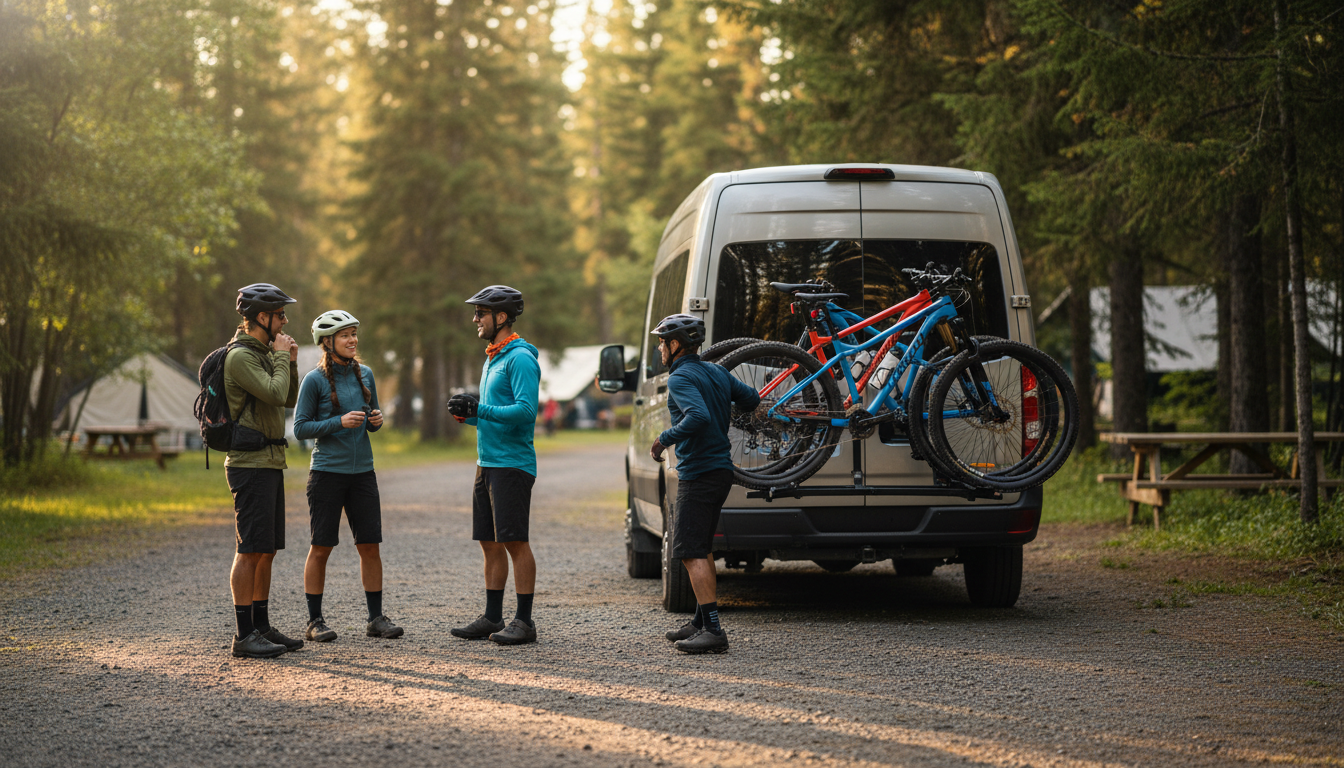
Your guests came for fresh dirt and flowing single-track, not the bumper-to-bumper circus at the trailhead parking lot. What if the solution to overcrowded lots—and to your own midweek vacancy—was already sitting in your driveway? A simple, gear-hauling shuttle run can turn that aging 15-passenger van into a revenue generator, a guest-satisfaction booster, and a billboard on wheels for your park.
Across the country, trail associations are flush with new grant dollars but short on safe, reliable transport for riders and paddlers. Plug your property into their network and you instantly offer what every adventurer craves: a one-way ride that ends with campfire stories instead of car shuttles. Ready to see how partnering with nearby bike-trail groups can fill sites, trim parking headaches, and brand you as the local adventure hub? Let’s map the route.
Key Takeaways
• Turn your old 12- or 15-passenger van into a trail shuttle that makes money
• Fewer cars at trailheads means less crowding and happier guests
• Team up with nearby bike or paddle clubs to fill shuttle seats fast
• Grants and trail funds can cover racks, signs, and marketing costs
• Test the idea with a simple weekend pilot and spend under $2,500
• Update insurance, train drivers, and use digital waivers for safety
• Promote the shuttle as an eco-win: one van can replace up to eight cars
• Riders who skip car shuttles stay longer, buy more, and spread the word.
From Crowded Trailheads to Seamless Guest Adventures
Picture a July Saturday at the region’s most popular trailhead. Cars idle for a precious spot, families unload gear on the shoulder, and frustrated cyclists pedal road miles before they even hit dirt. Meanwhile, your campground’s van sits parked, its seats empty, its potential untapped. By ferrying visitors directly from your front office to the trail’s high point, you erase those stress points and link every ride or paddle to a peaceful night under the stars.
Guests notice the difference immediately. They book longer stays because they no longer need a second vehicle for point-to-point itineraries, and they rave online about the “concierge-level” service. That buzz snowballs into word-of-mouth referrals, shoulder-season reservations, and fresh ancillary revenue—from trail lunches to e-bike battery charging—on days your occupancy once lagged.
Why Bike-Trail Shuttle Partnerships Matter to Outdoor Hospitality Operators
Demand for linear adventures is exploding. Rail-trails, ridge-to-river descents, and paddling chains all require transport solutions, and riders consistently rank “easy shuttle access” among their top trip-planning criteria. Only a sliver of campgrounds currently promote shuttle service, so the first mover becomes the default basecamp in the region.
Operational benefits mirror guest perks. Each shuttle seat filled means one less guest vehicle in your lot and fewer liability exposures from overloaded trailhead parking. The partnership also cracks open new marketing channels: your logo rides the trail association’s website and map, while their brand graphics adorn your van, forging social proof guests trust more than paid ads.
Funding Streams You Can Piggyback
A working model already thrives at the Delaware Water Gap National Recreation Area, where the River Runner launched its summer shuttle in 2025. The National Park Service joined forces with Monroe County Transit Authority to haul ten boats and four bikes per loop, easing parking strain while creating flag-stop convenience along the McDade Trail. Nearby private campgrounds now promote “Ride the River Runner, Sleep with Us” packages and report record RevPAR in peak season.
Grant dollars are equally persuasive. Trails Capacity awards injected $305k into 36 stewardship projects across North America. Operators located within a short drive can offer weekend shuttle swaps for trail-crew volunteers, earning logo placement on project pages and first dibs on group lodging blocks. The rail-trail grants program added momentum, distributing $398k to 40 initiatives that magnetize multi-day touring cyclists. A stay-and-shuttle bundle positions your property as the obvious start-and-finish line these car-free travelers need.
A Five-Phase Roadmap to Launch Your Shuttle
Building a shuttle service that delights guests and pays for itself starts with an organized rollout plan. Rather than jumping straight to daily loops, savvy operators phase their launch to test assumptions, protect cash flow, and gather data that guides expansion. The framework below breaks the job into bite-size tasks you can finish between check-ins without overwhelming staff bandwidth.
1. Map nearby trailheads, grant projects, and transit gaps to identify the most lucrative routes.
2. Run a lean pilot: repurpose your van, add a swing-away bike rack, and operate weekend mornings for four weeks under a $2,500 cap.
3. Secure coverage: extend general liability off-site, add non-owned/hired auto, and confirm DOT thresholds. Deploy e-waivers at check-in.
4. Dial in the hardware: low-profile racks, interior tie-downs, tool kit, and first-aid supplies keep gear and riders safe.
5. Write a one-page MOU with the trail association covering frequency, branding swaps, and quarterly reviews.
Track load factor and ancillary spend from day one; once you consistently top 70 percent seat fill or $12 per rider, expand to weekdays or add a second vehicle. Celebrate each milestone internally so your team feels invested, and share progress with the trail association to keep the partnership energized. With the operational backbone in place, you’re ready to turn the van into your most visible marketing asset.
Marketing the Service as an Eco-Benefit and Experience Multiplier
Travelers crave stories that let them feel like heroes, and nothing sells faster than a carbon-cutting narrative backed by real numbers. Each vanload can replace eight cars at the trailhead, slashing emissions and crowding in a single move—gold for Instagram captions and confirmation emails that frame your brand as the greener choice. Pair that message with user-generated photos of smiling riders unloading bikes, and you’ve engineered share-worthy content you didn’t pay a photographer to capture.
On-property, hand guests a pocket card with departure times and a QR code for live updates; local bike shops gladly display the cards because they solve the perennial “How do we get back?” question for free. Follow up with geo-targeted ads that hit riders’ phones when they approach the trailhead parking lot, nudging them to “skip the circus—ride the shuttle.” Close the loop by surveying guests at checkout and spotlighting five-star quotes in your next email blast, ensuring the eco-win story keeps rolling into future bookings.
Advanced Plays for Operators Ready to Level Up
Once the basics hum, innovative touches can separate your property from copycats that inevitably follow. Advanced features also open new revenue streams and deepen loyalty among hard-core recreationists who influence trip decisions for entire clubs. Consider the ideas below as mix-and-match modules you can phase in during shoulder seasons.
• Stock a communal repair bin at the trailhead kiosk—instant goodwill and five-star reviews.
• Retrofit racks for adaptive cycles and e-MTBs, then sell battery charging back at camp.
• Host a “Trail & Ale” festival with evening loops to a partner brewery, using dynamic shuttle pricing to capture after-hours demand.
Test each enhancement for a single weekend, measure incremental spend, and keep only what moves the needle. By treating every add-on as a micro-experiment, you ensure innovation never drifts into mission creep. The payoff is a service menu that feels custom-built for your exact audience rather than a random assortment of perks.
Common Pitfalls and How to Avoid Them
Even the best-laid shuttle plans can skid off course when operators overlook logistical fine print. Insurance assumptions, under-trained drivers, and rigid schedules top the failure list because they create guest-service gaps that social media quickly amplifies. The good news: proactive checklists neutralize each risk before launch.
Get written binders showing every insurance endorsement in force, not just emailed quotes. Conduct seasonal strapping demos so every driver can load bikes blindfolded and still protect carbon rims. Finally, build a one-hour buffer after each run so weather or flats don’t derail service—turning potential PR crises into heroic rescues that earn lifetime fans.
Quick-Start Checklist
If you’re itching to roll but short on bandwidth, a streamlined to-do list keeps momentum high. Tackle these tasks in order, and you’ll field-test demand before summer’s prime weekends evaporate. Each step moves you closer to a shuttle that not only pays its own way but also fills campsites you once discounted.
• Map nearby grant-funded trail projects
• Inventory van and rack options
• Sign a one-page MOU with the trail association
• Update insurance and integrate e-waivers
• Publish a pilot schedule and pocket card
• Gather guest feedback after the first weekend and adjust
Complete the checklist, and your pilot becomes an operational MVP ready for scale. Momentum feeds on quick wins, so celebrate each milestone on social channels and tag the trail association to amplify reach. Now the stage is set for the long-term marketing machine that keeps every seat sold.
When guests can step out of their cabin, hop a shuttle to the ridge, and coast back to your welcome center for s’mores, the trail experience—and your balance sheet—both come full circle. Your shuttle can be on the road in weeks—but packing every seat, maximizing ancillary spend, and keeping the buzz alive season after season takes more than a bike rack and good intentions. It takes precision targeting, automated booking funnels, and marketing that speaks the language of trail-hungry travelers long before they punch your ZIP code into their GPS. That’s where Insider Perks comes in. Our team blends data-driven advertising, AI insights, and hands-free automation to turn a simple van run into a signature amenity guests will plan their entire vacation around. Let us show you how to fill those shuttles—and your campsites—on autopilot. Reach out to Insider Perks today and put your brand in the driver’s seat.
Frequently Asked Questions
Q: Do I need a special commercial license or permit to run a guest shuttle if I already own a 15-passenger van?
A: In most states you can operate a courtesy shuttle under your existing registration if you only serve registered guests, but once you start selling seats to day visitors you may trigger common-carrier rules that require a DOT number, higher insurance limits, and driver medical cards, so confirm thresholds with your state motor-vehicle agency before you publish a schedule.
Q: How much extra liability insurance should I carry for off-site transport?
A: Ask your broker to add a non-owned and hired auto endorsement for at least $1 million combined single limit and to name the trail association as an additional insured; the premium bump for a seasonal shuttle typically runs $400–$700 and protects you if a claim arises beyond your property line.
Q: What does a basic pilot program cost to launch?
A: Operators who already own a van usually spend $1,500–$2,500 on a swing-away bike rack, tie-down rails, magnetic branding, and pocket-size schedules, meaning you can start testing demand long before investing in a purpose-built shuttle bus.
Q: How long does it take to reach break-even on a shuttle service?
A: Properties that bundle a complimentary seat with premium sites and charge day users $10–$15 typically recoup launch costs within six to eight peak-season weekends once average occupancy nudges just four to six riders per loop.
Q: Can grant money actually pay for my vehicle upgrades or fuel?
A: Yes—many trail-capacity and stewardship grants allow partner “support services” budgets, so the association can reimburse you for equipment, wrap graphics, or even driver hours as long as the expenses directly advance trail access or congestion relief objectives spelled out in their proposal.
Q: How do I schedule runs without overcommitting staff or frustrating guests?
A: Mirror natural trail flow by offering one early morning drop-off, a midday family loop, and a late-afternoon sweep, then insert a one-hour buffer after each run to absorb flats, storms, or traffic so published times stay reliable without burning out your team.
Q: What is the best way to handle guest waivers for both the shuttle and the trail experience?
A: Add a combined transport-and-activity waiver to your existing online check-in: guests e-sign once, the PDF auto-stores in your PMS, and drivers confirm names from a tablet at boarding, eliminating clipboards while keeping every rider’s release on file.
Q: How do I market the shuttle to non-camping day users without clogging my parking lot?
A: Promote advance online booking with limited on-site parking codes; visitors reserve a seat, prepay, and receive a QR gate pass that expires after their return, capturing new revenue while controlling vehicle volume on property.
Q: What maintenance routine keeps bikes—and my reputation—safe in transit?
A: Train drivers to inspect rack straps before every load, carry a mini-compressor and multi-tool kit, and photograph any pre-existing damage as bikes are mounted so you have time-stamped proof if a claim surfaces.
Q: How can I make the service inclusive for adaptive or e-bike riders?
A: Choose modular racks rated for 75-pound wheelbases and allocate one slot per loop for either an adaptive trike or an e-MTB, then offer battery charging back at camp for a flat fee so guests with specialized gear feel planned for, not accommodated after the fact.
Q: What if bad weather forces a last-minute cancellation?
A: Spell out in your confirmation email that trips may be rescheduled or refunded when trail managers close routes for safety; because you’ve collected mobile numbers at booking, a quick group text via your PMS reaches every rider instantly and protects guest satisfaction.
Q: Will the trail association expect revenue sharing?
A: Most associations simply want reliable transport and positive visitor flow, so they’re happy with in-kind swaps like logo placement and occasional volunteer shuttles, but outline expectations in a one-page memorandum so neither side assumes a cut of the other’s sales later.
Q: How do I prevent the shuttle from cannibalizing premium pull-through sites used for large RVs?
A: Stage the vehicle in a secondary overflow or staff lot, not on a revenue pad, and schedule departures to avoid prime check-in windows so the shuttle enhances, rather than competes with, your highest-yield inventory.
Q: What metrics should I track to decide when to add a second vehicle?
A: Monitor seat load factor, ancillary spend per rider, and incremental nights booked; once you consistently fill 70 percent of seats and shuttle users generate at least $12 each in on-property revenue, the data justifies expanding capacity or extending service to weekdays.