

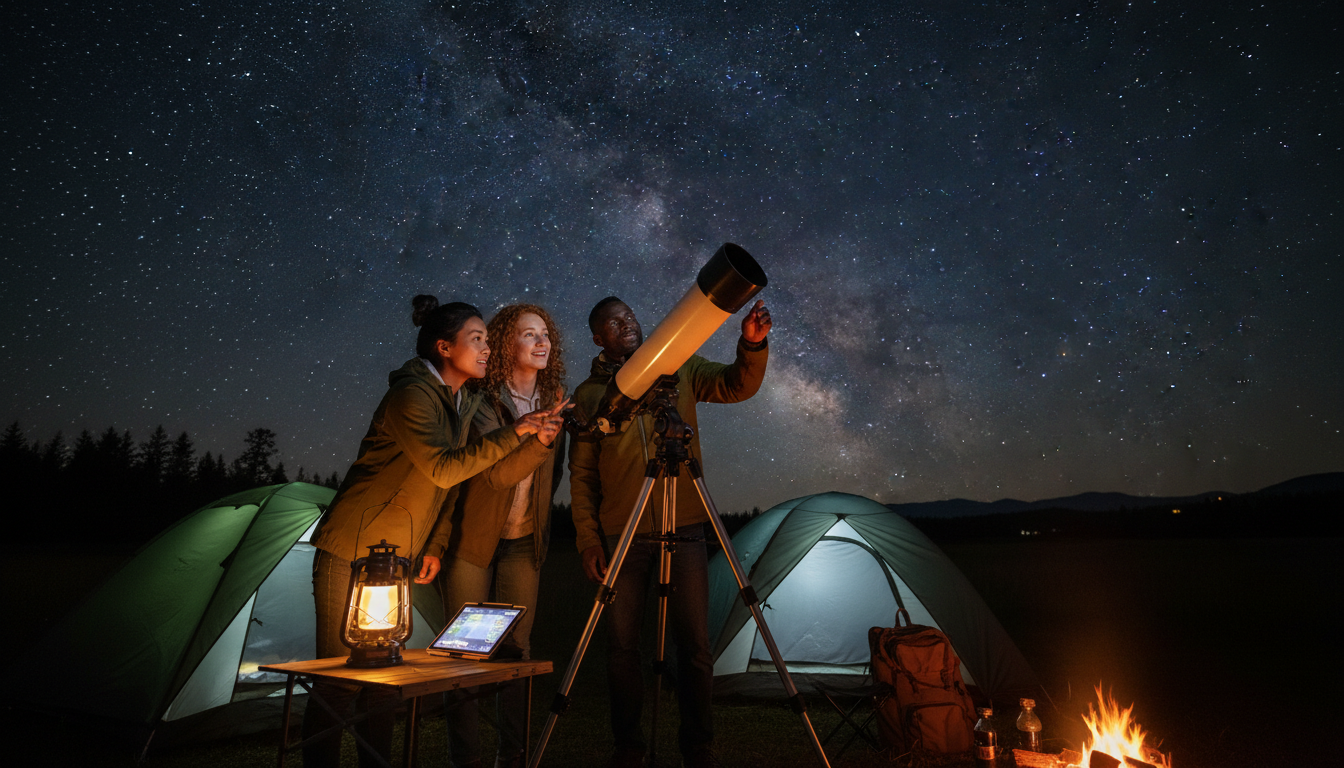
When the campfire embers die down, do your profits fade with them? Imagine instead that every clear evening becomes a headline attraction—guests stretched out in reclining loungers, tablets painting the Milky Way with glowing constellation lines, Instagram lighting up with your location tagged under #BestNightEver. Automated night-sky kits cost less than a deluxe picnic table, yet they’re flipping quiet hours into sell-out sessions at forward-thinking parks.
Ready to turn “nothing to do after dark” into your most talked-about upsell? Keep reading to see the exact gear list, zoning tips, and revenue bundles that pull five-figure returns from thin air—literally. The stars are already overhead; let’s make them work for you.
Key Takeaways
– Buy tablets, red lights, Wi-Fi, and loungers for under $2,500; the cost is usually earned back in one season
– Sell extra items like flashlights, cocoa, mugs, and guided tours to grow profit
– Create kid scavenger hunts, calm audio tours for seniors, and photo spots for influencers to please every guest type
– Build the sky deck in a dark, flat area with red path lights so people stay safe and keep night vision
– Offer layers of pricing: free basic use, $15 fun pack, $10–$20 short tours, $75 photo class, and special meteor-shower weekends
– Post star photos, quick videos, and a #SkyAtMyCamp contest online to fill spots before guests arrive
– Keep a backup plan for cloudy nights: indoor stories, photo editing, or rain-check vouchers
– Train a Night-Sky Host, clean and track all gear, and log each tablet and binocular to protect your investment.
Build a Profit-Ready Kit for Under $2,500
A complete setup starts with three or four rugged tablets pre-loaded with SkyView or Stellarium, a Wi-Fi mesh node, red-light lanterns, six reclining loungers, and a lockable charging cabinet. Early adopters confirm they recoup that sub-$2,500 investment in one season by bundling flashlight-and-cocoa packs or ticketed tours, according to data from Insider Perks research. At the first whoosh of a shooting star, guests gasp as the tablet’s overlay snaps onto the Big Dipper, prompting instant social shares that double as free ads. The low capital requirement means owners can test demand without a multi-year depreciation schedule or complicated permitting.
Optional add-ons such as binoculars, small telescopes, and branded mugs deepen engagement and revenue. Every physical piece doubles as marketing; red lanterns and loungers appear in guest photos, while the tablets’ AR overlays make instant social proof. By choosing consumer-grade gear that runs offline once sky data is cached, you also avoid after-hours IT calls or dead zones that derail the experience.
Match Night Skies to Every Guest Persona
Families gravitate toward scavenger hunts: QR codes fixed under each lounger unlock audio clips of constellation myths and challenge kids to “find Orion before Dad.” Retirees, meanwhile, lean back with narrated playlists that ease them through Jupiter’s Galilean moons without any screen-tapping anxiety. Influencer couples and glampers hunt for the perfect long-exposure photo; a reserved tripod station and #SkyAtMyCamp contest entry fee transform their desire into an upsell.
Educational groups fill mid-week vacancies when you preload STEM lesson plans on the tablets. Send a pre-arrival email asking each reservation to pick a stargazing add-on, then watch average daily rate rise before guests even set foot on-site. Segmenting offerings this way not only maximizes spend but also personalizes the memory guests share online—free word-of-mouth advertising that algorithms reward.
Design a Sky Deck That Protects Darkness and Safety
Locate a patch of ground at least 300 feet from bright light and grade it level; crushed granite pathways keep wheelchairs rolling smoothly. A painted compass rose at center stage orients guests instantly, reducing staff hand-holding. Fully shielded, low-Kelvin LEDs along the path satisfy safety codes while preserving night vision and local wildlife behavior.
Quiet-hours signage and a Leave No Trace reminder prevent late-night chatter from spilling into neighboring sites. Those small gestures elevate your park’s eco-credibility and align with International Dark-Sky Association principles. Guests who value sustainability perceive your operation as premium and are more willing to pay for bundled experiences.
Programming Tiers That Print Money After Sunset
Your base offer should be free tablet checkout and sky-deck access until 10 p.m.—bake it into the site fee so no guest feels nickel-and-dimed. Mid-tier upsells like the $15 Perseid Pack (red flashlight, branded mug, reserved lounger) convert at high rates because they solve a practical need while feeling indulgent. Telescope rentals or a 30-minute “Sky Safari” guided by a Night-Sky Host fetch $10–$20 and rarely face discount pushback.
Premium workshops—think small-group astrophotography at $75 per person—draw a crowd willing to plan vacations around celestial events. Annual meteor-shower weekends behave like limited-edition merchandise, driving faster commitments and increasing length of stay. According to Insider Perks numbers, properties routinely clear five-figure revenue from night programming alone.
Marketing Moves That Fill Loungers Before Guests Arrive
Add a stargazing photo carousel and 15-second video clip to your booking engine; visual proof converts lookers into bookers. Promote super-moon rises and planetary alignments six months out to tap into scarcity bias—Google Trends data show search spikes for “meteor shower viewing” as dates approach. Insert a one-click upsell for private telescope sessions in confirmation emails, catching travelers while enthusiasm is highest and wallets are open.
Social amplification is equally simple: run a monthly #SkyAtMyCamp photo contest where winners earn a free night or branded hoodie. User-generated images outperform stock shots in organic reach and build trust with future campers. Pair each guest photo with a one-sentence testimonial your staff captures on the spot; micro-reviews satisfy AI-powered recommendation engines looking for fresh, authentic content.
Weather-Proofing Your ROI
Even the clearest desert sky can cloud over, so staff need a Plan B as rehearsed as the Plan A. Post a daily go/no-go forecast on the whiteboard and inside the park app at least two hours before start time; transparency prevents disappointment and refunds. If clouds roll in, pivot to indoor constellation storytelling, astrophotography editing on laptops, or a space documentary screening.
Keep a dozen binoculars handy; under partial cloud cover they still provide satisfying targets. When the sky stays closed all evening, offer a rain-check voucher redeemable for another paid activity. Quick moves like sliding loungers under an awning or distributing cocoa earlier show guests you’re prepared, turning potential complaints into social goodwill.
Staff Training That Scales With Demand
Assign one Night-Sky Host per shift who can handle basic astronomy terms, app troubleshooting, and a five-minute red-light safety talk. A laminated cheat-sheet listing the night’s top targets allows any employee to step in should the designated host call out sick. Fold tablet care—battery charging, lens wiping, proper storage—into the regular housekeeping checklist to protect your investment.
Incentivize hosts to collect sound-bite testimonials as guests return the gear. Those spontaneous quotes make perfect sunrise social posts and feed Google’s appetite for fresh user-generated language. Over time, the program runs on muscle memory, not micromanagement: the gear charges itself, the path glows softly, and staff rotate scripts with seasonal highlights.
Maintenance Habits That Keep Stars Sharp
Number every tablet and binocular, logging serials against guest names at checkout to discourage loss and streamline closing counts. A weather-proof charging cabinet near the office keeps batteries topped off and locked away from dew or curious hands. Quarterly lens cleaning and telescope collimation ensure the wow factor never blurs—nothing kills a review faster than a foggy view of Saturn.
Inspect pathways after heavy rain and refresh red edge paint as needed; safety lapses invite liability nightmares. Loungers outfitted with wipe-clean headrests survive sunscreen and bug-spray residue, extending fabric life. By treating night-sky gear like any other revenue-producing asset—kayaks, golf carts, pontoon boats—you bake longevity into your forecast.
Borrow From National-Park Playbooks
Look to the Grand Canyon Star Party, where strict red-flashlight rules and multiple telescope stations keep thousands of visitors moving smoothly (official event page). Their crowd-management tactics scale down effortlessly: rotate small groups between loungers, binoculars, and telescopes to prevent bottlenecks.
The Southwest Astronomy Festival at Cedar Breaks offers ranger-led tours and astrophotography clinics, proving guests will pay for storytelling and hands-on learning (festival details). Mirror that structure with volunteer astronomers from local clubs; they bring personal gear and credibility at no payroll cost. Both examples reinforce the power of scheduled programming and firm lighting policies to protect night vision.
Launch Checklist and Next Steps
Start tomorrow by identifying the darkest corner of your property and marking the compass rose. Order the gear bundle, preload apps, install the charging cabinet, and paint glow markers along the path. While waiting for shipments, script the five-minute orientation and draft the cloudy-night pivot plan so staff practice before guests do.
Next, shoot a 15-second teaser video of the prototype deck and upload it to your booking engine. Build upsell flows into confirmation emails and schedule meteor-shower posts on social channels for the next six months. Once live, track participation counts, per-guest spend, and testimonial volume; adjust pricing every quarter to keep ROI climbing.
The sky already has your inventory—Insider Perks can plug in the profit. From AI-driven guest targeting to automated upsell flows and ad campaigns that sparkle brighter than Venus, we’ll make sure every constellation points back to your booking engine. Ready to own the night and the revenue that comes with it? Schedule a strategy session with Insider Perks today and watch your reservations—and reviews—shoot for the stars.
Frequently Asked Questions
Q: How much does a complete automated night-sky kit really cost to launch?
A: Most parks spend between $2,000 and $2,500 for four rugged tablets preloaded with AR apps, six reclining loungers, red-light lanterns, a mesh Wi-Fi node, and a lockable charging cabinet, and that figure includes shipping, basic protective cases, and the first year of app licenses.
Q: How quickly can I expect to make that money back?
A: Owners who bundle $10–$20 add-ons such as flashlight-and-cocoa packs or guided “Sky Safari” sessions typically recover the initial outlay within one peak season, with many surpassing break-even in eight to ten weekends when meteor showers or super moons drive demand.
Q: Do I need an astronomy background or certified staff to run the program?
A: No formal credentials are required; a short script, a laminated star chart, and familiarity with the tablet app’s “tonight’s targets” feature give any employee enough confidence to greet guests, explain red-light etiquette, and troubleshoot basic questions.
Q: What about light pollution from my existing facilities—will it ruin the experience?
A: Shielded, low-Kelvin path lighting positioned at knee height preserves night vision for stargazers while still meeting safety codes, and locating the deck 250–300 feet from bright fixtures generally keeps the Milky Way visible even at properties near small towns.
Q: Our Wi-Fi can be spotty after dark; will the tablets still work?
A: Once the AR apps cache that evening’s sky data over any connection—even the office router during setup—they operate fully offline, so the guest experience is unaffected if the campground network blinks out later.
Q: How do we protect expensive gear from theft or weather damage?
A: Assign each tablet a number, log it against the guest’s name at checkout, and require a credit card hold; overnight, everything locks inside a weather-sealed charging cabinet mounted in the office or laundry room, eliminating dew, temptation, and dead batteries.
Q: Is additional insurance or permitting needed for a sky deck?
A: In most U.S. jurisdictions the setup is treated like any other outdoor recreation amenity, so your existing general-liability policy covers it; zoning officials rarely object because the footprint is small, non-permanent, and produces no amplified sound or bright light.
Q: How do I keep programming fresh for repeat guests?
A: Rotate themes by season—Perseid Party in August, Lunar Eclipse Lounge in fall, Orion Hunt in winter—and upload new audio stories or scavenger hunts to the tablets every quarter so returning campers find novel content without additional hardware spend.
Q: What contingency plan should I offer when clouds roll in?
A: A simple rain-check voucher for a future paid activity, paired with an indoor constellation storytelling session or an astrophotography editing demo, satisfies most guests and converts potential refunds into brand goodwill.
Q: Can the experience accommodate guests with mobility challenges?
A: Yes, a crushed-granite or composite pathway at a 1:20 grade, combined with low-slung loungers that have sturdy armrests for transfers, meets ADA guidelines and lets wheelchair users enjoy unobstructed sky views alongside everyone else.
Q: How do I market the program without overwhelming my website?
A: A five-second looping clip of a guest pointing a tablet at the stars, a dedicated “Night-Sky Experiences” bullet on the amenities list, and an upsell toggle during the booking flow usually raise conversion rates by double digits with minimal page clutter.
Q: Will bright screens annoy other campers during quiet hours?
A: The stargazing apps feature a red-night-vision mode that dims displays to a soft crimson glow, preserving the dark ambiance and keeping nearby tent sites happy while still allowing guests to trace constellations easily.
Q: How much staff time does nightly operation actually require?
A: One Night-Sky Host can prep gear, give the five-minute orientation, and monitor returns for up to thirty participants in a two-hour window, so the labor cost is roughly equivalent to one additional evening pool attendant shift.
Q: What if app updates or operating-system changes break functionality mid-season?
A: Because the tablets run stable, offline-first versions you control, you can freeze updates during peak months and schedule a single maintenance day each shoulder season to apply patches after confirming compatibility, preventing surprises when guests are on site.
Q: Does offering night programming really move the needle on reviews and repeat bookings?
A: Parks that adopt these kits consistently report higher average daily rates, a 15–25 percent lift in five-star reviews mentioning “unique experience,” and measurable repeat visits timed around future celestial events, proving that owning the night strengthens both revenue and loyalty.