

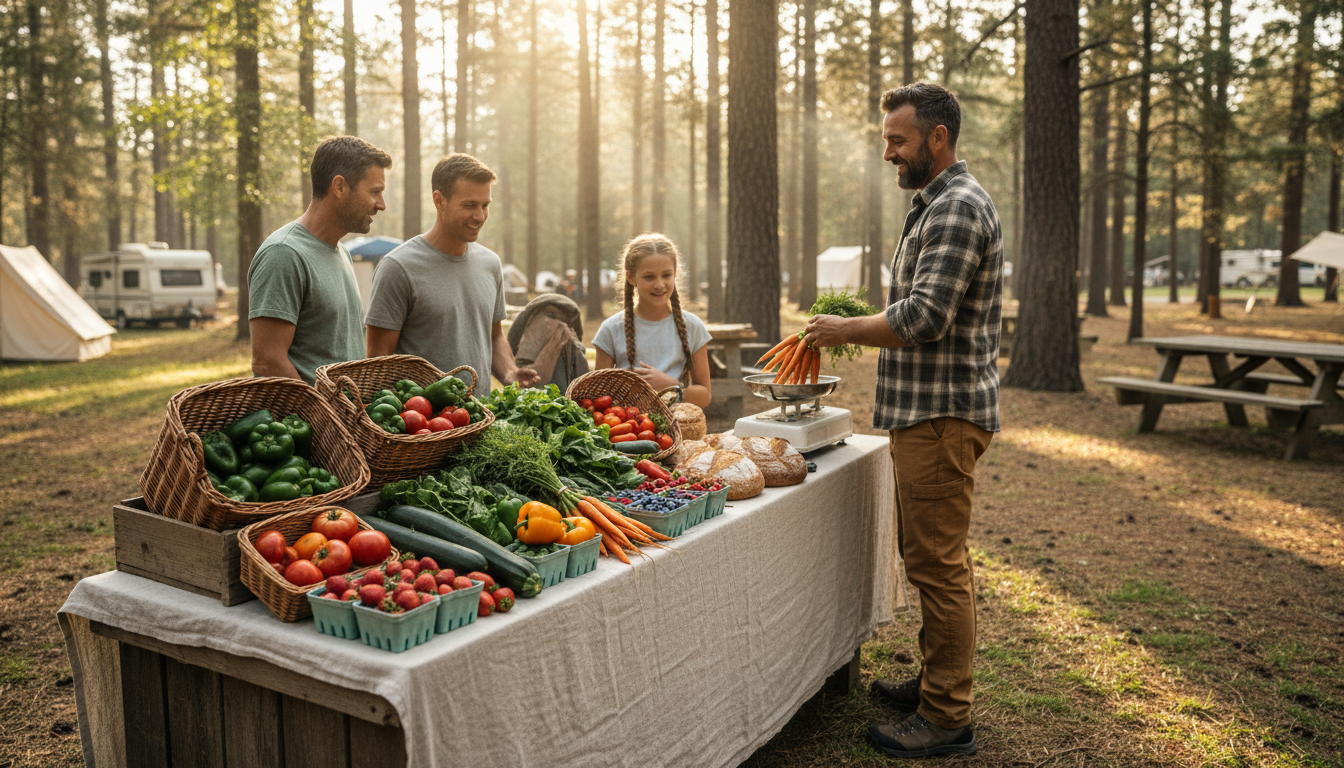
Imagine waking up your guests with the smell of fresh sourdough, the color splash of just-cut zinnias, and the buzz of neighbors swapping recipe tips—all before they’ve even unhooked their sewer line. That’s the power of a pop-up farmers’ market steps from every campsite.
Beyond the charm, a well-run market turns idle lawn space into a revenue engine, a loyalty magnet, and a billboard for local partnerships. Want to know the permits you actually need, the booth mix that keeps shoppers lingering, and the sponsorship tricks that pay for live music without touching your budget? Keep reading—your next signature amenity could be sprouting as soon as next Saturday.
Key Takeaways
– A small farmers’ market at each campground can bring in extra money and make stays feel special.
– Aim for about 60% booths with fresh food (fruit, veggies, eggs) and 40% with ready-to-eat snacks or crafts.
– Call the county first to learn which permits, food rules, and insurance papers are needed.
– Ask every vendor for proof of insurance and charge a simple booth fee or a tiny share of their sales.
– Set up wide walkways, power outlets, hand-wash sinks, and clear trash and recycle bins.
– Add fun things like live music, cooking demos, kids’ seed classes, or goat yoga; local sponsors can cover costs.
– Have shade tents, rain backup space, and even winter markets so bad weather or slow seasons don’t stop the fun.
– Advertise dates on your website, hand campers a QR code map at check-in, and share guest photos online.
– Count visitors, collect sales ranges from vendors, survey guests, and make small changes each week to grow bigger.
Why a Market Belongs at Your Park
Guests visit campgrounds for fresh air and memorable moments, and nothing feels more authentic than shaking hands with the grower who picked those strawberries an hour ago. Offering that connection on-site keeps travelers roaming your pathways instead of driving into town, lengthening dwell time and lifting per-guest spend on everything from firewood to kayak rentals. It also differentiates your park from nearby competitors that rely only on static amenities like playgrounds or pools.
A farmers’ market signals community stewardship, too. Accepting SNAP or WIC payments, as the weekly event at Point of Rocks in Prescott, Arizona, does, widens accessibility and positions your brand as socially responsible. Humboldt County markets in California go a step further with Market Match—doubling the buying power of EBT benefits—and attract sponsors to underwrite entertainment costs. The Great American Farmers Market on the National Mall layered goat-yoga and nightly concerts onto produce stalls, transforming a simple transaction zone into a weekend festival. Borrow one or all of these touches, and your market will do more than fill coolers—it will fill booking calendars.
Navigate Permits and Compliance Early
Before circling a Saturday on the calendar, phone your county planner and ask whether your event qualifies for a temporary-use or a streamlined “farmers-market” exemption. Many jurisdictions waive fees if at least 51 percent of stalls are agricultural producers, instantly trimming startup costs. Next, verify food-safety rules: most health departments require each vendor to hold an individual food-handler permit, so build a digital folder for easy uploads.
Insurance is equally straightforward when tackled up front. Require every vendor to name your park as additionally insured on a one- to two-million-dollar general-liability policy; seasoned growers already carry coverage for other markets, so producing a certificate is routine. Confirm that your own property policy covers third-party events, or add a low-cost rider if it does not. Finally, double-check sales-tax responsibilities. In some states the host must report totals for vendors lacking tax IDs. A simple sign-in sheet with sales brackets keeps you compliant without spreadsheets that swallow Sunday afternoons.
Recruit the Right Vendors and Keep Them Coming Back
Start with a one-page vendor packet that spells out set-up window, stall dimensions, electrical access, booth fee, and perks like overnight parking. Clarity curbs last-minute cancellations and signals professionalism. Aim for a 60/40 ratio: sixty percent raw farm goods—produce, eggs, honey—balanced by forty percent prepared foods or craft items. Guests can fill coolers for later and grab a breakfast burrito now, increasing both spend and satisfaction.
Retention is cheaper than recruitment, so layer in small gestures that feel big. Offer discounted mid-week stays or free shower access after close; traveling vendors love a hot rinse. Consider tiered booth fees—reduced rates for first-timers or youth garden clubs—to keep the lineup fresh. When the season wraps, invite vendors to a roundtable or survey them digitally. Adjustments like wider aisles or earlier power hookups prove you listen, turning growers into ambassadors who recruit peers for you.
Nail the Layout, Utilities, and Day-Of Flow
Design a U-shape or double-row layout with a twelve-foot emergency lane so maintenance carts and, if needed, an ambulance can pass without folding chairs scraping fenders. Place produce vendors up front; colorful vegetables create a visual draw that pulls campers from their sites. Spider boxes extending existing pedestals give each hot-food vendor a dedicated twenty-amp circuit, while a shared fifteen-amp outlet powers acoustic amps at the music corner.
Compliance inspectors love clean water and clean hands. Install a centrally located hose bib connected to potable lines and pair it with a foot-pump sink station—about two hundred dollars online—and you’ll sail through health checks. Trash, recycling, and five-gallon compost buckets at every third booth keep walkways tidy and communicate sustainability. Finally, chalkboard menus at each entry and a printed site map at the welcome table help guests navigate without clogging aisles, smoothing the sales funnel for every stall.
Layer Experiences and Sponsorships for Extra Revenue
Programming transforms a lineup of tents into an event worth planning vacations around. Borrow from the USDA model and slot a 20-minute camp-stove cooking demo between music sets. Schedule kids’ seed-planting workshops or goat-yoga for a small fee—both generate Instagram gold and secondary revenue. Sponsors such as local banks or gear shops love underwriting shade tents, reusable bag giveaways, or the acoustic stage because it aligns them with community wellness.
Direct revenue streams stack quickly when managed with intention. Charge ten to twenty dollars per booth to cover marketing and staff overtime, then switch to a ten-percent commission for prepared-food vendors so you share upside. Create a “Market Weekender” package that bundles a Friday night stay, early Saturday market access, and a Sunday farm tour at a partner ranch. To cap it off, sell branded coolers and ice so campers can haul perishables safely—an easy upsell that extends the market’s value proposition into the afternoon.
Guard Against Weather and Off-Season Slumps
Shade and rain cover keep produce crisp and guests happy. Pop-up canopies with detachable sidewalls tame midsummer heat, while sail shades strung between trees add resort aesthetics. Rent one ADA-accessible portable restroom for every 250 expected visitors if bathhouses sit beyond a comfortable walk; inclusivity is good hospitality and good liability management.
Always name a backup venue—a recreation hall or even a spacious maintenance bay—and print it on every confirmation email. When thunder rolls in, text-alert all vendors and guests via a free notification service and pivot gracefully under a roof. Off-season, consider a monthly holiday market featuring wreaths, jams, and knitwear; the slower cadence keeps your brand visible when competitors fall silent, and it gives snowbirds another reason to extend their stay.
Spread the Word and Fill More Sites
Search engines crave specificity, so list recurring market dates on your events calendar and embed booking buttons beside them. Tease new vendor spotlights on social feeds with countdown posts, tagging growers to tap their audiences. At check-in, hand campers a QR-coded map that links to a live vendor lineup; guests scanning for kettle corn Saturday morning might book an extra night to catch live music that evening.
User-generated content turbocharges reach. Encourage shoppers to post photos with a branded hashtag, then share the best shots in your Stories. Each mention becomes a micro-ad for your park, complete with social proof that rivals can’t copy overnight. On property, yard signs near trailheads and bathhouses nudge hikers and early-morning shower-goers toward the market before they plan off-site excursions, recapturing revenue that would otherwise leak to town.
Measure, Iterate, Grow
You can’t improve what you don’t track. Ask vendors to log sales ranges—under $500, $500–$1,000, over $1,000—when they sign out; no one divulges exact numbers, but brackets are enough to spot trends. Post staff at entries with clickers to record foot traffic, then compare against occupancy reports to see whether marketing is pulling locals or just serving registered guests.
Follow up with a two-question checkout survey: What did you buy? What would you like next time? Feed that data into vendor recruiting and layout tweaks. Perhaps guests beg for more shade in July or extra pastry options after 10 a.m.; small pivots sharpen the experience and compound returns. Iterate weekly, celebrate wins loudly, and your farmers’ market will mature from pleasant perk to signature attraction.
Your farmers’ market can be more than a Saturday novelty—it can be a finely tuned revenue channel that greets guests with flavor, keeps them onsite longer, and fills shoulder-season calendars. Pair those tents and turnips with the right digital muscle and you’ll watch every footstep convert into richer ADR and repeat stays.
That’s where Insider Perks steps in. Our marketing, advertising, AI, and automation tools stitch vendor sign-ups, targeted social ads, guest texts, and post-event surveys into one effortless workflow—so you can spend your mornings tasting jam, not juggling spreadsheets. Ready to grow something extraordinary? Explore what’s possible with Insider Perks today and let’s plant the first seed together.
Frequently Asked Questions
Q: What is the minimum number of vendors I need for a market that feels worth visiting?
A: Most parks find that eight to twelve vendors create enough visual energy, product variety, and cross-marketing to draw both campers and locals, yet are still manageable for first-time hosts in terms of power drops, parking, and staff oversight.
Q: Where can I find local growers and artisans willing to set up at my campground?
A: Start with your county extension office, existing regional farmers’ markets, and Facebook groups for small producers, then layer in outreach to 4-H clubs, school gardens, and cottage-food permit holders; personal invitations paired with an overnight site discount usually seal the deal.
Q: How should I structure booth fees or commissions so the event pays for itself without scaring vendors away?
A: A flat booth fee of $10–$20 for primary producers and a 10 percent sales commission for hot-food or craft vendors covers marketing, insurance riders, and staff time while keeping entry costs low enough that sellers still net healthy profits.
Q: If my park already carries general liability insurance, do I need extra coverage for a farmers’ market?
A: Yes—require each vendor to list your business as an additional insured on their $1–$2 million general-liability policy, then confirm with your carrier that special events are included or add a low-cost rider so gaps between policies don’t expose the park.
Q: Which permits are typically necessary, and how far in advance should I apply?
A: Most jurisdictions ask for a temporary-use or farmers-market permit filed 30–60 days out, plus individual food-handler or cottage-food licenses for each vendor; a quick call to your county planner and health department before you announce dates prevents scrambling later.
Q: How can I time market hours so they don’t collide with check-in traffic or quiet hours?
A: Scheduling 8 a.m. to noon on Saturdays works well because early shoppers finish before afternoon arrivals queue at the office, and teardown is complete long before evening quiet hours, keeping both front-desk operations and guest serenity intact.
Q: What infrastructure do health inspectors expect me to provide?
A: Inspectors usually look for a potable-water source with a hand-washing station, a twelve-foot emergency lane, separate trash and recycling receptacles, and enough 20-amp circuits or spider boxes for hot-food vendors to plug in safely without daisy-chaining.
Q: How can a farmers’ market actually drive new overnight bookings instead of just entertaining current guests?
A: Packaging a “Market Weekender” rate—which bundles Friday check-in, early Saturday shopping access, and a Sunday farm tour—gives produce lovers a concrete reason to extend their stay or choose your park over a competitor that lacks the experience.
Q: What parking strategy keeps local shoppers from clogging campsites and interior roads?
A: Designate an outer lot or unused rally field as “Market Parking,” post wayfinding signs from the highway entrance, and staff the first hour with a traffic attendant so day-visitors park where you want them before chance leads them into back-in RV sites.
Q: How do I handle bad weather or last-minute vendor cancellations without souring the experience?
A: Listing a covered backup location on every vendor agreement and guest confirmation, combined with an opt-in text alert that triggers the relocation notice by 6 a.m., sets expectations and maintains credibility even when storms or emergencies strike.
Q: Is it difficult to accept SNAP, WIC, or Market Match benefits at a private campground market?
A: Not at all: you register with your state’s EBT processor, secure a wireless point-of-sale device, and either run a central token system or let individual vendors swipe cards; the inclusive option broadens customer reach and often unlocks sponsorship grants.
Q: How much staff time should I budget for each market day?
A: Plan on two team members for about five total hours each—covering set-up, vendor check-in, crowd monitoring, and teardown—with an optional maintenance float for power or waste issues, meaning roughly ten labor hours per event.
Q: What cadence—weekly, biweekly, or seasonal—works best for destination parks?
A: Weekly markets during peak season build guest habits and vendor loyalty, while shifting to biweekly or monthly events once occupancy dips keeps the experience special without stretching resources during shoulder months.
Q: How do I measure success so investors or partners stay on board?
A: Track foot traffic with clickers, gather vendors’ sales brackets at sign-out, compare those numbers to occupancy and average daily rate data, and survey guests about purchase behavior; upward trends in any of those metrics provide concrete evidence the market is boosting both revenue and brand equity.