

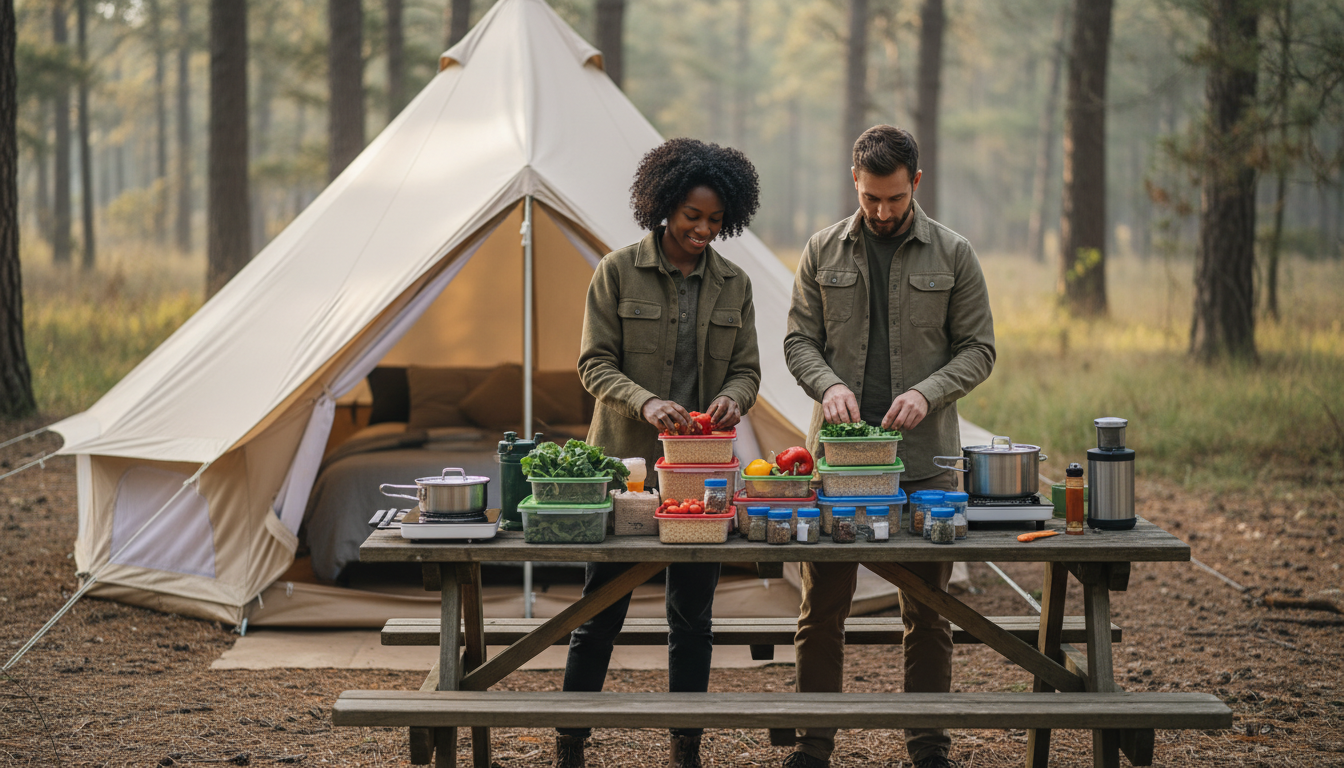
A hungry guest pulls up, mentions a severe nut allergy, and asks if your camp store has anything safe for breakfast. Do you scramble—or present a pre-packed, allergen-free “sunrise kit” that’s already tagged to their reservation? In today’s wellness-driven market, that moment decides whether your campground is remembered as merely a place to park or a property that anticipates needs before they’re spoken.
Ready to swap dietary dilemmas for new revenue streams? Keep reading to learn the five gaps most parks overlook—and the simple kit upgrades that turn vegan, gluten-free, or keto requests into rave reviews and add-on sales.
Key Takeaways
Modern guests judge your entire operation by the first bite they feel safe eating. When you combine smart data collection with thoughtful packaging, dietary care becomes a signature amenity that markets itself. The bullets below condense the blueprint so you can scan, act, and immediately elevate your park’s reputation.
Personalization also powers profit. Each reusable pouch sold boosts average order value, while pristine handling procedures slash risk and waste. Adopt even half of these steps and you’ll notice cleaner workflows, happier reviews, and a healthier bottom line.
– Campers now expect safe food options for diets like vegan, gluten-free, keto, and nut-free
– Ask for each guest’s diet choice during online booking and flag it for staff
– Pre-make simple food kits (breakfast, grill, s’mores) that match the flagged diet
– Store special foods on a separate shelf and use color-coded tools to avoid mix-ups
– Put kits in reusable, logo pouches so guests spread the word after their stay
– Give staff a quick yearly class and cheat-sheet cards on diets and safety steps
– Show and sell the kits during booking to earn extra money and better reviews
– Track kit sales and food waste, then tweak items to boost profit and cut trash.
Wellness and Food Personalization: The Differentiator
Outdoor travelers in 2025 crave curated wellness as much as they crave clean air. Industry trend-watchers note that RV parks offering farm-to-table dinners and pop-up cooking classes already outpace competitors in occupancy and ADR, a pattern highlighted in the latest RV-PRO outlook. When that same park hands over a vegan breakfast crate on arrival, it transforms lodging into lifestyle, proving that every detail—right down to oat-milk creamer—was planned with the guest’s goals in mind.
Hyper-segmentation pushes the distinction further. A HospitalityNet analysis explains that travelers who self-identify as keto, allergen-sensitive, or plant-based now assume safe choices are standard, not special request. Operators who weave diet care into booking flow, onsite merchandising, and nighttime yoga sessions win repeat stays, stronger reviews, and pricing power because the experience feels purpose-built rather than patched together at the last minute.
Turn Reservation Data into Actionable Prep Lists
Personalization begins before a guest even selects their site. Add a mandatory dietary drop-down to your booking engine so “Vegan,” “Gluten-Free,” or “Nut-Free” populate directly into the PMS. That single field triggers an automated email 48 hours before arrival, delivering a pick list to housekeeping and the camp store; suddenly, staff no longer run emergency errands or rummage through mislabeled bins at dawn.
Visibility keeps mistakes from slipping through the cracks. Color-coded flags—red for nut-free, green for plant-based—appear on the front-desk dashboard, maintenance tablets, and welcome envelopes. At quarter-end, export the data, sort by frequency, and calibrate inventory so capital isn’t tied up in specialty items that expire before they sell. Fewer rush orders and smarter stocking equal instant margin gains.
Modular Kits That Scale Personal Touch
Start every reservation with a core pantry pouch—olive oil, sea salt, pepper, and compostable wipes—because uniformity keeps operations tidy. Then layer on modular upgrades that thrill without complicating SKUs: a Vegan Breakfast bundle with tofu scramble mix and berry packets, a Gluten-Free Grill kit with disposable grill mats and tamari, or a Kids’ Nut-Free S’mores pack swapping peanut butter cups for sunflower-seed chocolate. Three foundational modules cover 90 % of dietary scenarios while giving guests the joy of choice.
Packaging matters as much as ingredients. Slip each module into a canvas bag stitched with your logo, attach an ingredient card in large type, and include a QR code for local farm stories to deepen the sense of place. Guests carry the pouch to the communal fire pit, turning it into an organic billboard. Offer a premium tier—throw in a personal blender or spiralizer—and you’ll watch attach rates climb past five percent with virtually no extra labor.
Keep Allergens at Bay, Confidence on Display
Safety lives in the small decisions. Dedicate a sealed shelf for allergen-free stock and post a bright decal so seasonal staff recognize the zone instantly. Store ingredients in airtight containers and reserve color-coded utensils—green for plant-based, yellow for gluten-free—that never cross lines. This simple geography prevents airborne particles and busy-day mix-ups that could send a guest to urgent care.
Transparency seals the bond. Every kit carries a laminated card listing ingredients and common-sense disclaimers. Staff are trained to lead with open-ended questions like “Tell me more about your allergy” rather than yes/no prompts, ensuring severity and comfort level are understood. The campground shifts from reactionary to proactive, and online reviews glow with phrases like “felt completely safe.”
Train Teams, Calm Guests
A two-hour preseason workshop anchors protocol. Cover common diets, emergency response procedures, and role-play scenarios so new hires practice greeting a keto camper or a parent managing severe peanut allergies. Laminated cheat sheets live at the front desk, mapping which sites already contain allergen-safe cookware, so late-night check-ins don’t sabotage weeks of planning.
Ongoing touchpoints reinforce muscle memory. Weekly five-minute huddles spotlight one diet and one safety scenario, while mid-season mystery-shop calls test knowledge. Because staff speak confidently, guests relax sooner, spend more, and spread the word that your park “gets it,” reinforcing the marketing cycle.
Promote Kits as Part of the Experience
Storytelling turns a meal kit into a memory. On your website, headline copy like “Chef-curated vegan breakfast crate” embeds the long-tail keywords travelers actually type. Pair the kit with trending nocturnal wellness programming—moon-lit yoga plus an anti-inflammatory snack pack—as advised in GlampingBusiness reports, and suddenly you’re selling serenity and sustenance in one click.
Social proof magnifies reach. Post guest photos holding branded pouches against sunset backdrops, and surface bite-sized testimonials in paid social ads. Sustainability completes the narrative when you mention compostable wrappers and local-farm partnerships, making shoppers feel ethically rewarded for every upgrade they buy.
Measure, Iterate, Profit
Separate kit revenue codes in the POS so you see the true lift. Track attach rate—the percentage of bookings that add a kit—and set a quarterly target for modest growth. Even a single-digit bump can spike RevPOR without adding sites or staff hours.
Waste metrics matter too. Log everything tossed or returned and pivot quickly—if gluten-free pasta lingers, substitute tortillas or smaller portions. Pair these numbers with review sentiment and repeat-stay percentages; operators routinely see higher NPS among kit buyers, confirming that dietary care drives loyalty long after the last marshmallow melts.
Quick-Start Checklist
Need momentum fast? Begin by adding a dietary question to your booking form today; most systems allow a custom field in minutes. Draft a pick-list template that pings housekeeping 48 hours pre-arrival so prep becomes routine instead of reactive.
Order color-coded utensils and canvas pouches in bulk to keep unit costs down. Pilot two modules—Vegan Breakfast and Gluten-Free Grill—for ten reservations, then survey guests on portion size, flavor, and presentation. With one swift season, you’ll turn a once-stressful variable into a systematized upsell that delights campers and delights your accountant even more.
A nut-free sunrise kit is more than a thoughtful touch—it’s a silent promise that your park sees each guest as an individual and has the systems to prove it. When that promise is captured in booking data, fulfilled by color-coded workflows, and showcased across marketing channels, you don’t just meet expectations—you turn every restriction into a revenue-rich reason to return. If you’re ready to weave this level of personalization into automated emails, AI-driven upsell prompts, and ad campaigns that spotlight your new kits, let Insider Perks set the table. Our marketing, advertising, and automation experts will help you collect smarter data, craft irresistible offers, and broadcast the story everywhere your future guests are scrolling. Click here to start a free strategy chat and see how easily dietary care can become your most profitable amenity.
Frequently Asked Questions
Personalizing food can feel daunting, so the answers below tackle the logistics, costs, and legalities park owners ask about most often. Scan for quick solutions, bookmark for future reference, and share with your team so everyone speaks the same confident language.
Q: My PMS doesn’t have a built-in dietary field—what’s the quickest workaround?
A: Add a mandatory question to your online reservation form and use a simple tag such as “Note: Vegan” in the guest profile; most systems allow custom fields or comments that can be filtered in reports, and that single tag is enough to trigger the automated pick-list email you send to housekeeping and F&B.
Q: How do I price a kit so it feels fair to guests but still protects margin?
A: Start with the landed cost of ingredients and packaging, add a 30–40 % markup to cover labor and spoilage, then compare the final number to what a guest would pay for a comparable meal at a local café; most operators land between $12 and $18 for breakfast kits and $20 to $28 for grill kits while still hitting 50 % gross margin.
Q: Where can I source certified allergen-safe or vegan products in small quantities?
A: Regional broadline distributors like Sysco or US Foods now carry allergen-labeled SKUs, but if your volume is light, turn to natural-food wholesalers such as UNFI or Azure Standard, which allow case-level orders and can drop-ship to rural locations without minimums that crush cash flow.
Q: Do I need any special insurance or legal disclaimer when selling dietary kits?
A: Your existing general liability policy typically covers F&B as long as you list it in operations, but add a laminated card inside each kit stating ingredients and a standard “manufactured in a facility” disclaimer to prove reasonable care should an allergy incident occur.
Q: Our camp store space is tiny—how do we prevent cross-contamination when prepping kits?
A: Dedicate one sealed bin or shelf for allergen-free items, use color-coded utensils that never leave that zone, and prep kits during a scheduled block before any other food handling starts so airborne particles from flour or nuts aren’t floating around.
Q: What if a guest declares a severe allergy only at check-in and I don’t have a ready kit?
A: Keep a micro-inventory buffer—oat milk, shelf-stable tofu, gluten-free buns—in a labeled emergency tote; it lets you assemble a basic safe meal on the spot while you arrange a fuller kit for the next day’s delivery.
Q: How long does it take staff to learn safe-handling protocols for these kits?
A: A seasonal two-hour workshop that combines a slide deck, hands-on practice with color-coded tools, and role-play at check-in is usually enough; reinforce weekly with a five-minute huddle that spot-checks one diet and one emergency response scenario.
Q: Are these kits taxable as food or retail merchandise?
A: In most U.S. states pre-packaged groceries are tax-exempt while prepared meals are taxable, so classify your kits as “packaged F&B” in the POS; always confirm with a local accountant because rules vary on whether bundled cookware pushes the item into taxable territory.
Q: How do I measure ROI beyond the direct revenue from kit sales?
A: Track attach rate in your POS, then cross-reference review scores and repeat-stay percentages for guests who bought kits versus those who didn’t; operators consistently see higher NPS and rebooking intentions among kit buyers, which translates into incremental revenue far beyond the initial sale.
Q: Will marketing dietary kits alienate guests who don’t have restrictions?
A: Position them as optional upgrades that enhance wellness rather than as replacements for standard offerings, and highlight that every guest still receives the core pantry pouch, which prevents any perception that you’re catering to one group at the expense of another.
Q: How often should I rotate menu items to keep frequent guests engaged?
A: Review sales data each quarter, swap out one or two SKUs based on what lingers in inventory, and spotlight at least one seasonal local ingredient—such as orchard apples in fall—to create freshness without overhauling your entire supply chain.
Q: Does offering kits require health-department certification like a restaurant?
A: Most jurisdictions classify sealed meal kits as retail packaged food rather than on-premise food service, so your existing campground retail permit usually suffices; just store items at safe temperatures and keep purchase invoices on file to satisfy inspectors.