

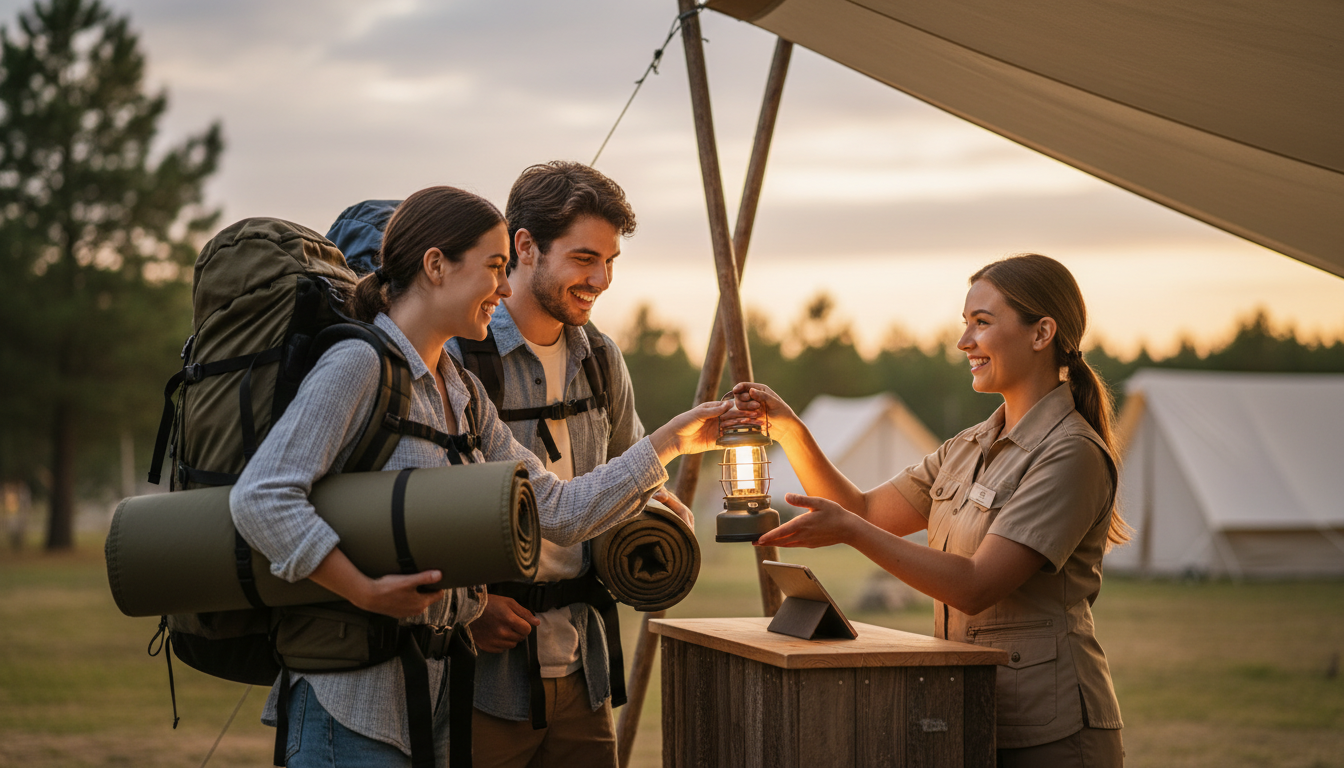
Picture your newest guests rolling in after sunset—headlights off, confidence low, and cell-phone flashlights barely piercing the trees. Now imagine their faces when, instead of a clipboard shuffle, you hand them a palm-sized glowing lantern and say, “Welcome, the night is yours.” Moments later they’re navigating tent stakes, posting photos, and telling everyone back home how your park literally lit up their first night outdoors.
Ready to turn a routine check-in into the brightest marketing asset you own? Keep reading to learn how a simple lantern, triggered by digital self-check-in and tagged in your PMS, can:
• Slash kiosk wait times while adding a personal flourish
• Satisfy dark-sky rules and sustainability goals in one stroke
• Generate free social buzz with every soft beam of light
The workflow is simpler—and more profitable—than you think. Let’s flip the switch.
Key Takeaways
• Hand every new group one small, glowing lantern during self-check-in
• Use a QR code link so guests finish paperwork on phones, then grab the light in seconds
• Faster lines and bright paths turn first impressions from hassle to “wow”
• Warm LED lanterns meet dark-sky rules and recharge, cutting trash and power use
• Your logo on the lantern travels in photos, giving free social media ads
• Mark “Lantern Issued” in the PMS to avoid duplicates and track real ROI
• Team can learn a two-minute script to blend map tips, quiet hours, and light demo
• Bulk buying, recharging, and sponsor logos keep costs low while brand value climbs.
The bullets above serve as your program’s cheat sheet, but they’re only the beginning. Each point connects to a deeper operational advantage, from labor allocation to long-tail marketing reach. By understanding how these elements interlock, you transform a giveaway into a data-backed profit center.
Think of the lantern as a bridge: it links digital check-in to an in-person moment, merges sustainability with guest delight, and converts fleeting arrivals into long-lasting impressions. The sections that follow break down the workflow so you can replicate—or improve upon—it at your own property with confidence.
Digital self-check-in clears the runway
Wisconsin State Parks recently proved that emailing campers a same-day registration link slashes wait times at the gate. Their pilot lets guests finish paperwork on a phone before arrival, freeing rangers to greet instead of process paperwork (Wisconsin DNR study). Private campgrounds already running cloud-based reservation software can mirror this win with a simple QR code in the confirmation email and a tablet at the welcome desk.
Once the paperwork hurdle drops, staff bandwidth reappears—precisely the moment to add a “wow.” A lantern hand-off slots neatly into the new rhythm: scan code, verify name, reach into the color-coded bin, and send the guest glowing toward their site. The entire exchange feels luxurious compared with the old clipboard shuffle and, in practice, speeds total throughput because talk time replaces form-filling.
Lanterns solve nighttime pain points and boost brand
First-time campers fear the dark more than mosquitos, and festival packing lists echo that anxiety. Night in the Country explicitly ranks lanterns, flashlights, and headlamps alongside sunscreen on its must-bring gear list (festival guidelines). By placing a branded lantern in a guest’s hand before they voice the worry, you practice anticipatory hospitality while eliminating late-night “I can’t find my site” radio calls that chew through staff hours.
The light source also travels. Guests clip it to a backpack during a sunrise hike or set it on the patio back home, effectively turning your logo into a roaming billboard that glows each time they press the power button. Every Instagram shot of a softly lit picnic table spreads your name to hundreds of future campers who now equate your park with thoughtful service. Over time, that organic reach outperforms paid ads and cements your brand in a place algorithms reward: authentic user content.
Seamless flow: from QR code to glow
Borrow a trick from large-scale events like Camp EDC, where one wristband given to the lead camper unlocks the entire reservation (Camp EDC process). At your gate, the lead guest receives one lantern for the whole group and a printed note explaining that the light is a communal welcome gift. This prevents duplicate hand-outs, keeps traffic moving, and still feels generous because everyone benefits the second darkness falls.
Back at the workstation, staff tick a Lantern Issued box in the PMS. That digital breadcrumb stops double distribution and primes your inventory report for ROI analysis later. Pair the software tag with two physical bins—charged and needs-charging—so even seasonal employees recognize at a glance which lanterns are ready for night duty.
Budget smart, buy once, shine all season
Start by reviewing last season’s count of first-time campers, then add ten percent for growth and breakage to set an annual quantity. Suppliers often unlock price breaks at 500 or 1,000 units, so negotiating at those tiers keeps margins intact without forcing massive storage commitments. Always order a sample box first; nothing torpedoes goodwill faster than flickering LEDs or flaking paint.
Offset costs through co-branding. A regional utility, outdoor retailer, or tourism bureau may underwrite part of the order if their logo sits opposite yours on the lantern shell. Keep a stash of simpler backup lights for unexpected walk-ins—those $3 units preserve the premium experience without jeopardizing inventory levels.
Keep skies dark and batteries out of landfills
Choose solar-rechargeable or USB-rechargeable lanterns to sidestep the disposable battery headache. If alkaline cells are unavoidable, install a labeled recycle tube near the camp store and mention it during checkout; responsible travelers will appreciate the convenience and share the eco-credit in reviews.
Light color matters, too. Warm-white or amber LEDs align with International Dark-Sky principles, reducing blue-light scatter that can flatten stargazing potential. Including a business-card reminder to switch to low mode after quiet hours lets guests feel eco-smart without sacrificing visibility during setup.
Train staff for two-minute magic
Write a micro-welcome script that bundles map directions, quiet hours, and a 15-second lantern demo into one seamless hand-off. Showing the dimmer switch up front prevents brightness complaints later and gives staff a natural segue into dark-sky etiquette. During orientation week, stage mock check-ins where trainees juggle maps, parking tags, and lanterns under imaginary Friday-night pressure until the motion feels automatic.
The personal touch seals the memory. Hand the lantern to a child or the lead guest, then point toward a trail the light will make safer tonight. That tiny gesture converts an object into a story the family will retell around tomorrow’s campfire—and in next week’s online review.
From soft beams to hard numbers
Print your URL on the lantern so every campsite photo auto-shares your branding. In pre-arrival emails, invite guests to post a lantern shot for a chance at a free s’mores kit; user-generated content will outpace anything your team could stage with a DSLR. Monitor review text for spikes in the words “light,” “lantern,” or “easy arrival” to gauge sentiment shifts without launching a full survey.
Meanwhile, track cost per unit, percentage distributed, and any premium upgrades sold in the camp store—color-changing globes or Bluetooth-speaker lanterns add revenue while amplifying the theme. Over time, compare Net Promoter Score before and after rollout; a single-point lift across a season often justifies the entire program.
Rollout timeline and common pitfalls
Month one: vet vendors, request samples, and test brightness against your quiet-hour policy. Month two: add the Lantern Issued field in your PMS, finalize the staff script, and set up charging stations. Month three: close a sponsorship deal, design signage for the charging shelf, and cue a teaser email to incoming guests so anticipation starts at home.
On opening day, launch with 25 percent of expected volume to stress-test bins, scripts, and battery life. Expect hiccups—missing units, overly bright LEDs—but fix them fast: lock the storage shed, stock a charged swap-out batch, and laminate a cheat sheet of troubleshooting tips. Momentum builds once staff trust the system and guests start posting nighttime photos of your glowing brand.
A single, well-timed lantern can spark rave reviews, social shares, and repeat bookings; now imagine scaling that glow with automation that never burns out. Insider Perks equips outdoor hospitality businesses with the marketing intelligence, AI tools, and hands-free workflows that turn every illuminated check-in into trackable revenue. Ready to make your entire guest journey shine this brightly? Connect with our team today and let’s build the system that keeps your park glowing long after sunset.
Frequently Asked Questions
Q: How do I automatically flag first-time campers so staff know who gets a lantern?
A: Most PMS platforms record guest history, so adding a “Lantern Eligible” field that auto-checks when the email or phone number has no prior stays lets the hand-off cue pop up the moment the QR code is scanned at check-in.
Q: What does a quality rechargeable lantern cost at wholesale?
A: Warm-white USB or solar units run about $6–$9 each at 500 pieces and drop to roughly $5 at 1,000, so a 200-site park that hosts 600 first-time parties a season can light the entire program for less than one weekend’s paid-ad budget.
Q: Won’t the extra step slow down high-traffic Friday arrivals?
A: Because the lantern replaces rather than adds to the clipboard exchange, the transaction averages ten seconds—scan code, verify name, grab light—so total throughput is faster than traditional manual check-ins.
Q: How do I keep hundreds of lanterns charged without clutter or fire risk?
A: A single shelf with multi-port USB strips or a sunny window for solar units, plus “Ready” and “Needs Charging” bins, lets one staffer rotate inventory daily while drawing less power than a household hair dryer.
Q: Are warm-white LEDs really dark-sky compliant?
A: Lanterns rated 2,700–3,000 K emit minimal blue light, and their directional, low-mode design keeps illumination below the horizon, satisfying most International Dark-Sky ordinances.
Q: How do I stop returning guests from expecting another free lantern every visit?
A: The PMS flag switches off after the first stay, and pre-arrival emails frame the light as a “welcome gift—bring it back next time for a camp-store discount,” turning it into a loyalty badge instead of an endless giveaway.
Q: What if a family arrives after the office closes?
A: A locked late-arrival box at the kiosk can dispense one lantern per code; guests scan a QR sticker on the box, which syncs pickup to the PMS and keeps overnight staff off the radios.
Q: How do I track shrinkage or guests grabbing extras?
A: Matching the “Lantern Issued” checkbox to end-of-shift counts in the charged bin highlights discrepancies immediately, so you can reorder or investigate before stock runs short.
Q: Can I offset costs through sponsorship?
A: Local outfitters, utility co-ops, or tourism boards often fund 30–50 percent of unit cost in exchange for a logo opposite yours, a mention in the welcome email, and a countertop flyer, making the program nearly cost-neutral.
Q: How do I prove the lanterns generate ROI?
A: Track Net Promoter Score, review mentions of “lantern” or “easy arrival,” social posts tagging your handle, and upsells of premium lights, then divide the incremental revenue or score lift by program cost to show clear per-guest value.
Q: Could lithium batteries be a safety liability in summer heat?
A: Modern cells include over-charge and thermal cutoffs, and when stored in shaded bins the ambient temperature stays well below the 140 °F threshold, making risk no greater than stocking power banks or Bluetooth speakers.
Q: How customizable are the lanterns without delaying delivery?
A: Most vendors offer one-color pad prints or full-color UV wraps with two-week lead times; approving a pre-production sample keeps artwork simple and timelines tight even during peak season.
Q: Do guests actually keep the lantern or toss it after night one?
A: State park pilots show 80 percent of recipients keep the light at least six months for backyard use, outages, or car kits, extending your brand presence long past checkout.
Q: What training do seasonal hires need to pull this off?
A: A five-minute role-play covering QR scans, hand-offs, and a two-sentence safety tip during orientation is usually enough, with real-world repetition cementing the flow by shift three.
Q: Can I sell upgraded lanterns without undercutting the giveaway?
A: Position the free unit as a “welcome light” and stock color-changing or speaker-equipped models in the store; guests treat the freebie as useful and the upsell as an optional enhancement, turning goodwill into impulse revenue.