

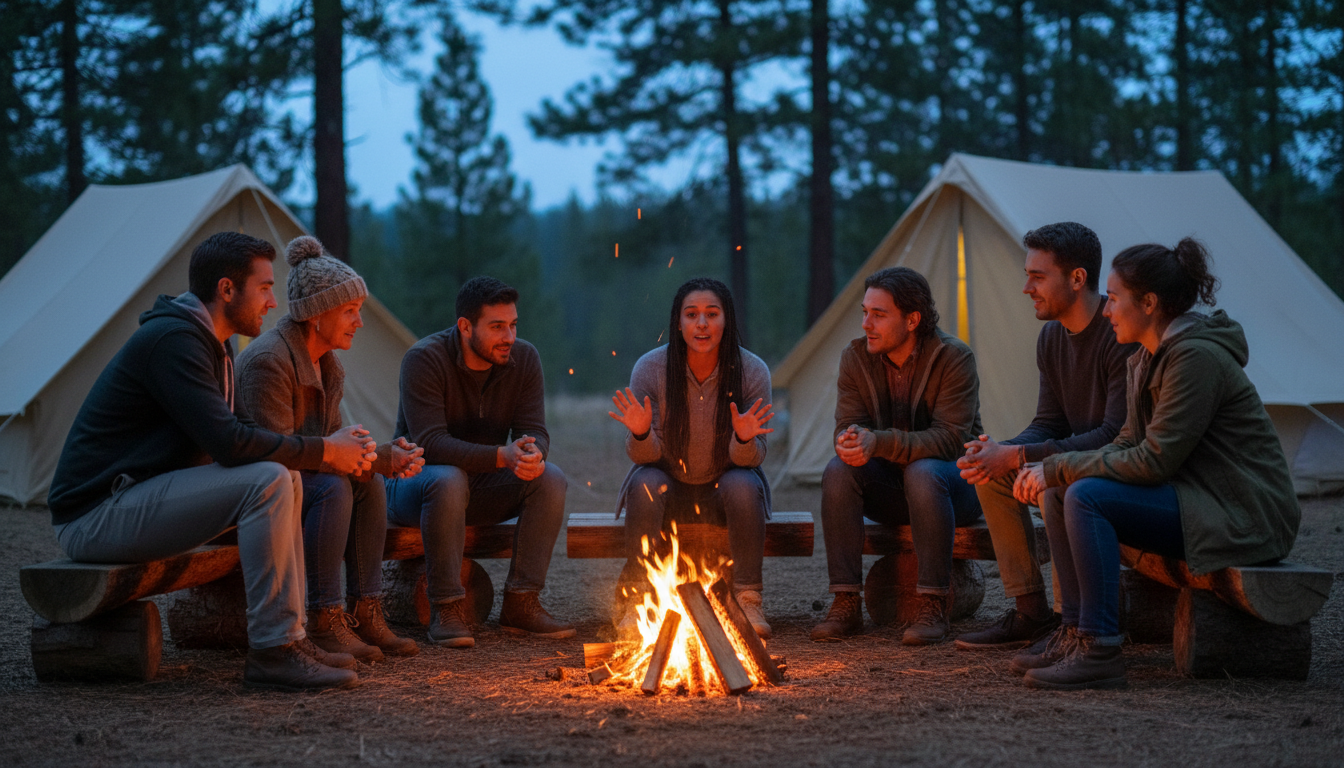
Picture this: every RV pad is booked, the camp store is bustling—and yet you still wonder if guests will remember your park’s name a month from now. What if the memory that lingers isn’t just the mountain view, but the midnight tale of the river ghost told around tonight’s campfire?
This guide shows how a single local legend can turn full sites into full hearts—and repeat reservations. Ready to discover, brand, and monetize the story already hiding in your own backyard? Keep reading; your campground’s most powerful amenity might be a myth away.
Key Takeaways
Every successful legend strategy starts with clarity, and this quick-hit list distills the entire process into actionable checkpoints. Read it once to orient yourself, then revisit it whenever you feel lost in archival dust or font choices. Each bullet marches you closer to a campground that guests will rave about long after they pull out of the gate.
Legend marketing is equal parts creativity and discipline. From the first newspaper clipping you uncover to the QR code beside a moss-covered boulder, these steps ensure the story feels organic, shareable, and profitable. Treat them as mile-markers on a journey where ROI and goosebumps walk hand in hand.
– A fun local legend makes campers remember your park and tell friends.
– Search old papers and talk to locals to find a true story you can use.
– Link the tale to a real spot in the park so guests can see and feel it.
– Rename trails, signs, music, and souvenirs to fit the story and create magic.
– Teach every worker a short, two-minute version to share with visitors.
– Show the legend on your website, emails, videos, and a catchy hashtag.
– Watch surveys, souvenir sales, and social posts to see if bookings go up.
– First 90 days: research, write the story, rename one area, start a night hike, then study the results.
Why Storytelling Wins in 2025
Guests have more choices than ever, yet they crave a sense of place that amenities alone can’t deliver. A legend about a pioneer’s lost gold or a guardian forest spirit transforms passive sightseeing into emotional investment. When campers retell that story to friends, they spread your brand for you, creating organic reach no ad budget can match.
Data backs the trend. Parks across Wisconsin saw pre-season buzz spike after launching narrative-driven events, such as mystery weekends and themed live-music festivals ModernCampground. Award panels notice, too. Mt. Gilead KOA Holiday secured KOA’s 2025 Campground of the Year by weaving generational family stories into guest touchpoints press release, while Coshocton KOA earned ICON status by echoing local canal lore in every email, event, and selfie spot KOA post. Stories aren’t fluff; they’re revenue multipliers and award magnets.
Unearth a Legend Worth Telling
Start your hunt in primary sources—county archives, pioneer diaries, or dusty newspaper reels often overlooked by franchise competitors. These materials ground your narrative in verifiable detail, giving it weight when a curious historian shows up. Spend one afternoon with a local librarian and you’ll emerge with more plot twists than a streaming thriller.
Next, interview the living memory keepers: elders who remember how the mill burned down, tribal cultural officers who can share origin myths, park rangers who know every whispered rumor. Record multiple versions to spot consistent themes and sidestep missteps. Anchor whichever story you choose to something guests can see—an abandoned rail bridge or a peculiar rock spire—so the legend feels inseparable from the land beneath their boots.
Before you script a single sentence, run a cultural sensitivity check. If Indigenous heritage or protected sites appear in the tale, invite tribal representatives to co-create the final storyline. Collaboration prevents appropriation and can turn local communities into enthusiastic partners rather than critics. Finally, keep a one-page source log; it protects you from disputes and becomes an instant training tool for new hires.
Bring the Tale to Life On-Site
Renaming assets is the fastest immersion hack. A generic “Loop B” becomes “Stagecoach Bend,” and every sign along the curve shares a 20-word snippet about dusty travelers and outlaw ambushes. Trailhead kiosks, cabin plaques, and even dump-station signs can drip micro-chapters, nudging campers deeper into the myth.
Go multisensory to seal the memory. Pipe a fiddle playlist from the legend’s era into the camp store, sell a locally scented “Lumberjack Stew” candle, and let dusk lighting paint the “Haunted Hemlock” in ghostly greens. Layer in QR codes for tech-savvy guests to unlock bonus audio, while printed maps satisfy analog souls. Finally, stock enamel mugs, patches, and kids’ activity books starring your legend’s characters; they double as souvenirs and off-site marketing.
Train Staff as Story Ambassadors
Even the richest storyline collapses if employees shrug, “I dunno, some ghost thing.” Equip every team member with a two-minute script that hits the legend’s headline beats. Housekeeping, grounds, and front desk staff should all be able to entertain a shuttle bus or quiet a checkout line with the same core narrative.
Print laminated cue cards, FAQs, and pronunciation guides so seasonal hires feel confident on day one. Host a pre-season campfire rehearsal where employees take turns telling the tale, adding safe personal flair. Reward standout performances with a simple “Legend Laureate” pin or monthly gift card; recognition turns storytelling from optional extra to team sport.
Broadcast the Story Everywhere Guests Click
Your website’s hero image should shout the legend, not hide it on an About page. Rename packages—Two-Night Legend Quest beats Weekend Special—and mention the myth within the first 100 words of your home page. Confirmation emails can tease, “Ask our crew where the first sighting happened,” building anticipation before tires touch gravel.
Short-form video multiplies reach. A 30-second sunrise reel over the guarded waterfall, paired with a whispered voice-over, often outperforms static photos in social feeds. Encourage user-generated content with a snappy hashtag like #ValleyLegendCamp, then repost the best reels in Stories and offer a merch discount to creators. Influencers love a narrative hook; give them plenty of scenes to film.
Measure, Tweak, Repeat
Add one fresh question to your post-stay survey: “Did the [legend name] enhance your visit?” The qualitative responses reveal which plot points hit home. Monitor shoulder-season booking curves around story-centric events—an uptick signals narrative traction.
The cash register tells its own tale. Track sales of branded legend merch as a quick proxy for resonance, and run a social-listening dashboard to count hashtag mentions. Hold a quarterly debrief with frontline staff; retire stale chapters, expand crowd-favorites, and budget for bigger set pieces once ROI proves out.
Your 90-Day Quick-Start Roadmap
Executing a legend strategy can feel overwhelming until you break it into bite-size sprints. The timeline below shows how quickly momentum builds once research, scripting, and signage move in lockstep. Consider it your compass: follow each checkpoint and you’ll transform camp lore into measurable guest excitement before the season’s halfway mark.
To satisfy the three essentials—speed, consistency, and staff buy-in—you’ll tackle tasks in weekly bursts rather than sprawling, open-ended projects. Each milestone compounds the last, so by the time Month 3 arrives, your park will already be testing, measuring, and refining the story experience. That foundation sets up the sprint below.
Week 1: Dig through archives, interview locals, and shortlist one legend that ties to a visible landmark. Draft a one-page source log to anchor accuracy and aid training.
Week 2: Craft a two-minute script, rename one asset, and design a pilot sign with a QR code linking to an audio clip. Print staff cue cards and schedule the first rehearsal.
Week 3: Soft-launch the “Legend Night Hike.” Collect guest reactions at the trail exit and on social media. Offer a free sticker to anyone who posts.
Month 2: Expand signage across another loop, add the legend to the booking engine’s package names, and film your 30-second teaser video.
Month 3: Analyze survey data, merch sales, and social buzz. Host a team debrief, celebrate wins, and outline phase-two upgrades.
Legends spark emotion, but strategy keeps the fire burning. If you’re ready to pair that campfire magic with laser-focused marketing, automated follow-ups, and ad campaigns that echo your story across every screen, connect with Insider Perks. We’ll help you turn one local myth into measurable lift—so the next time guests trade tales under the stars, the legend they share is your brand.
Frequently Asked Questions
Q: How do I know if a legend is legally safe to use without infringing on someone else’s intellectual property?
A: Most regional folklore is in the public domain, but always verify that the specific wording, artwork, or modern adaptations aren’t copyrighted by checking with your state historical society, local authors, or an IP attorney; if you adapt oral history yourself, cite sources and create original graphics to stay clear of infringement claims.
Q: What budget range should I expect for a basic “legend launch” if I’m a smaller, independently owned park?
A: Properties under 150 sites typically spend $1,500–$3,000 in the first season, covering archival research stipends, a handful of custom signs, staff training materials, and a starter run of merch; most owners recoup this through one or two fully booked themed weekends plus retail sales.
Q: My campground caters largely to families with young kids—how do I keep the story engaging but not too scary?
A: Emphasize mystery over horror by focusing on heroic characters, hidden treasures, or nature guardians, and use language like “legend says” instead of “beware,” letting guests opt into spookier evening versions while daytime scripts stay whimsical and age-appropriate.
Q: What’s the fastest way to train seasonal staff who arrive mid-summer?
A: Place a two-minute audio file and printable cue card inside your onboarding packet, then schedule a 15-minute campfire huddle where a supervisor models the story; repetition in daily pre-shift meetings cements consistency without lengthy workshops.
Q: How do I measure whether the legend is actually boosting revenue or just adding work?
A: Track three simple metrics—legend-branded merch sales, event occupancy compared to non-themed weekends, and the percentage of post-stay surveys mentioning the story—then compare those figures to the same period last year to quantify lift.
Q: Can I weave Indigenous stories into my brand if tribal representatives won’t co-create but give verbal permission?
A: Verbal approval is a start, yet best practice is a written agreement outlining how the story will be presented, any royalties or donations, and review rights; this safeguards cultural integrity and shields your business from future disputes.
Q: Our park is part of a national franchise—do I need corporate sign-off before renaming loops or packages?
A: Yes, submit proposed names and signage mock-ups to your franchise’s brand compliance team early; most franchisors welcome place-based storytelling but want assurance the tone aligns with network standards and trademark guidelines.
Q: How do I prevent the narrative from feeling cheesy or forced to today’s authenticity-seeking guests?
A: Ground every detail in verifiable local geography, keep descriptions concise, and let guests discover the story through organic touchpoints—like a QR code by an actual stone foundation—rather than over-the-top props that scream theme-park.
Q: What if the first legend I choose doesn’t resonate with guests—do I rebrand everything?
A: Start with flexible assets like trail signs, digital content, and limited-run merch so you can pivot easily; if engagement is lukewarm after one season, introduce a “newly unearthed chapter” instead of a full reset, preserving brand equity while refreshing interest.
Q: Are there insurance or liability concerns with hosting night hikes or ghost tours?
A: Most policies already cover guided activities, but notify your carrier about any extended hours, open flames, or uneven terrain, document participant waivers, and equip guides with radios and first-aid kits to satisfy underwriters and minimize risk.
Q: How can I integrate the legend into my digital marketing without redesigning my whole website?
A: Add a banner section on your home page, rename at least one booking category, weave the story teaser into confirmation emails, and pin a short vertical video to your social profiles; these quick wins deliver narrative punch without a full rebuild.
Q: Does telling a local legend limit my ability to host unrelated themed weekends later on?
A: Not at all—think of the legend as your park’s “master storyline” that runs year-round; you can layer in distinct events like 80s weekends or wine festivals and simply reference how they “join the valley’s ongoing tale,” creating cohesion rather than restriction.
Q: How can I encourage user-generated content around the legend?
A: Offer a small incentive—like a free s’mores kit or 10% merch discount—for posts using a dedicated hashtag, and place photogenic markers (murals, cut-outs, scenic overlooks) at points mentioned in the story to make filming and tagging effortless.
Q: My park has limited cell service; will QR codes and digital elements still work?
A: Print micro-chapters directly on signs and provide downloadable PDFs at check-in so guests can save content offline; QR codes remain useful for those with service, but your core narrative stays accessible regardless of connectivity.
Q: How soon should I start promoting the legend after I commit to it?
A: Begin teasing as soon as you’ve finalized the core plot and secured permissions—preview it in your email newsletter and social stories during development to build anticipation, then unveil the full experience on opening weekend for maximum buzz.