

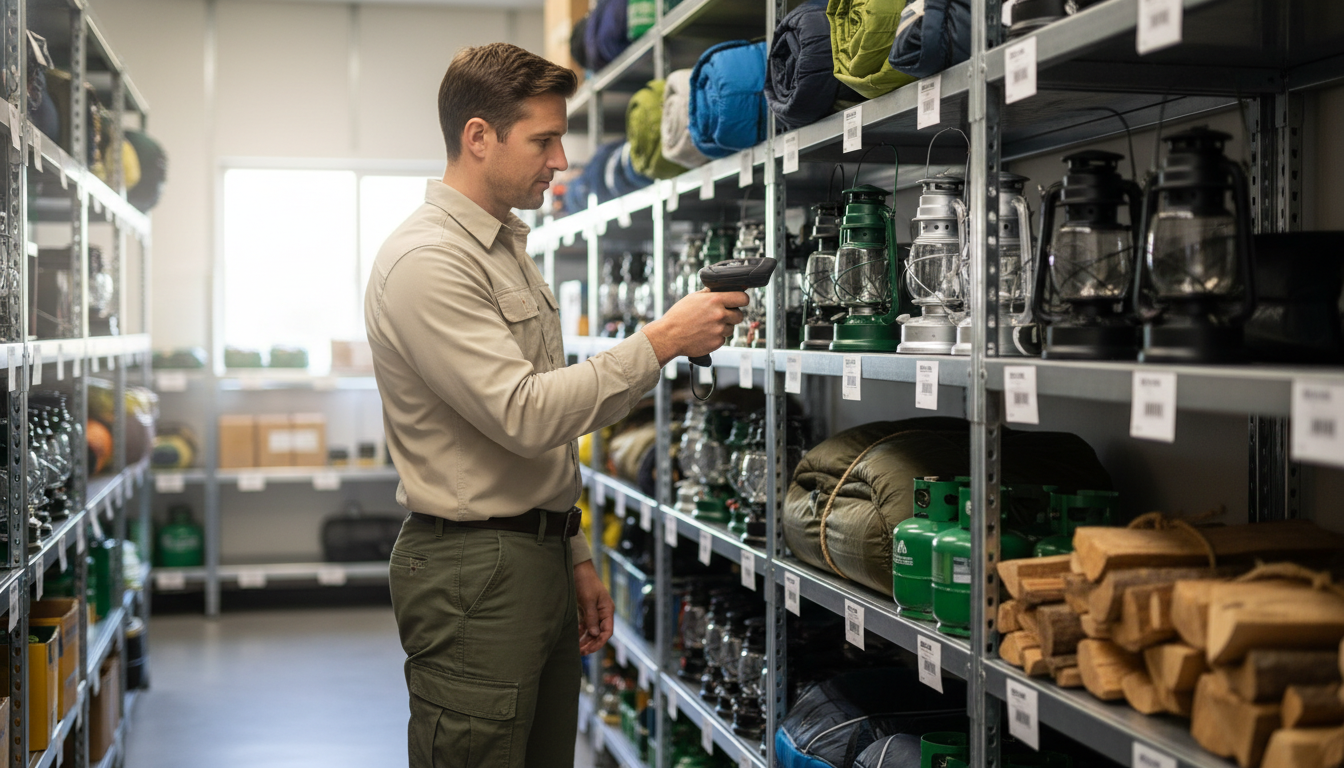
The last thing a guest wants to hear on a sold-out Saturday is, “Sorry, we’re out of firewood.” Yet that scramble happens every season when clipboards, sticky notes, or half-updated spreadsheets let supplies slip through the cracks.
What if a five-second scan could tell you exactly how many bundles are left, which kayak needs maintenance after 20 rentals, and which vendor order is about to miss its lead time—before the rush begins? That’s the everyday reality for parks that swap manual counts for barcode or QR tracking, and it’s shaving 10–15 % off wasted inventory spend while unlocking new on-site sales.
Ready to turn stock-room chaos into real-time clarity—and reclaim the hours your team loses hunting for missing gear? Keep reading; the roadmap is simpler and cheaper than you think.
Key Takeaways
• Paper notes and spreadsheets cause mix-ups, stock-outs, and wasted money
• Scanning a barcode or QR code shows exact stock in about five seconds
• Parks that switch to scanning save 10–15 % on inventory and boost sales
• Barcodes are cheap and best for simple, high-volume items like snacks
• QR codes hold more data, scan with any phone, and suit rentals or gear care
• Inventory software auto-updates counts, sends reorder alerts, and links to sales
• Four-week rollout: clean item list, label shelves, train staff, then go live
• Scanning also tracks rentals and maintenance so equipment lasts longer
• Cost of scanners and labels is often earned back in one busy weekend.
Why Manual Counts Fail in Outdoor Hospitality
Paper tallies look harmless until the first holiday weekend exposes their blind spots. Stock-outs on firewood, propane, or souvenir tees directly translate to lost revenue and unhappy campers. On the flip side, pallets of slow-moving bug spray tie up cash that could fund new amenities or marketing campaigns. Emergency truck runs to the nearest wholesaler burn labor hours and fuel, compounding the hidden expense.
RoverPass studied parks still using spreadsheets and found they misallocate 10–15 % of their retail or maintenance budgets because items get lost, double-counted, or never reordered on time (RoverPass data). Manual receiving is the biggest leak; what arrives rarely matches what was ordered, and the discrepancy lives on until someone notices an empty shelf. When margin is tight, those leaks decide whether you expand next season—or just survive.
Barcode or QR? Choosing the Best Code for Your Campground
Barcodes remain the workhorse for high-volume, low-information products like ice, snacks, or cleaning chemicals. They cost pennies, scan in half a second with a handheld reader, and stand up to dirt if you add a laminate strip. The limitation is data capacity: a barcode holds little more than the SKU, so instructions or serial numbers stay in the software.
QR codes carry more data and scan with any modern smartphone—no extra hardware needed. That versatility makes them perfect for rental gear, self-checkout kiosks, or equipment that lives outdoors. Scan a kayak’s QR tag and the screen can display care tips, log usage hours, and decrement inventory simultaneously. Whichever symbol you choose, durability matters: weatherproof vinyl for kayaks and golf carts, laminated shelf labels for humid bathhouses, and thermal labels for freezer goods.
Software That Turns Scans Into Action
For small-to-mid properties, CampLife’s Point of Sale module plugs barcode scans directly into reservations. When a guest adds a s’mores kit online, the system removes that SKU from stock immediately and schedules a reorder if on-hand dips below your threshold (CampLife POS). Cloud dashboards let you check firewood levels from your phone on a Sunday night, while auto-generated purchase orders pull vendor data and suggested quantities so there’s no triple entry.
Parks running larger retail footprints or wanting cashier-less shopping lean on VenueSumo. Guests scan a QR code at the camp-store entrance, build a mobile cart, and pay without forming a line. Each sale updates the central ledger, which in turn triggers economic order quantities, flags late shipments, and syncs multiple stock locations—from gift shop to maintenance barn (VenueSumo campground). Because the software captures lead times and invoice numbers, you can spot price creep or freight surcharges the moment they appear.
A Four-Week Roadmap From Spreadsheet to Scans
Week 1 – Clean your item master. Export every SKU from existing sheets, merge duplicates, and delete orphan entries. Assign a unique barcode or QR value to each remaining item. Most parks discover that up to 20 % of the rows vanish during this sweep, instantly streamlining future counts and reports.
Week 2 – Label and lay out. Zone shelves by category—cleaning, retail, rentals—and give every bin its own barcode. Fast movers sit at waist height near the door; slower movers fill the top or bottom rows. Color-coded labels (blue for food, green for maintenance, red for chemical hazards) speed new-hire orientation and support FIFO rotations.
Week 3 – Train the team. Draft a one-page quick-start guide with photos: scan to receive, scan to sell, scan to transfer. Laminate copies at each station and bake scanning into new-hire orientation. Role-based permissions stop cashiers from deleting transactions while letting supervisors approve system-suggested purchase orders. Post weekly scan-compliance scores in the breakroom—friendly competition keeps standards high.
Week 4 – Go live. Receive the next vendor shipment with barcode receiving: scan each case, close the PO, and watch on-hand counts update instantly. After two weeks, run a spot-check cycle count. Fine-tune minimum levels and edit auto-generated purchase orders during a calm mid-week review, keeping control without manual number-crunching.
Extend Tracking to Rentals and Maintenance Assets
A durable label on every kayak, golf cart, or linen set turns gear checkout into data gold. Staff scan the tag when a guest takes the item and again upon return. The software logs rental cycles, flags overdue gear, and predicts replacement dates before equipment fails mid-season.
Maintenance inventories benefit too. Spark plugs, mower belts, and lightbulbs live under the same program as T-shirts and trail maps. Techs scan a belt out of the bin, and the count drops toward its reorder point. That means no stalled repairs for want of a five-dollar part—and a complete audit trail when an item is lost or damaged, making internal cost allocation or guest billing a one-click task.
Plan Seasons and Events With Data, Not Gut Feel
Historic scan data is a forecasting engine hiding in plain sight. Tag last year’s Memorial Day, Fourth of July, and fall festival periods, then compare sales velocity to today’s on-hand levels. If firewood took two weeks to arrive last winter, raise its minimum stock in January. When you schedule a food-truck weekend, add a temporary buffer that auto-expires once the promotion ends.
Post-season, run a debrief. Compare forecasted versus actual usage, shrink minimums on slow movers, and bundle leftover mugs with hot-chocolate kits to clear shelves without steep discounts. Each refinement inches your ordering accuracy closer to 100 %, freeing cash and floor space for higher-margin items next year.
Barcodes tame the stock room, but when their data feeds AI-driven forecasts, automated reorders, and targeted upsell campaigns, they also supercharge your bottom line. That bigger picture is what we engineer at Insider Perks—tying inventory, marketing, and guest experience into one friction-free loop. Curious how a single scan can trigger a replenishment order, a mid-stay firewood offer, and the five-star review that follows? Schedule a quick strategy call with our team and see how effortlessly your park can run when technology does the counting—and the selling—for you.
Frequently Asked Questions
Q: How much does it really cost to add barcode or QR tracking to a small campground store?
A: For most parks the up-front spend is roughly $300–$800 for two Bluetooth scanners, a label printer, and a starter roll of weather-resistant labels, plus $0.03–$0.07 per label thereafter; if you already subscribe to a POS such as CampLife, the software module is often included or runs under $50 a month, so the entire system typically pays for itself after preventing one or two peak-weekend stock-outs.
Q: Can I just use staff smartphones instead of buying dedicated scanners?
A: Yes—modern iOS and Android cameras read QR codes instantly and many cloud POS apps let employees scan barcodes with the phone’s camera as well, so you can launch with zero hardware beyond a label printer and add rugged handheld scanners later if speed or durability becomes a concern.
Q: What happens if our Wi-Fi or cell service drops in the camp store?
A: Most campground-focused inventory apps cache scans locally; staff can keep selling and receiving items offline, then the data syncs to the cloud once the device reconnects, so you never lose counts or sales history during a brief outage.
Q: How do I tag awkward items like loose firewood bundles or single bags of ice?
A: Print a durable shelf or bin label with the SKU’s barcode or QR, place it at eye level, and instruct staff to scan the fixed label when they sell or restock the item; the same approach works for propane refills, kayak rentals, or anything that doesn’t hold a sticker well.
Q: Will the inventory system talk to my reservation or accounting software?
A: CampLife, VenueSumo, and most modern POS platforms offer direct integrations or Zapier connectors that push sales data to QuickBooks and pull guest details from your reservation engine, so you avoid double entry and capture every upsell on the same folio.
Q: How long does it take to train seasonal employees who have never used scanners?
A: A 15-minute hands-on demo plus a one-page cheat sheet is usually enough because the workflow is simply “scan item, tap quantity, choose payment,” and parks that post scan-compliance scores in the breakroom report near-perfect adoption within the first weekend.
Q: We only miscount occasionally—how much accuracy improvement can we expect?
A: Parks that switch from paper or spreadsheets to barcode tracking typically move from 85–90 % count accuracy to 98–99 %, which means almost every reorder point, labor forecast, and financial report is built on reliable numbers instead of best guesses.
Q: Does barcode tracking reduce shrinkage or employee theft?
A: Because every unit is scanned out and matched to a user ID or cash drawer, discrepancies surface immediately during cycle counts, creating a transparent audit trail that discourages casual theft and pinpoints training gaps before losses add up.
Q: How do we handle perishables or vendor pre-labeled items that arrive with their own UPC codes?
A: You can keep the vendor’s UPC for speed at checkout while layering your internal SKU behind the scenes, and for perishables the software lets you attach expiration dates so FIFO prompts and spoilage alerts fire automatically.
Q: What kind of payback period should a 150-site RV resort expect?
A: Resorts averaging $8,000 a month in camp-store and rental revenue usually recover hardware and setup costs in one operating season through 10–15 % lower inventory spend, faster receiving, and the extra sales captured by avoiding out-of-stocks.
Q: Is guest-facing QR self-checkout secure for payments and data privacy?
A: The leading campground POS apps use tokenized, PCI-compliant gateways identical to those in traditional card terminals, and guest data lives in encrypted cloud servers, so self-checkout carries no more risk than a standard card swipe at your front desk.
Q: Can we roll out scanning in the camp store first and add maintenance parts later?
A: Absolutely; most systems let you switch modules on as you’re ready, so you can stabilize retail inventory, then tag rental gear, housekeeping linens, and maintenance parts at your own pace without having to reconfigure the core database.