

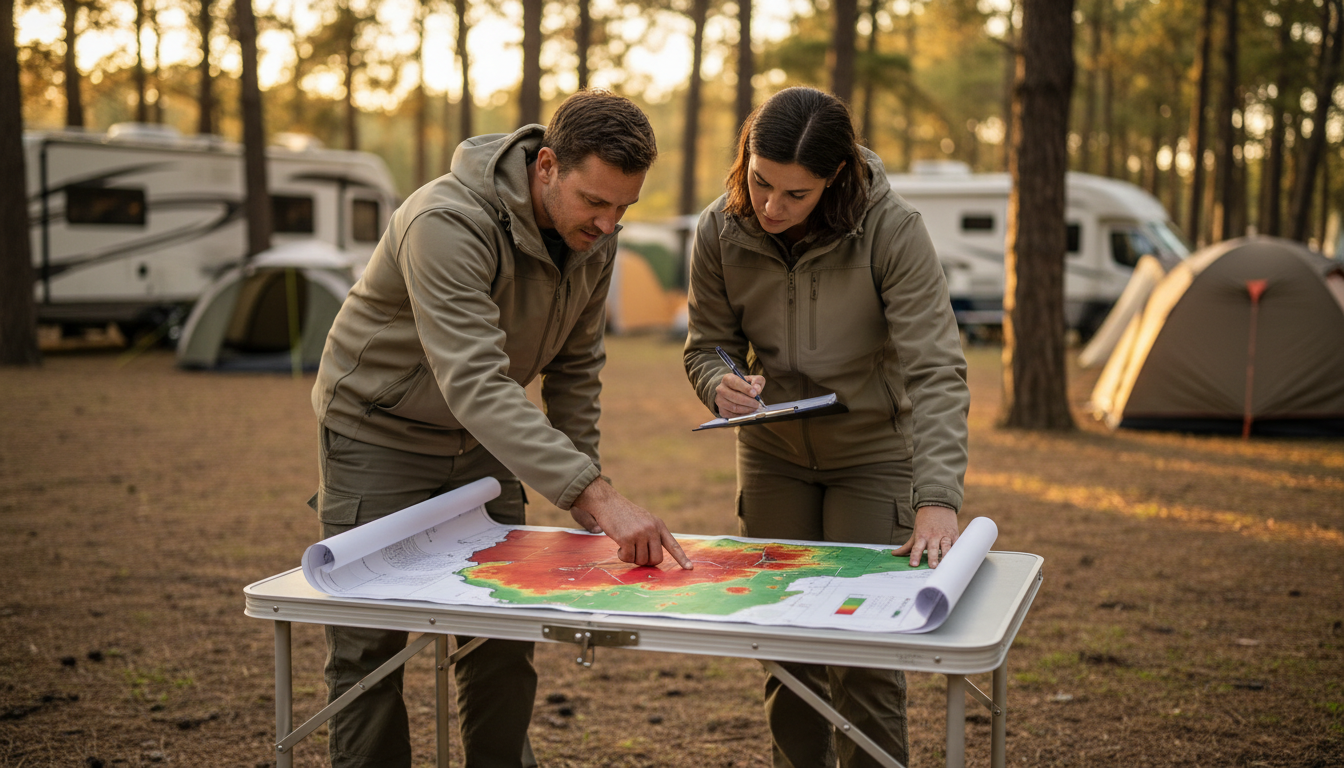
Saturday check-in is surging, the bathhouse floors are muddy again, a food truck spot just opened up—but which corner of the park is actually packed right now? Pull out your phone, glance at a live heat map, and the answer glows in red. Tap a site, assign a cleanup in two clicks, and watch a housekeeper’s icon move across the screen while guests post five-star reviews about “how spotless everything always is.”
If a simple color layer can lift rates on your hottest loops by 15%, slash response times by 30%, and pay for itself before the next billing cycle, can you afford to ignore it? Keep reading to see how a handful of sensors and a mobile checklist can turn every inspection route into a real-time profit engine—and why the owners already using them are quietly pocketing 25% more revenue per season.
Key Takeaways
– Heat maps color busy areas red and quiet areas blue so everyone knows where to go
– Staff check the map on phones and finish jobs 30% faster
– Parks using this tech make about 25% more money each season
– A 10-minute morning huddle sets cleaning, maintenance, and prices for the day
– You only need good Wi-Fi, steady power, and a few low-cost sensors to start
– Begin with 3–5 sensors in hot spots, test, then add more if it works
– Mobile checklists let workers tap icons to mark jobs done in seconds
– Guest data is kept private and the same system boosts safety alerts
– Past heat maps help plan new features like coffee carts or glamping domes.
The Ten-Minute Morning Huddle
Picture sunrise over the pines, coffee steaming, and a tablet glowing like a campfire ember. Managers, housekeepers, and the maintenance lead crowd around the screen as red halos pulse over Loop C, yellow dots blink at the dump station, and a calm blue blankets the ridge-side pads. In ten minutes they set the entire day: two cleaners start at the bathhouse, one groundskeeper hits the dog park, and the taco truck gets a primo spot beside the red-hot lakefront trail.
Because everyone can literally see the workload, debates vanish and execution accelerates. Staff who used to roam aimlessly on golf carts now move with GPS-like precision. Guests notice the difference almost immediately, leaving reviews about sparkling restrooms—even on peak Saturdays—and recommending the park to friends. Revenue, response times, and morale rise together, proving that a shared visual language beats handwritten checklists every time.
Heat Maps and Mobile Inspections Explained
A heat map transforms raw movement data—Wi-Fi pings, reservation swipes, RFID wristbands, or people-counting sensors—into a living topography of demand. Reds reveal heavy footfall, blues expose under-used corners, and the colors shift as the day unfolds. Crucially, the map is more than pretty colors; it is a GPS for profitability that updates every few seconds.
Mobile inspections complete the loop. Each time a housekeeper taps “cleaned” or a tech logs “needs repair” on a phone, the entry drops a pin on that same heat layer. Managers no longer juggle radio chatter; they drag and drop tasks, and the app reroutes crews in real time. Parks combining these two tools report revenue gains of roughly 25 percent and leaner staffing schedules. When data collection and task execution share one canvas, even small teams operate like a well-funded resort chain.
Build the Backbone Before You Add Dots
Great heat maps crumble without reliable connectivity, so a site-wide survey is step one. Walk the loops with a Wi-Fi analyzer, note cellular shadows, and pop open electrical panels to check load capacity. Install mesh access points on bathhouse roofs or existing light poles to avoid trenching costs, and drop a rugged gateway within 100 feet of the densest sensors so data buffers locally during brief outages.
Power matters as much as signal. Stationary cameras or people-counters thrive on PoE lines that deliver both electricity and bandwidth through a single cable, slashing contractor hours and future maintenance. Quarterly, a staffer should flip breakers, clear vent screens, and install firmware updates; ten minutes of preventative rebooting keeps latency low and batteries alive. Solid infrastructure is invisible to guests, yet it underpins every rate hike, guest review, and operational win your heat map will deliver.
Pilot First, Scale Fast
Start with three to five sensors in obvious hotspots—bathhouse entrances, the camp store doorway, and the food-service window. The upfront cost is almost negligible, but the data pours in instantly, verifying that your dashboard matches boots-on-the-ground reality. Operators who launch this kind of micro-pilot usually gain enough confidence to expand park-wide within weeks.
Early wins spark cultural change. A single week of accurate foot-traffic visuals can reveal that the dog-wash station is morning-rush red while the playground sits blue until noon. Suddenly you know where to post a self-service coffee cart—or where to install a solar shade structure—using proof, not hunches. Data-driven decisions inspire staff and reassure owners that every dollar spent on sensors produces measurable ROI.
Turning Color into Action on the Ground
Once live, the map becomes a task engine. Bathhouse Loop C turns scarlet and housekeeping auto-receives a push notification; they clean it first, mark “complete,” and the halo fades to green. Maintenance sees a yellow dot at Site 42, swings by with the right parts, and fixes a leaky spigot before the incoming guest even parks. With windshield time eliminated, the same team covers more ground and still clocks out on schedule.
Revenue managers get an equally powerful lever. Lakefront spots glowing red fetch 10–15 percent higher nightly rates, while cool ridge-side pads bundle firewood or kayak rentals to drive bookings. Properties deploying these tactics typically recover sensor and software costs inside sixty days. All it takes is a live feed and the willingness to let data guide pricing instead of tradition.
Protecting Guests and Data in One Move
Today’s traveler expects transparency, so smart parks post concise privacy notes at check-in explaining that movement data remains anonymous and auto-purges after sixty days. Many offer opt-out wristbands with no RFID chip, proving that guest comfort outranks data greed. Physical segmentation helps, too: sensor networks run on their own SSID, separate from public Wi-Fi, so malware on a camper’s tablet can’t hop into operational systems.
Cyber hygiene must match campground hygiene. Device passwords and encryption keys rotate twice a year, default credentials get erased, and any removed sensors spend the off-season in a locked cabinet with sign-in sheets. Label gateways with a help-desk number—not the model name—so staff can troubleshoot without gifting intel to hackers. When operators guard data this tightly, they earn customer trust and fend off regulatory headaches simultaneously.
Training Crews for Instant Adoption
Technology only works when people use it, so mirror the inspection checklist to the route crews already walk. Tappable icons—broom for clean, wrench for fix—let seasonal employees log issues in seconds, even if English isn’t their first language. Each shift assigns a “heat-map captain” who opens the dashboard during morning briefing, checks status at lunch, and flags unresolved pins before clock-out.
Analog backups smooth over dead zones. Laminated cheat sheets clipped to golf-cart keys remind staff what to record when connectivity blips, and the app syncs notes once the network returns. Recognition fuels adoption more than rules ever could; a five-minute shout-out to the housekeeper who cleared the most red alerts turns data entry into a badge of honor rather than a chore.
Readiness When Seconds Matter
Safety use cases sell themselves the first time occupancy spikes after quiet hours around a communal fire ring. The system pings security, who arrive before sparks turn into a forest-service report. During wildfire drills, evacuation routes overlay the same map, letting staff watch bottlenecks form and redirect guests on the fly.
Sensors stuck to propane grills send temperature or leak alerts, dispatching maintenance before anyone smells gas. Color-coded muster-point signs match the dashboard palette—green for clear, red for full—so guests intuitively follow staff instructions if a siren sounds. Post-incident, a time-stamped movement layer reconstructs events for insurers, proving diligence and accelerating claims.
Data That Plans Your Future
Historic heat maps become a crystal ball for capital projects. Last season’s 15-minute interval data might reveal a 7 a.m. dog-park surge, making a self-serve coffee cart almost too obvious to ignore. Shoulder-season blue zones may justify repurposing underused pads into premium glamping domes that command higher ADR.
Layer weather records over visitor flows and discover that drizzle halves trail traffic; suddenly, a covered activity hub leaps to the top of the budget list. Visual before-and-after maps turn into compelling decks for lenders, showing red halos around current hot spots and painting a vivid ROI picture for fiber expansions or new bathhouses. When capital decisions lean on data instead of gut feel, money flows more easily from banks—and from guests.
Case Snapshot: Pacific Northwest Glamping Resort
A luxury tent resort overlooking a misty lake installed sensors at lakefront paths and ridge-side yurts, then armed staff with mobile checklists tied to the same heat map. Within one month, management raised prices on lakefront tents and promoted mid-week specials to under-used ridge sites. Seasonal revenue jumped 25 percent, maintenance response times fell 30 percent, and reviews praised the “uncrowded feel” despite record occupancy.
The story traveled fast. Competing parks touring the property saw a single live dashboard running the show—no binders, no radio chaos—and went home with new budget lines for mesh Wi-Fi and sensor gateways. Industry analysts now note that most 2025 RV resorts plan for this infrastructure on day one, avoiding costly retrofits.
Your Quick-Start Roadmap
Overhauling an entire park can feel daunting, but a streamlined roadmap keeps everyone focused. By breaking the rollout into manageable steps, operators move from concept to live data without getting bogged down in analysis paralysis. The checklist below condenses the most successful playbooks into bite-size actions you can tackle this week.
1. Run a connectivity and power survey to locate dead spots and check breaker loads.
2. Drop three to five sensors in high-traffic zones and tie them to your existing PMS; live data should appear on your phone before sunset.
3. Launch mobile inspection checklists that mirror current staff routes, using icon-based taps so even brand-new seasonal hires contribute accurate pins.
4. Hold a daily ten-minute heat-map huddle to set staffing, reprice hot loops, and direct maintenance.
5. Scale sensors steadily, refine pricing rules, and dive into historic data each off-season for capital planning.
Treat this roadmap as a living document that evolves alongside your park. Revisit the steps monthly, compare results against your baseline, and adjust the sequence to match on-the-ground realities. Within a season, the practice of testing, deploying, and reviewing will feel second nature, embedding data-driven habits across every department.
Every glowing dot is a decision waiting to be automated, a rate bump ready to be triggered, a five-star review just a swipe away. Pair that live intelligence with marketing muscle, and your park stops reacting to demand and starts orchestrating it. Insider Perks already powers this full loop for forward-thinking campgrounds, RV parks, and glamping resorts—laying the fiber, syncing the sensors, and turning every byte into bankable revenue. Discover what your map can really do. Reach out now for a quick strategy session and watch the red on your screen transform into a greener bottom line.
Frequently Asked Questions
Q: How is the foot-traffic data actually collected—do I need cameras everywhere?
A: No; most operators rely on small Wi-Fi or Bluetooth beacons, doorway people counters, or RFID taps from wristbands that register anonymous pings, so you can blanket high-traffic areas without installing privacy-sensitive cameras or running miles of cable.
Q: What does a basic starter kit cost and when does it usually pay for itself?
A: A pilot with three to five sensors, a mesh gateway, and app licenses typically lands under $3,000, and parks that use the heat map to raise rates on hot loops or tighten staffing often cover that spend within one to two billing cycles, according to the case studies cited above.
Q: Will the system work if parts of my property have weak Wi-Fi or spotty cell service?
A: Yes; sensors buffer data locally until they reconnect, and mesh access points can be solar- or PoE-powered to fill dead zones, so real-time accuracy holds even in far-flung ridge sites or heavily wooded loops.
Q: Do I need an in-house IT person to maintain all this new gear?
A: Not usually; most vendors ship pre-configured hardware, provide cloud dashboards, and run remote firmware updates, leaving on-site staff with little more than quarterly reboots and the occasional battery swap.
Q: How hard is it to teach seasonal staff who aren’t tech-savvy?
A: Training generally fits inside a single 30-minute session because the mobile app mirrors the paper checklist they already know; tap a broom to mark “clean,” a wrench to flag “repair,” and the system handles the rest.
Q: What happens to guest privacy—are names or device IDs stored?
A: Foot-traffic data is anonymized at the edge, purged automatically after a set retention window (commonly 60 days), and displayed only as color intensity, so no personally identifiable information ever appears on the dashboard.
Q: Can the heat map integrate with my existing PMS and housekeeping software?
A: Most platforms offer open APIs or pre-built connectors that sync reservation data, site numbers, and task statuses, so housekeeping assignments and dynamic pricing rules update in real time without double entry.
Q: How durable are the sensors in harsh weather or curious wildlife environments?
A: Outdoor-rated enclosures carry IP65–IP67 seals, withstand temps from –20°F to 120°F, and include tamper screws or camouflaged housings that have survived everything from monsoon rains to raccoon inspections.
Q: What is the typical battery or power requirement for each device?
A: Doorway counters and beacons run 18–24 months on AA lithium packs, while fixed cameras or gateways draw PoE or small solar panels, eliminating the need for trenching new electrical lines.
Q: Can I move or add sensors as the park expands?
A: Absolutely; devices pair to the network via QR code or NFC tap, so you can redeploy them to new loops, bathhouses, or glamping domes in minutes without re-architecting the whole system.
Q: How does the heat map actually drive higher nightly rates?
A: By visualizing which pads glow red at different times, you can automate yield rules that nudge lakefront or holiday-weekend sites 10–15 percent higher while bundling underused blue zones with add-ons, instantly monetizing real-time demand rather than relying on static seasonal pricing.
Q: What if the network goes down during a sold-out weekend?
A: The app stores tasks offline, sensors keep buffering, and once connectivity returns the backlog syncs automatically, so crews keep working from laminated cheat sheets and no data is lost.