

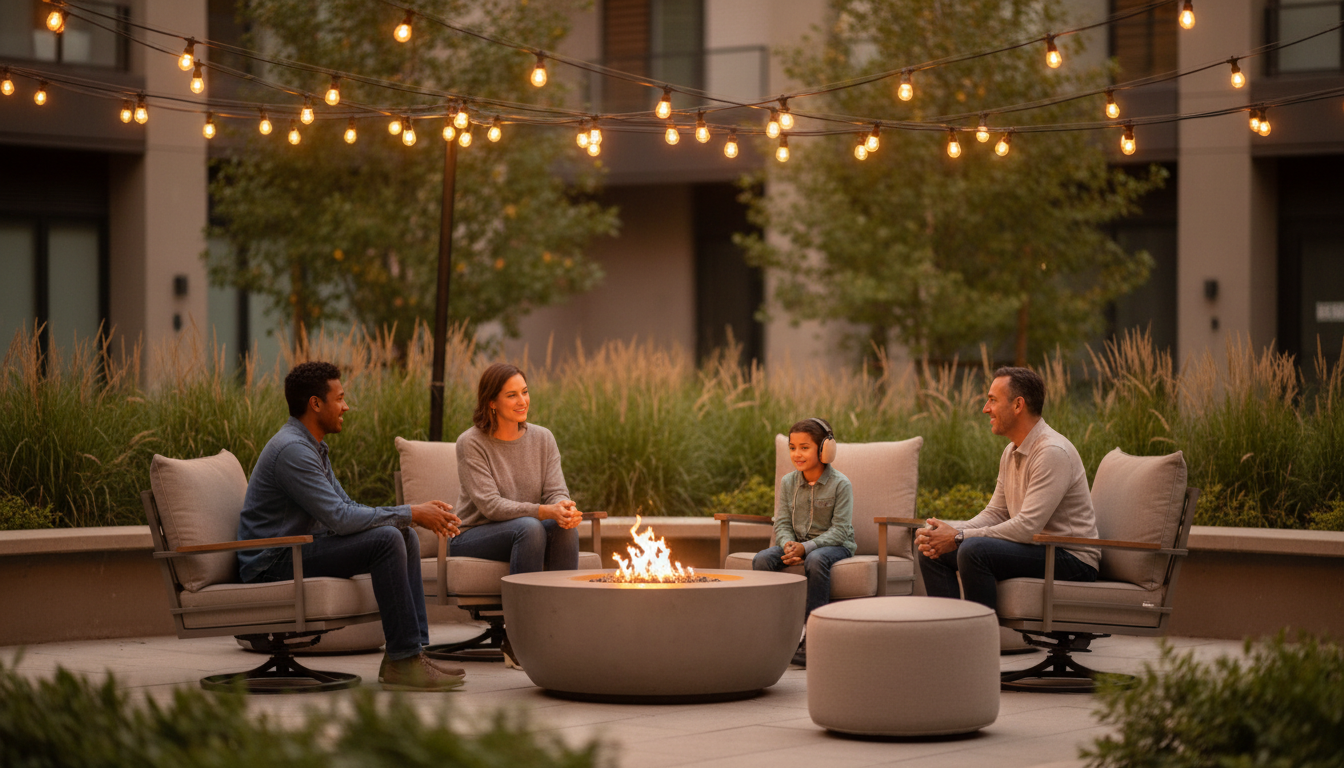
Picture your busiest Saturday night: the flames are perfect, yet half the chairs sit empty because they’re too low for Grandpa’s knees, too smoky for a sensory-sensitive child, or impossible for a wheelchair to reach. What if the very heart of your campground—the fire circle—could welcome every guest, melt complaints, and spark rave reviews all at once?
Unlock that possibility with a sensory-friendly design that pairs adjustable-height seating with smarter layouts, low-glare lighting, and near-smokeless rings. Done right, it turns an ordinary pit into a revenue-boosting amenity guests remember long after check-out.
Ready to see how a few inches of lift and a dash of foresight can light up your entire property? Keep reading—your next five-star feature starts here.
Key Takeaways
Small, intentional tweaks can make your fire circle comfortable for every age and ability while tightening safety and boosting revenue. Think of this checklist as both a design blueprint and a marketing roadmap: the more barriers you remove, the more families stay late, spend more, and post glowing photos online. Use the quick-hit points below as an on-site reference for managers and maintenance teams alike.
– Add two fire ring heights: a low one for kids and a taller 18-inch one so wheelchairs and older knees reach the flames
– Pick “smokeless” rings and a spark screen to cut most smoke and random pops
– Give guests strong chairs that can raise or lower; keep spare pins and bolts for fast fixes
– Space seats 4–5 feet from the fire and leave wide, flat paths plus big turning circles for wheelchairs
– Use quiet ground like pea gravel or pavers and a bumpy border to warn when feet get close to heat
– Put gentle, low-glare LED lights under benches so people see without killing the campfire glow
– Post easy-to-read safety rules and place a fire extinguisher and ash bin nearby; staff do a quick dusk check
– Sell add-ons like comfy cushions, VIP s’mores kits, and story nights to boost money and five-star reviews.
The fire ring that fits every guest
A successful sensory-friendly fire circle starts at flame level. Most commercial rings sit 6–11 inches high, perfect for marshmallow-hungry kids but tough on aging knees and unreachable from a wheelchair. Add a second ring around 18 inches tall—research shows this height lets wheelchair users and guests with limited mobility tend flames without shoulder strain (ParkTables study). Position the taller ring adjacent to or concentric with the standard one so families can choose their comfort zone without feeling segregated.
Smoke is the next hurdle. Secondary-combustion or smokeless rings cut visible smoke by up to 80 percent, easing eye and throat irritation for neurodiverse visitors and anyone wearing contact lenses. A hinged spark screen tamps down random crackles while providing quick access for s’mores. Pair these features and you’ve already answered two common review-site complaints—smoke and lack of accessibility—in one upgrade.
Seating that adapts—and lasts
Inclusive fire circles collapse without durable, height-adjustable seating. Powder-coated steel frames paired with composite or thermally modified wood slats shrug off freeze-thaw cycles, bleach, and power-washing. Lift mechanisms matter just as much: simple pin-and-hole or gas-assist lifts feature fewer moving parts, translating to fewer repairs and less downtime during peak season.
Plan maintenance like you plan check-ins. A quarterly ten-minute checklist—torque bolts, inspect finishes, confirm seat-lock integrity—can be handled by any staffer. Keep spare pins, bolts, and non-skid feet on-site, and design your seating pad so a single chair slides out for off-season storage without disturbing the entire ring. Long-term durability meets quick-swap convenience, and empty seats never stay empty for long.
Layouts that calm the senses
Comfort begins with spacing. Position seats four to five feet from the fire; it’s the sweet spot between cozy warmth and personal space, according to outdoor-design data (AJM Grounds guide). Maintain a three-foot safety buffer around wood pits and two feet around gas units. For guests using mobility devices, leave at least two 60-inch turning circles so no one has to back awkwardly toward heat and sparks.
Ground materials finish the sensory picture. Pea gravel, flagstone, or pavers drain well and muffle footsteps, preventing sharp crunches that can overwhelm sensitive ears. Approach routes at least 36 inches wide with slopes under two percent let wheelchairs roll smoothly, while a tactile border—say, a band of contrasting texture—cues visually impaired guests that they’re nearing the heat zone. Layer in low-Kelvin LED strips under bench fronts; they light transfer points without stealing the fire’s visual thunder.
Safe, simple routines staff can master
The best design fails without daily follow-through. Mount an ABC extinguisher or water source within 30 feet of every circle and point it out during check-in. Post large-print rules—maximum flame height, quiet hours, stoking tools only—on a low-glare sign so guests don’t have to scroll through an app in the dark.
A dusk walkthrough locks in safety and sensory comfort. Staff verify the spark screen is down, ashes sit below grate level, pathway lights work, and cushions are dry. Nearby, a lidded metal ash bin keeps embers contained, and complimentary earplugs or noise-dampening headphones at the front desk give sound-sensitive visitors agency over their environment. Five minutes of routine protects hundreds of dollars in ADR.
Turn comfort into revenue and reviews
Once the hardware and procedures are dialed, monetize the experience. Offer tiered packages: basic includes fixed seating; premium adds adjustable chairs, cushions, and lap blankets; VIP layers on a private smokeless ring with a gourmet s’mores kit. Partial privacy—think tree clusters or a low berm—encourages guests to linger, which pumps up on-site spending at your camp store.
Events add another revenue stream. Schedule astronomy nights, acoustic sets, or storytelling circles that leverage the inclusive design. Photos of grandparents and grandkids roasting marshmallows at equal eye level practically write your next Instagram caption (Hekipia design trends). The visual narrative sells itself, and positive word-of-mouth travels fast through online parenting and accessibility forums.
Great design lights the spark, but great storytelling keeps it burning. When you’re ready to turn those accessible, smoke-free campfire moments into targeted ads, automated follow-ups, and five-star buzz, Insider Perks has the match. Let our marketing, AI, and automation specialists amplify every glowing review and keep your reservation calendar stoked—reach out today and let’s fan the flames of your next full-park weekend.
Frequently Asked Questions
Q: Why should I spend extra on adjustable-height seating when standard benches already get the job done?
A: Adjustable seating multiplies your usable guest pool by accommodating older adults, wheelchair users, and people with joint or sensory issues, which translates into longer stays, higher ancillary spend, and stronger reviews; operators who have added even a few lift-enabled chairs report occupancy bumps of 3–7 percent in shoulder seasons because families no longer have to choose between comfort and community time around the fire.
Q: What height range covers the majority of guests and how many adjustable chairs do I really need?
A: Pair your existing 6–11-inch “kid-friendly” ring with seating that adjusts anywhere from 16 to 22 inches—wheelchair armrest height—then dedicate at least 20 percent of your total seats to the lift-enabled style so mixed-ability groups can sit together without anyone feeling isolated or forced to swap spots mid-evening.
Q: Can I retrofit my current fire pit or is a full rebuild unavoidable?
A: In most cases you can bolt a secondary combustion insert inside the existing ring, pour a wider paver or concrete pad for the new chair footprint, and add an 18-inch satellite ring if desired, all without disturbing underground utilities; the entire retrofit usually fits within a single mid-week maintenance window.
Q: What kind of budget should I expect for a basic sensory-friendly upgrade?
A: Campground owners typically invest $2,500–$4,500 for a smokeless insert, four to six adjustable chairs, and improved lighting, with a payback of one to two peak seasons once you factor in upsold bundles, reduced complaints, and the marketing value of inclusive imagery.
Q: Do smokeless rings actually reduce guest complaints and are there any trade-offs?
A: Secondary-combustion models cut visible smoke by up to 80 percent, almost eliminating sting-in-the-eyes reviews, and while they cost slightly more up front and require periodic ash clean-out of the outer burn chamber, fuel consumption remains comparable to traditional pits so ongoing operating costs stay flat.
Q: Won’t a taller ring create safety hazards for small children who lean over the edge?
A: The added height actually moves flames farther from toddlers’ reach, and when paired with a hinged spark screen and a three-foot clear zone, incident reports drop; clear signage and staff walk-throughs at dusk further mitigate any risk without dampening the communal atmosphere.
Q: What weekly maintenance keeps lift mechanisms from failing mid-season?
A: A five-minute check—wipe debris from the track, verify pins or gas struts lock firmly, and spray a silicone-based lubricant on moving parts—prevents the grit buildup that causes most malfunctions, letting frontline staff handle upkeep without calling in specialized vendors.
Q: Which materials hold up best in freeze-thaw or coastal environments?
A: Powder-coated steel frames combined with composite or thermally modified wood slats resist rust, salt, and UV degradation far longer than untreated lumber or aluminum, and they can be pressure-washed or spot-bleached between turnovers without voiding warranties.
Q: How do I ensure the new layout meets ADA guidelines?
A: Provide at least one 60-inch turning circle on each side of the pit, maintain a hard-surface path at least 36 inches wide with a slope under two percent, and align seat platforms 17–19 inches from grade so wheelchair users can do a lateral transfer without excessive shoulder lift, all of which satisfies the most relevant sections of the 2010 ADA Standards for outdoor constructed features.
Q: What’s the quickest way to monetize the upgraded fire circle?
A: Bundle the amenity into tiered site fees or sell “VIP fire kits” that include reserved adjustable seating, a gourmet s’mores box, and branded lap blankets; operators who beta-tested this approach saw average on-site spend climb $8–$12 per participating party.
Q: Do adjustable chairs introduce new liability concerns with my insurer?
A: As long as weight ratings are clearly posted, locks engage with a positive click, and staff follow the documented inspection schedule, most carriers treat adjustable models no differently than standard outdoor furniture, and many even note the reduced trip hazard compared to low-slung benches.
Q: Is gas or wood the better fuel choice for a sensory-friendly setup?
A: Both can work, but wood in a secondary-combustion ring delivers the nostalgic crackle guests expect while still keeping smoke low, whereas gas offers instant on/off convenience and easier compliance with burn bans; many parks install dual systems so they can switch fuels based on occupancy, local regulations, or special-event ambiance.