

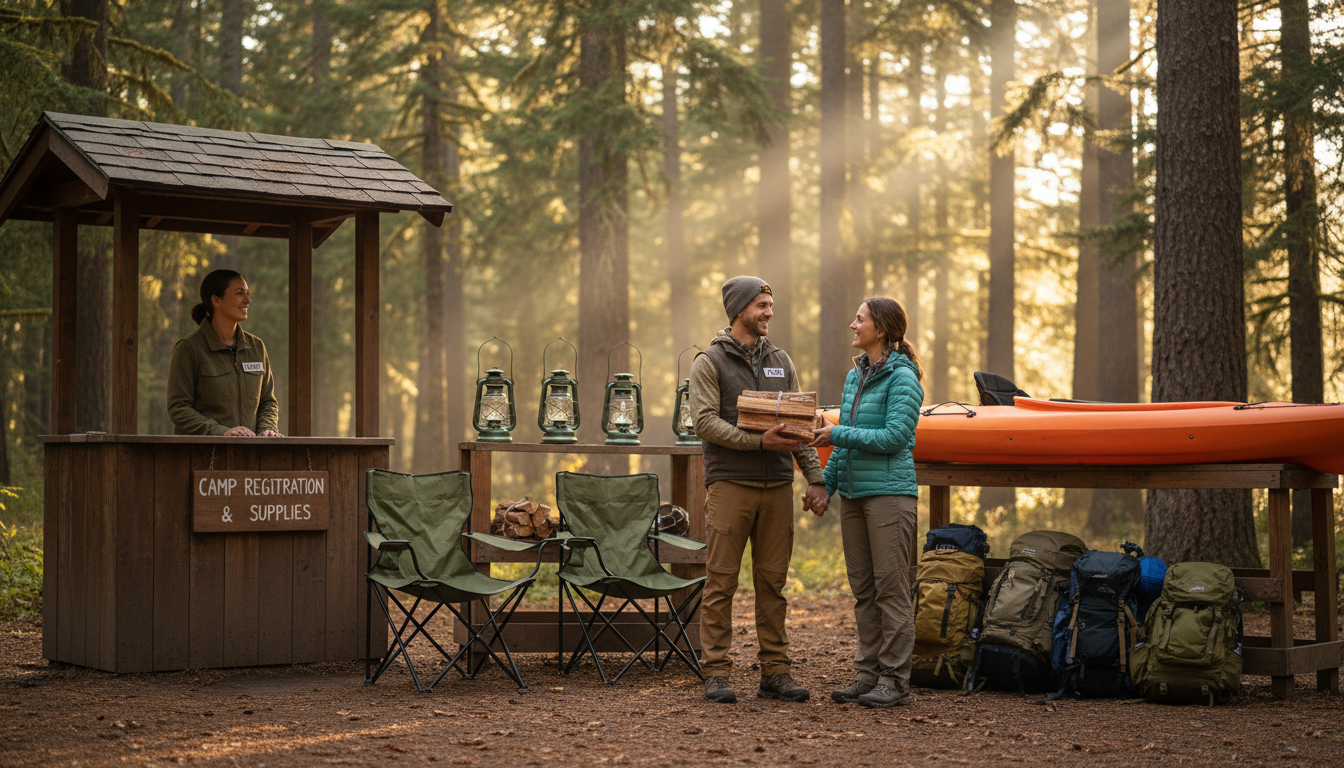
Stop leaving money in the woodpile—and on the gear shelf. Every time a guest hauls in outside firewood or borrows a neighbor’s camp stove, your park forfeits easy, high-margin dollars and a chance to control the guest experience.
In the next few minutes, you’ll see how smart operators are turning bundled logs and rentable tents into reliable profit centers—complete with tiered pricing, digital upsells, and eco-friendly storytelling that keeps regulators, insurers, and Mother Nature on your side. Ready to kindle fresh revenue? Keep reading; the sparks fly fast.
Key Takeaways
Smart operators want the cheat-sheet before the deep dive. The bullets below distill proven tactics and metrics so you can keep them on your phone or pin them to the office corkboard.
Scan the list now, and you’ll read the rest of the article with a strategist’s eye, spotting quick wins that fit your park’s unique layout and guest flow.
• Extras like firewood and gear can raise park profit 9–12% without adding new campsites
• Put add-on choices (wood, gear, activity packs) in every online step so guests see them easily
• Firewood tips: keep a 24/7 self-serve rack, sell single and “weekend” bundles, store wood dry and local, offer $2 trade-in for outside wood
• Gear rental tips: bundle tents, bags, stove, and lantern; use two price levels (standard and light); give early-bird discounts; track items with RFID and a digital waiver
• Marketing moves: show “add wood” or “add kitchen kit” buttons during booking, send a reminder email 4 days before arrival, post short videos of families using the extras, and reward loyalty points on add-ons
• Scoreboard to watch: 35%+ margin per SKU, 20–30% of bookings with an upsell, tents rented 6 nights each month, guest convenience score 4.5/5 or better
• Fast start plan: buy kiln-dried local wood, build an off-ground rack, load two wood SKUs and one gear kit into your system, set up auto emails, confirm insurance, and list your eco steps on the FAQ.
Ancillary Sales: The Fast Track to Higher NOI
Most parks battle fixed expenses, but add-on items rewrite the math. When average add-on spend climbs above eight dollars per site-night, net operating income has historically jumped nine to twelve percent, giving owners a cushion against wage hikes and utility spikes. That bump comes without adding a single campsite, proving that monetizing the guest you already have is often cheaper than finding the next one.
Guests reward convenience, and hard data backs it up. Sixty-eight percent of travelers now say “on-site essentials” influence their decision to rebook, according to the 2024 KOA North American Camping Report. They are also conditioned by airlines and rideshares to expect one-click extras, so your PMS and POS must surface firewood, gear, and experience bundles at every digital touchpoint. Parks that ignore those micro-moments surrender wallet share to competitors—or to the nearest big-box store on the highway.
Firewood: From Smoky Staple to Tiered, Tracked Cash Flow
Rocky Mountain National Park just handed private operators a blueprint. Its May 12, 2025 prospectus invites vendors to sell bundled logs via staffed counters or unmanned racks beginning in 2026, proving that self-service plus late-night impulse demand coexist nicely RMNP prospectus. Private campgrounds can mirror that model by placing a 24/7 kiosk near bathhouses and a manned station at the camp store, capturing both the “arrived-after-dark” crowd and daytime browsers. In test parks, more than half of all bundles leave the rack after 6 p.m., a window when staff costs are often sunk anyway.
Pricing makes the flame roar. Operators who offer a single bundle at nine dollars alongside a three-bundle “weekend pack” at twenty-four dollars watch over two-thirds of guests self-select the higher-margin option. A subtle one-dollar surcharge during holiday weekends exploits peak demand while maintaining goodwill mid-week. Pre-arrival upsells inside the booking engine secure the sale before the guest even hits the road, letting you season staffing and stock levels with confidence.
Solid storage and rotation convert gross sales into net profit. Stack bundles at least six inches off the ground under breathable tarps, then push the oldest, driest wood out first to minimize smoky complaints. A thirty-dollar moisture meter pays for itself when it prevents a single refund. Maintain a safety stock of one-and-a-half times your average weekend burn rate; nothing kills momentum faster than a sold-out sign on Saturday night.
Safety, liability, and ecosystem health overlap here, and each can drive revenue when handled well. The National Plant Board’s 2025 outreach guide urges parks to warn guests about pest-transfer risks in confirmation emails and at check-in plant-board outreach. Parks that sweeten the message with a trade-in voucher—hand us your outside wood, get two bucks off an on-site bundle—turn compliance into incremental spend. Meanwhile, QR-code signage by every ring leads guests to a quick safety video, reducing claims and proving duty of care to insurers hunting for reasons to raise rates.
Gear Rentals: Riding the Experience-First Wave
Camping culture is shifting from ownership to access, and the numbers tell the story. Global Growth Insights forecasts the camping gear rental market to rise from 0.054 billion to 0.056 billion dollars between 2024 and 2025, a 4.5-percent CAGR gear-rental market. Tents and sleeping bags lead the pack at thirty-seven percent of rentals, but kitchenware and lanterns combine for another thirty-seven percent, proving that convenience rules every category. Nearly half of these rentals are booked online, so if your booking flow lacks an “Add Family Camping Kit” toggle, you’re invisible to half the market.
Stocking smart beats stocking deep. Choose durable, recycled-fabric tents and bluesign-approved bags to satisfy eco-conscious travelers and extend asset life. Bundle high-frequency items—a four-person tent, matching bags, lantern, and two-burner stove—into a single SKU priced twenty percent below the sum of its parts; parents love one-click certainty. Keep a ten-percent safety float on top performers so you can swap out damaged gear without canceling reservations, and schedule a deep-clean and inspection every Tuesday morning when occupancy bottoms out.
Dynamic pricing isn’t just for campsites. A standard three-season tent at eighteen dollars per night co-exists nicely with an ultralight version at twenty-six, letting backpackers self-identify their willingness to pay. Early-bird discounts—say, ten percent for rentals booked two weeks ahead—pull cash flow forward and lock in volume before weather forecasts start meddling with demand. When those rentals pair with premium site types, average daily rate can climb forty dollars or more, turning a once-static inventory item into a margin accelerator.
Risk management remains critical, but technology eases the load. A digital waiver integrated into your PMS speeds check-in while capturing “who used what and when,” data that becomes gold if a claim surfaces months later. RFID tags on tent bags and color-coded stakes let returning staff verify completeness in under thirty seconds, slashing shrinkage. Stashing a basic first-aid and tool kit at the return bay shows guests you care and gives insurers proof of proactive safety culture.
Digital Touchpoints That Sell Without the Hard Sell
Upsell prompts that appear organically inside the reservation path feel like service, not shakedown. Position “Firewood Delivery on Arrival” beneath site selection and watch conversion rates top twenty percent. Follow with “Reserve a Camp Kitchen Kit” before payment, using enticing thumbnails to trigger FOMO. If your PMS supports drip campaigns, schedule a pre-trip email four days out: a visual checklist nudges guests to realize what they forgot, and a single click adds those items to their folio.
Social media amplifies the cycle. Short reels of families unboxing s’mores kits or zipping into pristine rental bags humanize the offer and supply user-generated content you can repost for free trust signals. Meanwhile, loyalty programs that award points on ancillary spend condition repeat guests to pre-order everything for next time. Cross-promotions—ten percent off a kayak rental from a local outfitter when guests book two nights at your park—expand your ancillary menu without ballooning inventory risk, and the partner often markets the deal to their audience on your behalf.
The Numbers That Signal Success
Gut feel is overrated; dashboards win. Attach unique SKUs in your POS for every bundle and kit, then pull weekly reports comparing revenue to cost of goods sold. Any SKU with a margin below thirty-five percent deserves a pricing tweak or supply-chain audit. Track add-on conversion by dividing clicks by total bookings and aim for at least twenty percent; top parks approach thirty. Asset turnover tells a parallel story: tents should log six rental nights per month or you’re carrying too much stock.
Guest sentiment rounds out the scorecard. A single post-stay question—“How convenient was our firewood and gear service?”—generates a concrete metric you can chase. Operators maintaining a 4.5 out of 5 rating find that reviews begin selling the add-ons for them, and OTA algorithms often reward high satisfaction with better ranking. In short, what gets measured gets repeated, and what gets repeated stacks revenue month after month.
Action Plan: Ignite, Don’t Overthink
Launch steps are simple but powerful. Source kiln-dried, locally harvested wood, build a FIFO rack, and photograph the setup for eco-credibility on your website. Create two firewood tiers and at least one family gear package inside your PMS, then tie each to a digital waiver and QR-based setup guide. Program an automated pre-arrival email featuring the add-ons and schedule a weekly inventory walk-through with moisture checks and RFID scans. Finally, confirm that your insurance rider covers retail combustibles and gear rentals, and update your online FAQ to highlight sustainability wins. Each move can be executed in under a week, none requires a six-figure tech overhaul, and together they form a flywheel that ramps profits in the background.
Small extras, big impact. The operators who master tiered pricing, airtight storage, digital marketing, and clear safety protocols will see ancillary revenue swell and guest reviews sparkle. Try one tactic this season, measure the lift, and refine. Before long, the woodpile and the gear closet will be two of the healthiest line items on your P&L—and your guests will thank you for the convenience.
Mastering firewood and gear rentals is only half the story—the real magic happens when every upsell, waiver, and follow-up runs itself in the background. Insider Perks plugs AI, automation, and razor-sharp marketing into the systems you already use, so guests see the right add-ons at the perfect moment and you see higher NOI without higher workload. Ready to let technology keep the flames—and the revenue—roaring? Connect with Insider Perks today and turn those side hustles into your campground’s next core profit stream.
Frequently Asked Questions
Q: How do I set profitable yet guest-friendly prices for firewood and gear rentals?
A: Start by calculating your fully landed cost—purchase price, freight, storage loss, and staff time—then mark up to hit at least a 35 percent margin; from there, test tiered options such as a single bundle at nine dollars and a weekend pack at twenty-four or a standard tent at eighteen dollars per night versus an ultralight at twenty-six, monitoring weekly POS reports to see which mix maximizes both uptake and profit.
Q: What kind of margins should I aim for to make the effort worthwhile?
A: Operators who consistently clear 35–45 percent on firewood and 50 percent or better on gear rentals see ancillary revenue lift NOI by 9–12 percent, a range that cushions wage and utility spikes without adding new sites, so treat those thresholds as your floor when negotiating supply contracts and setting price tiers.
Q: How can I discourage guests from bringing outside firewood without sounding punitive?
A: Send a pre-arrival email that explains pest-transfer risks, offer a two-dollar trade-in credit for any outside logs they surrender at check-in, and include a QR code on site signage linking to a 60-second video; guests feel educated and rewarded rather than scolded, compliance rises, and you convert potential lost sales into discounted but still high-margin purchases.
Q: What’s the best way to source and store firewood so it stays dry and pest-free?
A: Buy kiln-dried, locally harvested wood from a certified supplier, stack it six inches off the ground under breathable tarps, rotate stock first-in/first-out, and spot-check with a $30 moisture meter—simple measures that minimize smoky complaints, refunds, and invasive bugs while extending shelf life.
Q: Do I need extra insurance to sell firewood or rent camping gear?
A: Most general liability policies exclude combustibles and rented equipment unless specifically endorsed, so call your broker and request a retail combustibles rider plus an equipment-rental endorsement; premiums are usually modest and insurers often grant discounts when you document waivers, QR-based safety guides, and scheduled inspections.
Q: How do I integrate upsells into my existing PMS or booking engine without custom coding?
A: Nearly every modern PMS has an “add-on” or “extras” field; create unique SKUs for each bundle or kit, upload thumbnail images, and position prompts directly after site selection and again in the pre-departure drip email, then map those SKUs to your POS so inventory and revenue sync automatically.
Q: What kind of waiver or deposit protects me if gear is lost or damaged?
A: A digital waiver signed during the reservation flow that lists replacement costs, coupled with a pre-authorized credit-card hold equal to 50–100 percent of the gear’s value, deters abuse and satisfies most insurers; because it’s paperless, staff can confirm completion in seconds at check-in.
Q: How much inventory should I keep on hand to avoid stockouts but not overbuy?
A: Maintain a safety stock equal to 1.5× your average weekend burn rate for firewood and a 10 percent “float” of your top two rental SKUs, which lets you swap out damaged items without canceling reservations while freeing cash that would otherwise sit idle on the shelf.
Q: When should I retire or replace rental gear?
A: Track each item’s nights-rented in your POS; hard goods like tents typically last 30–40 rental nights before zippers or coatings fail, so schedule deep cleans every Tuesday when occupancy dips, inspect for wear, and budget replacements once a unit’s repair costs exceed 20 percent of its new price.
Q: Are there legal restrictions on selling or transporting firewood across state lines?
A: Yes—federal and state quarantines may prohibit movement of certain species, so verify your supplier’s compliance certificates and restrict sales to on-property consumption; posting that policy online and at the rack not only satisfies regulators but also reinforces your sustainability narrative.
Q: Do I need staff on duty late at night for firewood sales?
A: Not necessarily; a self-service rack paired with a 24/7 payment kiosk or QR pay code captures more than half of after-dark purchases, while periodic security rounds deter theft and your manned camp store can handle daytime volume.
Q: How can I promote these add-ons without annoying guests?
A: Present them as conveniences rather than sales pitches: embed “Firewood Delivery on Arrival” and “Reserve a Camp Kitchen Kit” toggles in the reservation path, send a visual checklist email four days before arrival, and post short social reels of families using the products—guests perceive value and voluntarily opt in.
Q: Does eco-friendly messaging really boost conversion rates?
A: Absolutely—highlighting kiln-dried local wood, recycled-fabric tents, and bluesign-approved sleeping bags taps into travelers’ desire for low-impact stays, often justifying a 5–10 percent price premium while generating share-worthy content that fuels organic marketing.
Q: What’s the simplest way to add specialty gear like kayaks without buying inventory?
A: Form a revenue-share partnership with a vetted local outfitter who supplies the assets and liability coverage; you embed their offering as an add-on in your PMS, earn a 10–20 percent commission on each booking, and extend your ancillary menu without capital or storage headaches.