

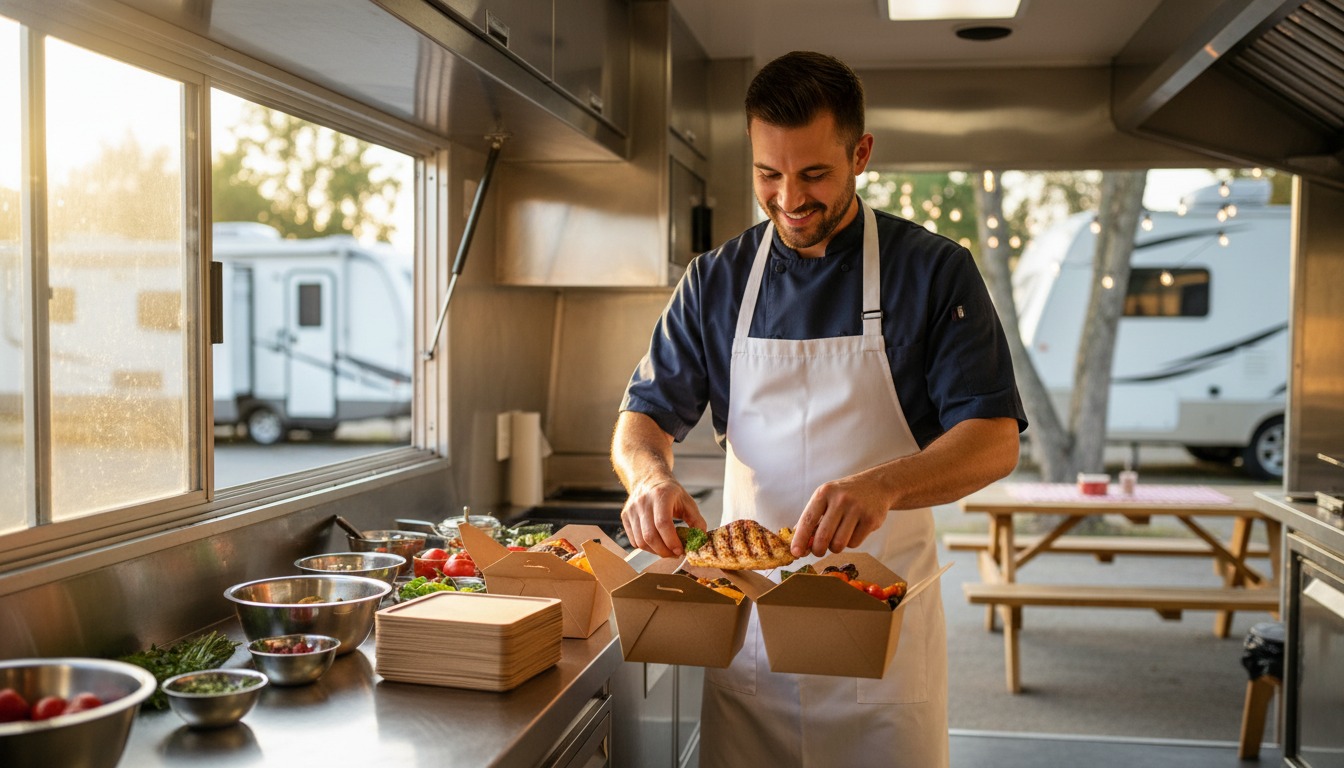
Every time an RV leaves your gate for a pizza run, you watch revenue—and control over the guest experience—drive off the property. Meanwhile the ghost-kitchen industry is racing toward $147 billion, fueled by tech that shrinks labor and food waste. Why let DoorDash siphon off those dollars when you already host a hungry, on-site audience?
Picture a 200-square-foot prep room turning out breakfast burritos at sunrise, barbecue baskets by lunch, and campfire-ready desserts after dark—no dining room, no 30 percent delivery fees, no late-night traffic jams. This playbook shows you how to plug a compact kitchen into your existing power and staff, sidestep the zoning snares that trip up urban operators, and keep guests (and their wallets) exactly where you want them: right at your campground. Ready to convert convenience into a high-margin amenity? Read on.
Key Takeaways
– A tiny kitchen (about 200 sq. ft.) can cook breakfast, lunch, and dessert for campers
– You keep food money on-site instead of losing it to delivery apps
– Campers like easy, eco-friendly meals without leaving the campground
– Rural parks avoid city traffic and zoning problems if planned with local officials
– Ventless ovens and induction burners work on standard RV power lines
– Cross-train current staff so you need fewer new workers
– Lock trash and use sealed boxes to keep food safe from animals
– Choose a point-of-sale system that still runs when Wi-Fi drops
– Send QR-code menus before arrival and offer first-night meal deals
– Track sales per site, food cost, and waste to decide when to grow.
Why Outdoor Hospitality Is Perfect for Ghost Kitchens
The global ghost-kitchen market hit roughly $78.45 billion in 2025 and is on pace for $147.32 billion by 2030, according to market research. Much of that growth comes from multi-brand consolidation, AI forecasting, and automation, all designed to lower labor and ingredient waste—exactly the pressure points that RV parks face during peak season. That steep climb shows investors that the model isn’t a fad but an accelerating shift in how travelers expect to eat.
Unlike urban operators that rely on third-party apps for customers, you control a built-in audience. Campers don’t want to unhook the trailer just to hunt dinner; provide an easy on-site option and you capture spend that would otherwise drive away. Capturing even a slice of that impulse spend can add thousands of dollars per week during high occupancy.
Lessons from Urban Ghost Kitchens You Can Skip
Echo Park in Los Angeles saw neighborhood streets jammed with delivery drivers and sparked zoning pushback, a cautionary tale documented by the Los Angeles Times. Your rural footprint avoids that congestion, but the lesson stands: engage local planners early and show that most deliveries stay within resort boundaries. Framing the concept as an amenity rather than a restaurant often reassures officials reviewing your site plan.
Purely virtual kitchens also struggle with brand anonymity and 15-to-30 percent marketplace fees. A 2025 industry review highlighted a shift toward hybrid models that pair delivery with a visible pickup point or walk-up window industry analysis. By adding a branded shelf near the camp store or dispatching golf-cart runners, you keep commissions in your pocket and build guest trust through face-to-face contact.
Infrastructure That Won’t Trip Your Breakers
Start by confirming power: a single 50-amp circuit or multiple 20-amp lines will drive ventless combi-ovens, induction burners, and countertop fryers without brownouts. If shore power flickers in your back acreage, budget a quiet-run generator or solar-battery backup to protect refrigeration. Just as critical, a three-compartment plus hand-wash sink meets most health codes; portable self-contained sinks bridge gaps when plumbing lines sit too far away.
Ventless high-speed ovens and induction gear let owners convert unused snack bars, pavilions, or even shipping containers without punching through roofs for Type-I hoods. Walk-in “cooler pods” placed on shaded gravel pads slash electric load, while rodent-proof shelving guards dry goods. Unsure about a permanent build? A towable commissary trailer keeps capital light and can be winterized off-site if cold weather shuts the park.
Keep Labor Lean, Not Mean
Seasonal payroll drains margins, so cross-train front-desk or activities staff to handle basic prep and hand-offs during rush periods. Standardized recipes, portion scoops, and color-coded labels let a first-day worker meet quality targets after a single shadow shift. The less you rely on specialized cooks, the easier it is to flex staff levels with real-time demand.
Leverage split shifts that mirror breakfast, lunch, and evening peaks; employees clock out during mid-afternoon lulls instead of soaking up slow-hour wages. Self-swap scheduling apps slash no-shows, while campsite or gear-rental perks sweeten the employment deal in towns where traditional restaurants fight for the same talent. These perks translate into lower turnover, which keeps recruiting costs from devouring peak-season profits.
Wildlife, Wi-Fi, and Food Safety: Manage the Unseen Threats
Outdoor prep brings a different guest list—bears, raccoons, and insects. Keep dumpsters at least 100 feet from the kitchen and invest in locking, bear-resistant lids. Tamper-evident yet compostable packaging traps odors and signals professionalism to eco-minded travelers.
On the human side, maintain cold-chain integrity with time-stamped containers and discard anything held above 41 °F for four hours. A clipboard checklist of hourly sanitation rounds gives health inspectors easy proof of compliance, and separate zones for raw proteins versus ready-to-eat items keep HACCP in play even when space is tight. Posting these procedures on a wall chart also reminds seasonal staff of the stakes when the kitchen gets slammed.
Tech That Works Off-Grid
Rural Wi-Fi hiccups can paralyze ordering systems, so choose a cloud POS with an offline “store-and-forward” mode. Orders print and sync once the signal returns, protecting revenue from connectivity chaos. A small-cell repeater or directional antenna extends coverage to the prep room and pickup shelf; pair that with rugged tablets rated for high heat so screens don’t shut down at noon.
For doomsday moments, keep a laminated “panic pad” of top-selling items priced with tax included. Staff can accept cash or room-charge slips and reconcile once systems reboot. Finally, integrate the POS with your reservation software so campsite numbers flow to ticket stubs—golf-cart drivers drop meals faster and guests feel the white-glove touch.
Marketing Moves That Keep Dollars on Property
Send a pre-arrival email featuring a QR-code menu and a “first-night dinner” discount; road-weary travelers are unlikely to detour once they’ve already chosen a meal. Bundle meal credits into premium site categories to bank revenue before check-in—guests view the credits as perks even though margins remain healthy. A clear upsell path—such as adding family-size salads or drink kits—can nudge each order well past the psychological $25 mark.
On-property, locate a branded pickup shelf near the camp store and play a short audio chime when orders land; curious campers will follow the sound. Theme nights—taco Tuesdays by the pool, s’mores kits at the bonfire—create photo-worthy moments that flood social feeds, delivering free exposure and upsells. A bounce-back card tucked into every bag invites five-star reviewers to claim a free appetizer next visit, turning satisfied stomachs into repeat customers.
Run the Numbers Before You Pour Concrete
Scrutinize PMS data for occupancy peaks and mealtime pinch points; if 60 percent of Friday departures occur between 9 and 11 a.m., a grab-and-go breakfast line may outperform a late-night snack menu. Rural zoning often favors light commercial food production, but verify setbacks, grease-trap requirements, and parking minimums before ordering equipment. Overlay those patterns with weather history to fine-tune staffing projections.
Audit existing assets first: a shuttered snack bar or laundry-room annex can provide 70 percent of code-required infrastructure with minor upgrades. Where no structure exists, a modular trailer delivers speed to market and lets you validate demand before committing to concrete. Modular builds also sidestep depreciation headaches because you can relocate or sell them if long-term strategy changes.
Design a Hybrid Kitchen Guests Can See and Trust
Align branding with your audience: a family campground might lean into “Campfire Eats,” whereas an upscale glamping site could debut “Glamp Bites.” Keep the menu tight—three day-parts, limited SKUs, and crossover ingredients—so quality stays high and prep stays simple. A unified visual theme across packaging, menus, and golf-cart runners further reinforces the concept.
Order channels should converge on one kitchen display: QR codes at each site, an in-app button, and a small kiosk at reception all feed identical tickets. Physical touchpoints matter too; a pickup window lit by string lights or a roaming delivery cart wrapped in your logo adds theatre that pure delivery can’t match. That visual theater converts meal pickup into an experience guests share online, amplifying your reach without ad spend.
Metrics Tell You When to Scale
Track sales per occupied site, average ticket size, food cost percentage, labor percentage, and waste pounds. Weekly reviews reveal whether extended hours pay off or if a SKU deserves the axe. Consistently hitting target ranges lets you forecast discretionary cap-ex with far greater confidence.
When capture rate tops 20 percent of on-site guests for several consecutive weeks and your mobile unit pays for itself in one season, those numbers signal it’s time to consider a permanent build. Partnerships with local farms, roasteries, or breweries can deepen community ties and pad the marketing story, but review ingredient pricing and delivery schedules so margins hold. Treat every collaboration like a menu item: test, measure, and either double down or move on.
A compact, ventless ghost kitchen turns idle square footage into a high-margin amenity that keeps guests, and their spending, firmly inside your resort gates. Plan the utilities, train a lean crew, bake in tech resilience, and weave the pickup window into the vacation narrative—then watch campers return with hungry friends in tow next season. Ready to fire up that first ticket? Whether you want an AI-powered menu that predicts demand, automated texts that steer campers from check-in to checkout, or a branding blitz that makes your kitchen the talk of every rally, Insider Perks has you covered. Reach out today, and let’s turn those pizza-run dollars into on-property profit—so the only thing leaving your gate is rave reviews.
Frequently Asked Questions
Q: How much capital does a small ghost kitchen usually require to get off the ground at an RV resort?
A: Most operators we work with launch for $25,000–$60,000 by retrofitting an existing snack bar, pavilion, or shipping container; that figure covers ventless equipment, smallwares, basic branding, and the first month of food inventory, and it can often be financed through equipment‐leasing programs or rolled into an SBA microloan.
Q: Do we need a full restaurant license or can we operate under our campground’s existing retail food permit?
A: In most states a ghost kitchen that sells prepared meals falls under the same retail food service category as your camp store’s hot‐dog roller, so you can usually amend the existing permit rather than apply for a new one, though you will still need a food manager certification on staff and a revised plan on file with the county health department.
Q: What health‐code requirements trip up park owners the most?
A: Inspectors mainly look for a dedicated hand‐wash sink, a three‐compartment ware‐washing sink, accurate refrigeration logs, and clear separation of raw proteins from ready‐to‐eat items; missing any of those staples—especially the hand sink—creates the majority of first‐visit violations.
Q: Can a ventless setup really replace a traditional hood and grease trap?
A: Yes, provided you stick to equipment certified for ventless operation—combi ovens, high‐speed impingers, induction burners, and countertop fryers with built-in filtration—which capture grease particulates internally and let you skip costly roof penetrations and below‐grade plumbing.
Q: How do we handle delivery inside a sprawling resort without paying DoorDash commissions?
A: Most parks dispatch staff in golf carts, labeling tickets with campsite numbers that flow in automatically from the POS integration; this keeps fulfillment under 10 minutes, eliminates third‐party fees, and preserves direct control of the guest experience.
Q: What staffing model keeps labor from ballooning during shoulder seasons?
A: Cross‐train front‐desk or activities employees for short, high‐volume shifts that coincide with breakfast, lunch, and evening peaks, then schedule them back to their primary roles during lulls, allowing you to pay for productive hours only.
Q: How do we decide which menu items make sense in such a compact kitchen?
A: Start with crossover ingredients that serve at least two day-parts—think tortillas that become breakfast burritos in the morning and quesadillas at night—and run a four-week test menu, pruning any SKU that misses a 70 percent margin or sells fewer than 10 portions a day.
Q: What’s the typical ROI timeline for a campground ghost kitchen?
A: Parks that capture even 10 percent of occupied sites for two meals a day commonly recoup their initial investment within one high season, especially when meal vouchers are bundled into premium site rates or group packages to guarantee upfront revenue.
Q: How do we keep Wi-Fi drops from crashing the ordering system?
A: Choose a cloud POS with an offline “store-and-forward” mode, install a cellular hotspot or directional antenna as backup, and keep a laminated emergency menu with tax-included prices so staff can write manual tickets and settle them once connectivity returns.
Q: Are we liable for food delivered to a guest’s campsite if wildlife gets into it?
A: Liability usually ends once properly packaged food is handed off, but mitigate risk by using tamper-evident, odor-reducing containers, posting wildlife guidance in your app and on the bag sticker, and training runners to place orders on picnic tables rather than cooler lids or trash bins.
Q: Can the ghost kitchen operate year-round in colder climates?
A: Many parks winterize the kitchen in an insulated trailer with propane or electric heat and shift the menu to low-prep comfort foods, but if occupancy drops below 30 percent it can be more profitable to shutter the kitchen and reopen for peak season while offering limited retail frozen meals in the camp store.
Q: Will adding a food operation increase our insurance premiums significantly?
A: Carriers typically add a 5–10 percent premium bump for prepared-food service, though rates stay modest when you demonstrate ServSafe certifications, a written HACCP plan, and ventless equipment that reduces fire risk; most owners find the new revenue dwarfs the modest insurance uptick.