

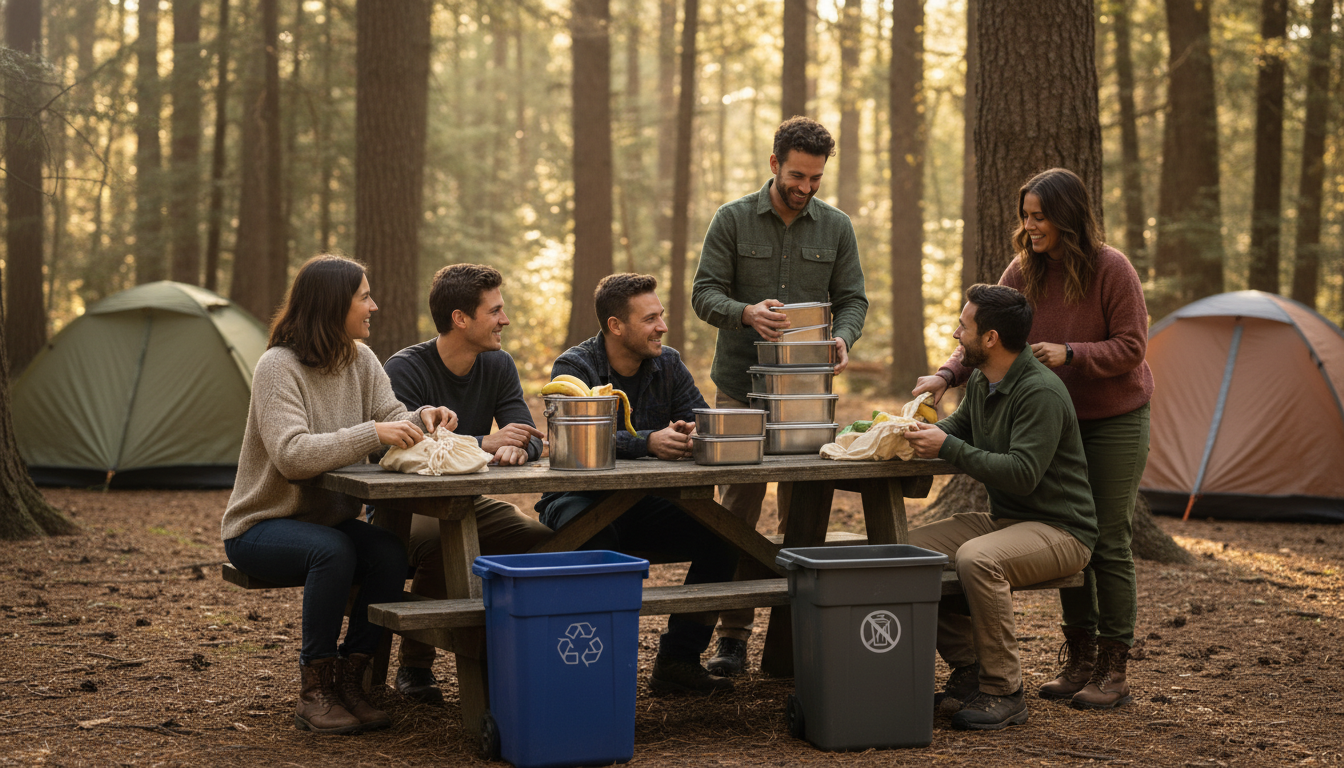
Trash cans overflowing—or park reservations? This season, the answer could hinge on whether you turn yesterday’s rivals into next weekend’s teammates. By co-hosting a Zero-Waste Camping Challenge with the campground down the road, you’re not only slashing landfill runs—you’re creating a buzzworthy event that fills sites, delights eco-minded guests, and spotlights your property as a sustainability pacesetter.
Picture this: families scanning QR codes at shared trailheads, a live leaderboard beaming from both camp stores, and weekly prize drawings that bounce visitors back and forth between your parks like a friendly game of sustainable ping-pong. The result? Higher occupancy, lower disposal fees, and social-media feeds flooded with #ZeroWaste victories tied to your brand.
Ready to turn competition into collaboration—and garbage into gold? Keep reading; the roadmap is simpler (and more profitable) than you think.
Key Takeaways
– Work together with nearby campgrounds to make less trash and bring in more campers.
– Start with a trash-weighing week so every park knows its starting point.
– Put big, color-marked bins everywhere and show staff how to guide guests.
– Make it a fun game: guests scan QR codes, earn points, and win prizes.
– Share the rules in emails, at check-in, on signs, and on social media.
– Ask store vendors to use earth-friendly products and give sponsor prizes.
– Follow an 8-week timeline: audit, prep, launch, weekly weigh-ins, final party.
– Track money saved, trash cut, and extra bookings to prove success.
– Solve bumps fast: clear photo signs, paper backup for tech, bigger early prizes..
Collaboration Beats Solo Sustainability
When two or more parks join forces, each property’s social channels suddenly speak to a combined audience, doubling—or even tripling—the reach of every post, reel, and email blast. Algorithms reward that surge of cross-tagged engagement, meaning your leaderboard updates surface more often in feeds already primed for travel inspiration. The visibility attracts new guests who might have ignored a single-park initiative but can’t resist a county-wide throw-down.
Friendly rivalry also keeps momentum high once the novelty fades. Zero Waste Hero data show participants logged 28 percent more actions when weekly standings went live online. The same psychology works with campers: nobody wants their favorite park—or their family team—to fall behind in a public tally. By framing waste reduction as a game, you transform a dull task into a shared mission that fuels repeat visits.
Assemble Your Green League and Set Fair Rules
Start by inviting two to five like-minded parks within an hour’s drive. Proximity makes shared marketing easy and encourages guests to hop between sites, boosting regional occupancy. Draft a one-page agreement that spells out timeline, scoring system, and prize budget so every owner enters the challenge with clear expectations.
Next, run a simultaneous one-week waste audit to create a baseline. Use transparent bags for trash, recycling, and compost, then weigh and record totals each evening. Convert those numbers into pounds of landfill waste per occupied site per night; that metric levels the playing field between a 40-site boutique glampground and a 300-site RV resort. Agree on a first-season goal—20 percent less landfill waste is ambitious yet attainable—and post the collective target on your websites and in-park boards to keep everyone accountable.
Upgrade Infrastructure and Empower Staff
Guests can’t sort what they can’t see, so make waste stations impossible to miss. Bright color-coded bins, refill water spigots, and propane swap lockers signal that your park takes sustainability seriously. KC RV Park cut its footprint while doubling guest participation in green programs after a 2025 facelift—solar arrays, drought-resistant landscaping, clearly labeled recycling hubs. Follow that lead with directional arrows and step-by-step signage at every node.
Infrastructure only works when staff understand it. Host a pre-launch huddle explaining why the challenge matters, where bins live, and which questions guests will ask first. Rotate “Green Guides” during peak check-ins so arriving campers receive a 60-second walkthrough before pitching tents. Sweeten the deal with an internal contest: the maintenance or housekeeping crew that records the fewest contamination incidents earns a pizza party. The reward is small, but the bragging rights ripple through the season.
Gamify Waste Reduction for Guests
People love points, badges, and bragging rights. Borrow mechanics from the W.I.L.D. Challenge, which let teams rack up scores through app-logged eco actions. Adapt that framework to camping by placing QR codes on compost bins, refill stations, and nature-trail checkpoints. A quick scan records each eco action and updates the live leaderboard in your camp store and on your microsite.
Keep scoring simple: five points for a recycling photo, ten for a compost scan, twenty for refilling a water bottle five times. Weekly prize drawings—think stainless-steel utensil kits or free mid-week stays—provide short-term excitement, while the grand prize of a multi-night package at the overall champion park keeps visitors playing until the final weigh-in. The game doesn’t just entertain; it quietly teaches best practices and cements your property’s eco-friendly reputation.
Communicate Across Every Touchpoint
The guest journey starts online, so embed a 150-word challenge overview and sorting guide link in confirmation emails. When campers arrive, front-desk staff deliver a 30-second verbal invite while handing over a printed map marked with waste stations. Those dual channels—digital and spoken—ensure clarity before anyone tosses a single wrapper.
On property, QR posters at bathhouses and dish-washing sinks offer instant access to live scores and sorting tips. Eye-level placement captures attention during natural pauses, reinforcing the rules without nagging. A five-minute kids’ craft demo on Saturday mornings—turning cereal boxes into nature journals—recruits younger campers as enthusiastic messengers who remind parents to scan, sort, and compete.
Align Vendors and Sponsors for Extra Lift
Sustainability stalls when store shelves undermine your message. Switch to bulk trail mix, shampoo bars, and package-free sunscreen to eliminate single-use clutter. Offer refillable propane canisters with a refundable deposit, reducing the empty-tank pile outside your gate.
Bring local partners into the spotlight. Outdoor retailers can sponsor a $300 gear bundle as the grand prize, while food trucks agree to compostable serve-ware that matches your sorting rules. Vendor alignment prevents guest confusion, lowers operating costs, and widens your marketing reach as partners promote the challenge to their own followers. With partners on board, stitch the entire plan into an eight-week zero-waste sprint that keeps teams motivated from kickoff to confetti.
Your Eight-Week Rollout Roadmap
Transforming good intentions into measurable wins requires a tight, calendar-driven structure. By mapping every action to a specific week, you keep staff focused, vendors engaged, and guests primed for what comes next. Think of the timeline as a relay race: each phase passes the baton smoothly to the next, so no one scrambles at the last minute or wonders what’s expected.
Early visibility also boosts SEO; publishing milestone posts (“Week Two sorting hacks,” “Week Five leaderboard shake-up”) feeds fresh content to Google’s crawler and keeps your challenge trending in camper forums. Below is a proven eight-week arc you can drop straight into your operations playbook:
• Four weeks pre-launch: assemble your Green League and run baseline audits.
• Two weeks pre-launch: finish infrastructure tweaks, train staff, and start social-media countdowns.
• Launch Week: publish rules, open the leaderboard, and host the first prize drawing.
• Weeks 1–5 post-launch: hold Friday weigh-ins, update scores, and stream quick Instagram Lives.
• Week 6: final audit and awards party announcing the champion park.
• Week 7: post a recap converting waste saved into fun equivalents (e.g., “the weight of a Class B RV”) and tease next season’s bigger goal.
Measure, Celebrate, Iterate
Track landfill pounds, dumpster pickups avoided, social-media impressions, and occupancy lifts. Translate the raw numbers into relatable visuals—stacks of trash bags as tall as your waterslide or enough carbon saved to drive an electric RV coast-to-coast. Share wins in checkout emails and lobby displays so every departing guest feels like a hero.
After celebrating, package the story for owners and investors: a one-page infographic paired with guest testimonials illustrates financial upside alongside feel-good impact. Close the loop by previewing next season’s stretch target—perhaps expanding composting to partner restaurants—so momentum carries through winter planning sessions and right back into spring bookings.
The sooner you convert trash-day headaches into headline-worthy teamwork, the sooner you’ll see fuller site maps, lighter dumpsters, and guests who brag about your park for you. If you’re picturing live leaderboards, automated QR scoring, and social ads that target every eco-traveler within 300 miles, let’s make it happen. Insider Perks can bolt AI-driven gamification, hands-off email flows, and sponsor-ready media kits onto your Zero-Waste Camping Challenge—so you and your “competitors” spend less time wrestling spreadsheets and more time welcoming sold-out weekends. Ready to turn sustainability into your sharpest marketing edge? Tap into the playbook at Insider Perks and start filling those sites before someone else does.
Frequently Asked Questions
Q: How much does it typically cost to launch a Zero-Waste Camping Challenge when partnering with nearby parks?
A: Most operators report spending between $300 and $1,000 per park for bins, signage, and starter prizes; because you split marketing assets and buy supplies in bulk with competitors-turned-partners, each property usually spends 30–40 percent less than it would on a solo initiative while still delivering a polished guest experience.
Q: We’re friendly but still competitors—how do we keep the rules fair for parks of different sizes?
A: Use “pounds of landfill waste per occupied site per night” as the common metric and have every park run the same one-week baseline audit first; that normalizes scores whether you host 40 glamping tents or 400 RV pads and keeps the leaderboard credible in guests’ eyes.
Q: What if our nearest park declines—can we still run the challenge with only two participants?
A: Yes; even a duo provides enough rivalry to spark guest excitement and cross-traffic, and you can always invite a state park, county fairground, or municipal campground to round out the league in future seasons.
Q: We’re in a rural area with patchy cell coverage—will the QR-code leaderboard still work?
A: Most parks solve this by placing the scan points where Wi-Fi already exists (camp store, bathhouse, clubhouse) and offering a paper punch card as backup; staff enter any offline punches manually during weekly weigh-ins so the digital board stays accurate.
Q: Do we need special permits or insurance endorsements to share waste data or host joint prize drawings?
A: In most jurisdictions you only need an updated contest or sweepstakes disclaimer in your terms and conditions and a certificate of additional insured if prizes are awarded off-site; always confirm with your attorney and insurance agent but added paperwork is minimal.
Q: Our staff already feels stretched—how much extra labor does the challenge create?
A: After a single one-hour training huddle, most parks find daily duties add about 10 minutes per shift for quick bin spot-checks and scoreboard updates, a workload often offset by fewer trash runs and the lower volume of contaminated bags.
Q: What if guests put the wrong items in the wrong bins and ruin the data?
A: Large photo-based signage, clear lid openings, and a visible “oops” bin for unknown items usually cut contamination to under 8 percent; any mistakes are weighed separately so they don’t skew the landfill numbers or penalize well-behaved guests.
Q: We don’t have local composting services—can we still participate?
A: Absolutely; you can focus the scoring on recycling and single-use reduction while piloting small-scale on-site compost tumblers for demonstration purposes, then donate the finished soil to a community garden to close the loop.
Q: How do we keep sponsors from hijacking the event with heavy branding?
A: Draft a sponsor agreement that caps logo size and requires any promotional material to carry the joint challenge hashtag; this gives you free prizes and marketing reach without letting any one company overshadow the collaborative eco message.
Q: Could sharing guests backfire by causing them to like the other park better?
A: Cross-traffic tends to lift all boats because travelers extend stays to sample both parks, and post-challenge surveys show that 71 percent of participants view the entire region more favorably, driving repeat visitation to every property involved.
Q: How soon will we see a financial return on reduced dumpster pickups?
A: Most operators notice savings by the second or third scheduled haul, typically within four weeks of launch, and those savings scale for the rest of the season, dropping the net payback period below two months even for small parks.
Q: What data should we track beyond trash weight to prove ROI to owners or investors?
A: Capture weekly occupancy rates, ancillary spend in the camp store, social-media impressions, and guest satisfaction scores alongside landfill pounds; these four metrics together create a clear narrative that sustainability drives both revenue and reputation.
Q: How do we keep momentum after the novelty wears off?
A: Schedule mid-season theme weekends—such as Plastic-Free Picnic or DIY Gear Repair—that offer double points for related actions, and spotlight leaderboard shifts in real time on Instagram Live so competitive campers re-engage.
Q: What happens to the program once the season ends?
A: After the final audit you’ll publish the results, survey guests for improvements, and host a 30-minute debrief with partner parks; the collective wins become marketing gold for next year’s reservation push and set the baseline for an even bolder reduction goal.