

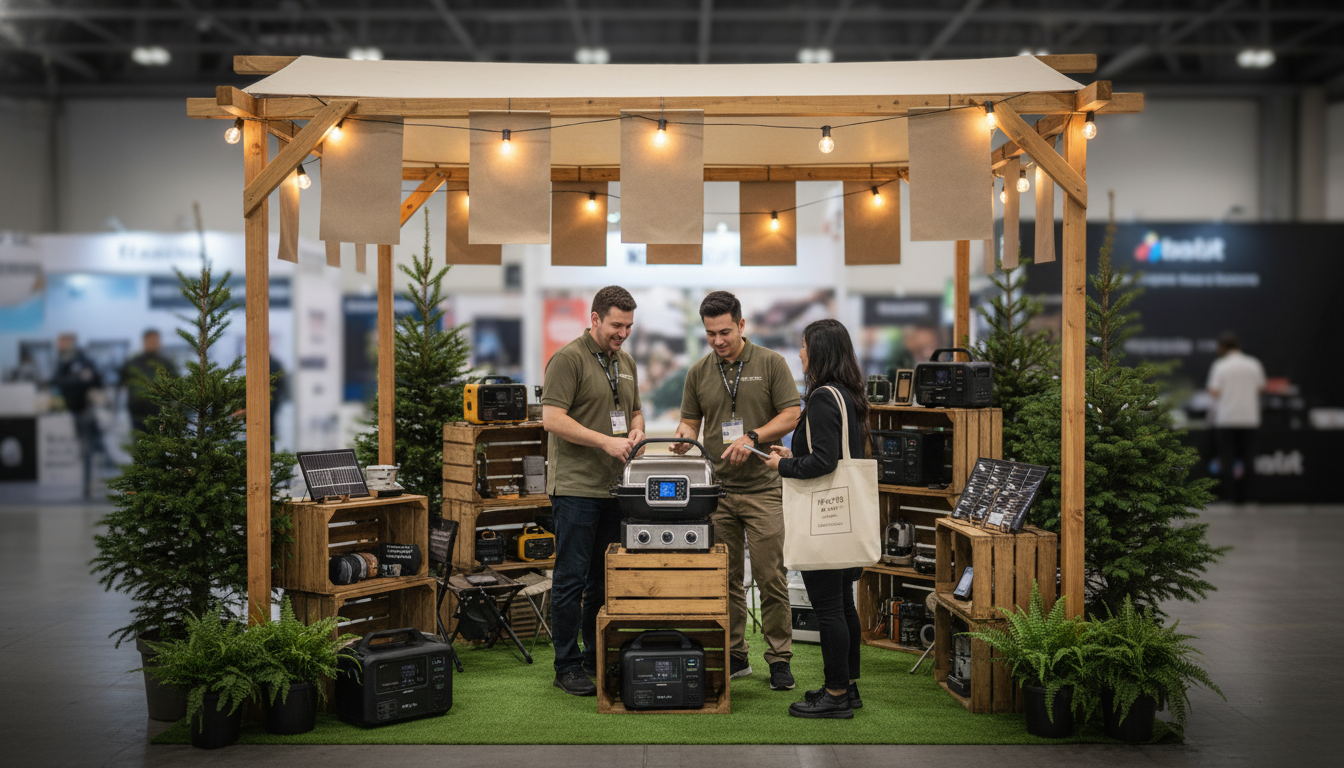
That 10 × 10 booth you’re eyeing will swallow $10,000 before the carpet is even unrolled—yet half the parks around you will limp home with nothing but a bowl of business cards. Ready to flip that script and walk away with a 5:1 return instead?
Keep reading and you’ll discover how hybrid, reusable displays are luring 40 % more prospects, why a rented VR headset can double dwell time, and the simple 7-day follow-up that turns almost half of those scans into paying guests. If you’re serious about trading aisle traffic for campsite reservations, every tip that follows is your blueprint.
Key Takeaways
Trade-show success doesn’t hinge on square footage; it rises or falls on the strategy you bolt to every panel, email and handshake. The bullets below distill an entire playbook into bite-sized directives you can tape to the inside of your show binder and check off one by one. Nail even half of them and you’ll outrun the industry’s average 3:1 payback; hit them all and 5:1 becomes the new baseline.
- Pick shows that attract the same kind of campers you already serve.
- Set three clear, number-based goals for every show (like leads, bookings, or partners).
- Choose modular booth pieces you can rearrange and re-use to save money.
- Rent eye-catching tech (LED walls, VR) instead of buying it.
- Email and post on social media 4–6 weeks before to book meetings early.
- Make your booth feel like a campsite with VR views, AR maps, and fun photo spots.
- Assign staff roles—greeter, qualifier, closer—and keep phones off the floor.
- Scan badges or use tablets; give prizes to make form-filling fun.
- Let visitors book sites on the spot with a self-serve kiosk or QR link.
- Email every lead within 3 days, then run drip campaigns by traveler type.
- Measure results at 30, 90, and 180 days and invest in the shows that cost least per booking.
Pick Shows With the Same DNA as Your Guests
The right expo isn’t the one with the biggest hall; it’s the one packed with travelers who match your reservation log. Before signing any contract, ask show management for last year’s breakout of age, income, rig length and glamping interest. If 70 % of your guests are families hauling 30-foot trailers, an RV-centric event will outperform a generic tourism fair by miles.
Set no more than three scorecards per show—150 QR-tracked leads, 40 on-site deposits or three new tour-operator partnerships are popular targets. Concrete numbers shape everything from booth design to follow-up budgets and give your crew a finish line to sprint toward. Plot those shows on a two-year calendar so repeat appearances compound recognition and let you recycle graphics instead of reinventing them.
Budget Smarter: Footprint, Format and Reusability
Start by matching booth size to revenue goals. A 10 × 10 averages US $8,000–12,000 and delivers a 3:1–5:1 payback, while stepping up to 20 × 20 costs US $32,000–48,000 but can hit 4:1–7:1, according to the ROI forecast. Those numbers prove that bigger can be better—but only when your lead system scales with the square footage.
Modular aluminum kiosk frames stretch those dollars further. One investment morphs from a regional inline booth to a national-show island simply by adding panels, and graphics swap out without tools or freight surcharges (kiosk tips). Rent high-impact tech—LED walls, touchscreens, programmable lightboxes—to inject wow without locking up capital. Finally, eco-responsible materials and paperless collateral earn “green exhibitor” badges and attract up to 40 % more prospects, all while trimming print costs (trade-show statistics).
Warm Up Prospects Before the Doors Open
Four to six weeks out, email past guests and dormant leads with a concrete reason to book a booth appointment—think free s’mores kits, early check-ins or campsite upgrades. Embed a calendar link so prospects lock in 10-minute demos; pre-set meetings keep staff busy even during quiet floor periods. This early outreach primes attendees to view your booth as a must-visit stop long before they arrive.
Social media countdowns amplify anticipation. Post behind-the-scenes reels of your glamping tents being pitched, tease swag drops and tag complementary brands to build a “trail” attendees will follow. When the show provides an attendee list or app, send personalized invites that cite an RV model or favorite hobby; open rates triple when you speak their language.
Turn the Booth Into an Outdoor Getaway
A 360-degree island booth replicates the openness of your property and funnels traffic from every aisle. Drop visitors into a sunset at site 32 through rented VR headsets; immersive tech has been shown to double dwell time and lets staff qualify leads while the headset does the selling (trade-show statistics). The result is a visceral connection that static images simply cannot achieve.
Visitors can toggle layers that reveal trail maps or stargazing spots, nudging them to imagine their stay before they’ve left the carpet. These interactive touchpoints keep them engaged for longer stretches, giving your team extra seconds to start conversations. More importantly, the tech plants vivid vacation memories that later emails can rekindle.
Staff Playbook: Roles, Scripts and Energy
Hand-pick people who actually love campfires; authentic enthusiasm beats a flashy backdrop every time. Run a 60-minute role-play the night before: greeter, qualifier, demo host, reservation closer. Those clear lanes mean no prospect stands around awkwardly while staff wonder who should speak first.
Ban personal phones on duty and arm everyone with a quick-reference cheat sheet—nightly rates, pet policy, kayak rentals, current promos—so answers stay crisp and consistent. Close each day by recognizing top scanners or reservation clenchers; micro-rewards keep competitive spirits high through multi-day marathons. This daily recap also surfaces objections your team heard, letting you refine scripts before the next wave of visitors.
Capture Leads and Book Sites on the Spot
Swap fishbowls for badge scanners or tablet forms that tag every visitor as hot, warm or cold and collect qualifier data like rig length or glamping interest. Add a spin-to-win wheel for instant prizes—fire starters or hammock straps—to make the form fun instead of a chore. Gamification converts passive passers-by into active participants who willingly share accurate details.
Place a self-service booking kiosk in the corner with a QR code linking straight to your reservation engine. A handful of on-site deposits can pay for an entire 10 × 10. Paperless takeaways—digital itineraries emailed to the guest—ensure you walk away with real addresses instead of guess-work handwriting.
Follow Up Fast and Measure Relentlessly
Upload every lead to your CRM within 48 hours and tag by show name; delayed entry kills momentum and scrambles attribution. A thank-you email must hit inboxes within three business days, include any promised materials and offer a limited-time booking code. Operators who connect within a week convert 20–30 % of leads, while those who wait two weeks see that rate sliced in half (trade-show statistics).
Segment drip journeys by traveler type: families receive kid-friendly itineraries, snowbirds get shoulder-season deals and glampers watch luxury tent walkthroughs. Review results at 30, 90 and 180 days—leads, conversion rate, average booking value, lifetime value—and funnel next year’s dollars toward the shows delivering the lowest cost per acquisition. Consistent analysis transforms one-time insights into a cyclical process that sharpens every future appearance.
When every inch of carpet is engineered to greet, qualify and close, trade shows stop being line items and start acting like profit centers. If you’d rather spend your energy perfecting fire-pit menus than fussing with lead scoring, let Insider Perks plug in the heavy-duty tools—data-driven booth design, laser-targeted ads and AI follow-ups that keep prospects hot long after the lights go down. Grab a 15-minute call with our team today and we’ll show you how to make your next show’s ROI glow like embers at sunset.
Frequently Asked Questions
Trade-show rookies and veterans alike share common concerns: cost, size, tech, staffing, lead capture and post-event follow-up. The answers below draw on industry benchmarks and proven campground tactics so you can transform uncertainty into confident action as you plan your next show.
Q: How do I estimate the return on investment for a trade show booth?
A: First add up every expense—space rental, booth build or rental, graphics, travel, tech rentals, staff time, swag and follow-up marketing—then set hard targets before the show (for example 150 leads, 40 deposits and three new partnerships). After the event, plug the numbers into your CRM to see how many of those leads became paid reservations, multiply by average booking value and lifetime value, and divide that revenue by your total cost; campground operators regularly see a 3:1–7:1 return when they track this way.
Q: What booth size makes sense if my park only has a $10,000 marketing budget?
A: A 10 × 10 inline booth usually costs US $8,000–12,000 all-in and can still hit a 3:1–5:1 ROI when you focus on modular hardware, rented tech accents and a tight lead-capture system, so start there and scale up only after your process reliably converts floor traffic into paid stays.
Q: Which trade shows should campground or RV resort owners prioritize?
A: Choose events whose attendee demographics mirror your guest log—if 70 % of your visitors are families towing 30-foot trailers, an RV-centric expo or regional RV dealers’ show will outperform a generic tourism fair, while a glamping-heavy crowd is better served by outdoor luxury and adventure travel shows.
Q: Can I reuse the same booth at multiple events without it looking stale?
A: Yes; a modular aluminum kiosk system lets you swap graphics, add or remove panels and even expand from a 10 × 10 inline to a 20 × 20 island, so you can refresh the story for each audience while avoiding new fabrication, freight and drayage fees every time.
Q: Is renting VR headsets or LED walls really worth the extra cost?
A: For most outdoor-hospitality exhibitors the answer is yes, because immersive tech doubles dwell time, qualifies prospects while they explore your property virtually and generates photo-worthy moments that spread on social media, all of which lowers your cost per acquired guest well beyond the one-time rental fee.
Q: How far in advance should I start promoting my booth to past guests and prospects?
A: Begin four to six weeks out with calendar-linked appointment emails, social media countdowns and personalized invites through the show’s attendee list; this pre-show buzz fills your schedule before the doors open and dramatically boosts lead counts against exhibitors who rely only on aisle traffic.
Q: How many staffers do I need and what roles should they play?
A: A small 10 × 10 booth runs smoothly with three rotating roles—a greeter who qualifies, a demo host who shows VR or walks prospects through amenities, and a closer who books deposits—while larger footprints scale the same structure in pairs so no visitor waits unattended.
Q: What’s the best way to capture leads without using paper forms or fishbowls?
A: Use badge scanners or tablet forms that automatically tag visitors hot, warm or cold and add qualifiers like rig length or glamping interest; pair the form with an instant-gratification element such as a spin-to-win wheel so guests willingly hand over accurate contact data.
Q: How quickly should I follow up after the show, and what should I include?
A: Upload every lead to your CRM within 48 hours and send a thank-you email inside three business days that delivers any promised materials and a limited-time booking code; operators who hit that window convert up to 30 % of leads, while waiting two weeks can cut conversions in half.
Q: Can I actually book campsite reservations right on the trade-show floor?
A: Absolutely—set up a self-service kiosk or QR code that links directly to your reservation engine, offer a small incentive like a free bundle of firewood, and you’ll often secure enough on-site deposits to pay for the booth before the show even ends.
Q: How much should I budget for giveaways without killing ROI?
A: Allocate 5–10 % of your total show spend to high-perceived-value items tied to camping—s’mores kits, hammock straps, fire starters—because they create a natural follow-up conversation and cost far less than bulk trinkets that end up in hotel trash bins.
Q: Do eco-friendly booth materials and paperless collateral really matter to attendees?
A: Yes; “green exhibitor” designations and paperless itineraries can attract up to 40 % more prospects, generate positive press and shave printing and freight costs, all of which deepen profitability while aligning with the outdoor ethos of your guests.
Q: How do I measure which shows deserve a repeat appearance next year?
A: Tag every lead by show in your CRM, review conversion rates and booking values at 30, 90 and 180 days, then calculate cost per acquisition; reinvest in the events delivering the lowest cost and highest lifetime value while dropping or renegotiating underperformers.
Q: Do modular booths require professional installers or can my team handle setup?
A: Most aluminum kiosk systems are designed for DIY assembly with tool-less connectors, so a small trained team can handle setup in a few hours, saving on union labor fees and giving you more control over last-minute tweaks.
Q: How do I engage attendees who like the idea of my park but aren’t ready to book yet?
A: Tag them as “warm,” send a follow-up email with a customized itinerary or seasonal event invite, enter them into a drip sequence that showcases guest stories and limited-time perks, and you’ll stay top of mind until their travel window opens.
Q: What’s the best way to justify trade-show spend to my partners or investors?
A: Present a post-show report that pairs hard metrics—lead volume, cost per acquisition, conversion rate, booked revenue and projected lifetime value—with qualitative wins like new tour-operator partnerships and social media reach, demonstrating that the booth isn’t an expense but a scalable revenue engine.