

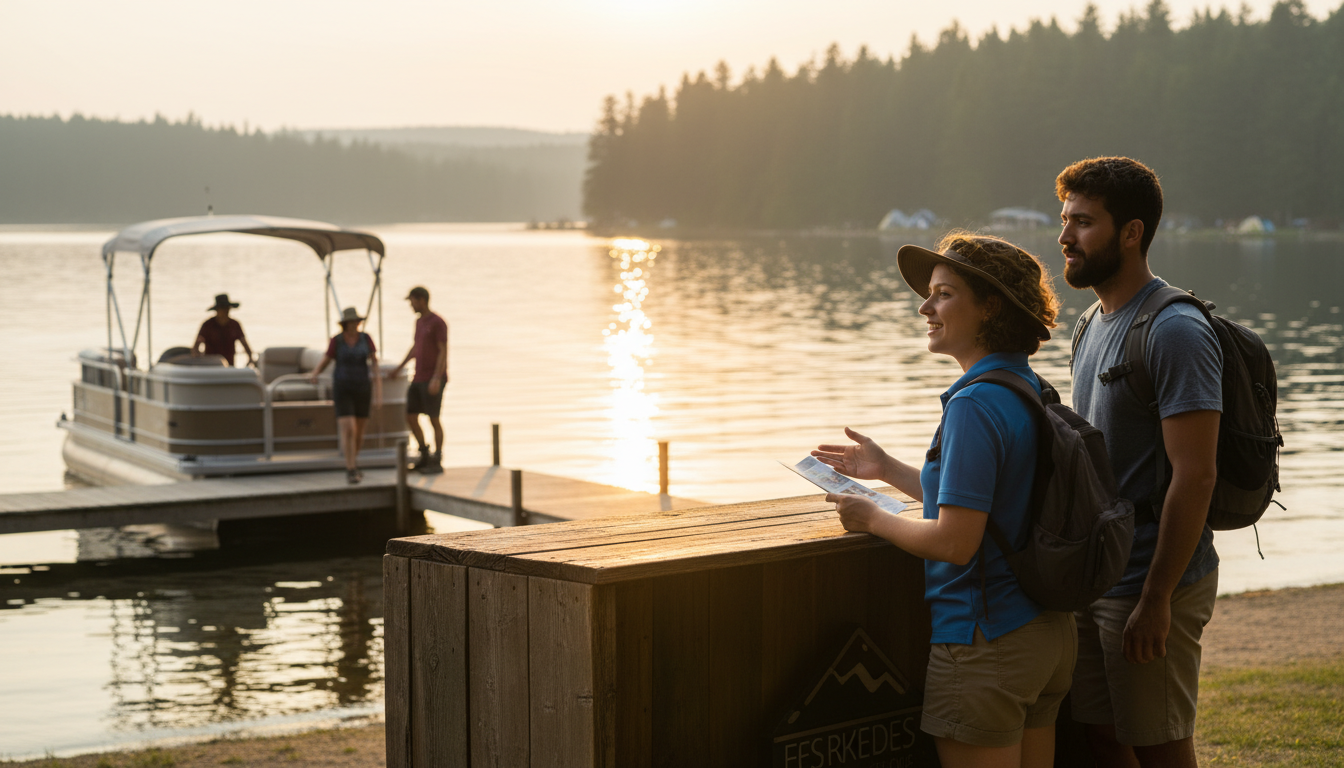
Your office lights click off at 6:00 p.m., but a hundred campers are still scrolling their phones wondering, “What should we do tonight?”—and every golden sunset you’re NOT monetizing drifts quietly over the lake. Now imagine a digital concierge that spots a crystal-clear forecast at 4:17 p.m., checks your PMS for open seats, and slips a one-tap booking link into that guest’s chat before the first streak of pink hits the sky.
AI-powered voice and chat agents are already lifting campground upsell revenue 10–20 percent; add live weather data and you’ve got an automated closer that never misses the perfect moment. Ready to turn casual “Anything fun to do tonight?” messages into full boats and fatter margins—without adding one more task to the front desk? Keep reading; the playbook is simpler than you think.
Key Takeaways
• A smart chatbot can watch the weather and sell sunset boat rides for you
• Guests get a one-tap link to book seats before the sky turns pink
• Parks using this tech make 10–20% more money from add-ons
• The bot checks open seats, collects pay, sends waivers, and updates staff in seconds
• If wind or lightning shows up, the bot stops sales and suggests a safer plan
• Four tools plug in: PMS for guest data, payment system, weather API, and team alerts
• Short, friendly chat messages and QR codes help more campers open the bot
• Track clicks, sales, and refunds to keep improving the wording and bundles.
The bullets above outline the fast facts, but the magic lives in the details. Think of this section as your cheat sheet before diving deeper: if all you did was wire those four tools together and let the bot follow the weather, you’d already be ahead of most parks. The rest of this article unpacks exactly how to make each bullet point hum in real life, from integrating your PMS to copywriting that earns taps instead of eye-rolls.
You’ll also discover why timing beats discounting, why a simple waiver capture can save twenty minutes of dockside chaos, and how data loops help you squeeze new profit from the same lake you watched fade to black yesterday. Stick with the play-by-play below, and by the time you hit the CTA you’ll know how to turn sunsets into a line item you can bank on.
Why Sunset Cruises Outperform Other Add-Ons
A sunset cruise carries built-in scarcity: limited seats, single departure time, and a daily countdown clock nature itself supplies. That scarcity triggers urgency, and urgency converts, especially when your guest is already picturing cotton-candy skies over the water. Better yet, cruises bundle effortlessly with champagne, photo packages, or VIP deck seating, pushing average order value higher than kayak or bike rentals.
Because many RV parks, glamping resorts, and lakefront campgrounds already own docks or partner with local captains, the incremental cost per rider is low while perceived value stays sky-high. Guests aren’t just buying a boat ride; they’re buying the Instagram moment, the story to tell around tomorrow’s campfire, the memory their kids will pack home. When your chatbot frames the offer as “tonight-only, perfect-weather voyage,” the product practically sells itself.
Proof the Tech Sells Seats
In a 2024 gear-rental study, AI chat agents boosted ancillary sales 10–20 percent by reading intent and closing transactions inside the conversation (gear-rental study). Swap paddleboards for boat tickets and the numbers hold: the same workflow checks seat inventory in the PMS, collects payment, and fires a waiver—all before the guest can second-guess the purchase. That kind of lift turns a sunset cruise from a nice-to-have into a dependable profit engine.
A 2025 itinerary-automation analysis found bots that ingest live weather feeds can pivot recommendations instantly (itinerary automation study). Clear evening? The cruise offer surfaces automatically. Wind kicks up? The bot suggests a locally loved food-truck rally instead, protecting satisfaction scores and refund rates in one move. Meanwhile, travel-industry data show conversational AI evolving from FAQ to full-fledged sales rep, recognizing phrases like “anything fun tonight” and replying with a one-click checkout window (conversational AI report). The takeaway is hard to miss: guests chat, the AI notes sky conditions, and your boat fills itself.
The Four Integrations That Make It Work
First, connect your Property Management System so the bot sees who’s on site, when they depart, and which profile tags—family, couple, rally group—apply. With real-time access, it shows only the six seats that truly remain, eliminating double bookings and late-night spreadsheets. Second, embed a frictionless payment gateway and digital-waiver module. Guests tap once, sign with a finger, and the captain’s manifest updates before the life jackets come out.
Third, bolt on a reliable weather API. Custom rules tell the bot to pause sales if sustained winds top 15 knots or lightning flashes within ten miles, turning safety compliance into automated peace of mind. Fourth, route confirmations to a shared Slack or SMS channel so dock crews, front desk, and F&B all see headcounts the moment an order lands. One ecosystem, zero clipboards.
Crafting Messages Guests Actually Tap
Your chatbot’s first hurdle isn’t selling—it’s getting opened. Introduce it in every pre-arrival email, splash it on the Wi-Fi login, and print a QR code on campground maps with a friendly nudge: Need plans for tonight? Ask our digital concierge! When staff mention the bot at check-in, engagement jumps because human endorsement breeds trust.
Once inside the chat, brevity wins. A greeting like “Hi, I’m Sunny—here 24/7 to find you the perfect activity” sets guardrails. From there, the bot pulls PMS tags for personalized persuasion: families hear about kid-friendly scavenger hunts aboard, while couples get a discreet note about chilled Prosecco upgrades. Length-of-stay logic ups urgency—if checkout is tomorrow, guests see “Last chance for tonight’s cruise.” And by capping upsell attempts at two per conversation, you stay helpful rather than pushy, preserving those all-important review scores.
Keeping Operations Safe and Seamless
Great marketing dies fast if life jackets don’t fit or the captain lacks credentials. Build a quick daily checklist—captain’s license verified, emergency gear logged, food baskets packed—and feed pass/fail data to the bot. If any box stays unchecked, the sales flow halts automatically, preventing a promise your crew can’t honor.
Safety automation extends to weather thresholds. Should winds spike or lightning approach, the chatbot flips from Book now! to Let’s look at tomorrow’s calm forecast together. Guests appreciate transparency, refunds drop, and your dock team isn’t scrambling to placate disappointed passengers. Even waivers become one less clipboard: concise liability language inside the chat means no paperwork jams in the boarding line.
Aligning Your Team With the Bot
People still power hospitality, and alignment starts with visibility. Every new booking pings a shared Slack channel so the captain knows headcounts, the F&B crew preps s’mores kits, and the front desk stops overselling by mistake. A printed escalation tree beside each service desk shows when to hand chats back to humans—special-needs requests, medical issues, or big-group discounts.
Run a five-minute huddle each morning to scan the AI dashboard. Did questions spike about timing? Did anyone struggle with the payment link? Staff who use the bot themselves troubleshoot faster and recommend it naturally to guests, completing the virtuous loop of tech and touch.
Track, Test, and Tune for Ever-Growing Revenue
If you can’t measure it, you can’t optimize it. Start with four KPIs: opt-in rate, conversion rate, average order value, and refund percentage. A simple dashboard—or even a shared Google Sheet—shows trends at a glance so you know whether last week’s new greeting lifted taps or tanked them.
Set up occasional A/B tests on phrasing and bundles: “Golden-hour cruise” versus “Sunset sail,” ticket-only pricing versus ticket-plus-Prosecco. Small tweaks often unlock surprisingly large lifts without a single dollar of discounting. After each season, layer in weather data to spot patterns—maybe shoulder-season sunsets sell better at 6:00 p.m. than 7:30 p.m., or perhaps midweek wine-and-music pairings outperform weekend runs. Data decides; your chatbot executes.
From Zero to Sailing in Six Weeks
Week one belongs to platform selection and hooking up your PMS and payment gateway. By week two, the weather API is in place with redline safety rules baked in, so you’ll never sell a seat Mother Nature can’t honor. Week three focuses on copy: segment-rich messages, plain-language waiver text, and that snappy opening greeting.
Training and guest-facing media roll out in week four—QR codes on key cards, splash screens on Wi-Fi, and a soft launch of ten seats nightly. By week six, you’re combing dashboard insights, tweaking greetings, and considering champagne bundles because the numbers prove people click. In forty-two days, you’ve turned an unpredictable sunset into a predictable revenue stream.
Every cloud scan, seat count, and champagne upsell can run on autopilot—if the tech and the storytelling are wired together the right way. That’s exactly what our team at Insider Perks does every day for forward-thinking campgrounds, RV resorts, and glamping destinations: we blend marketing flair, AI brains, and automation muscle so your guests see the sunset and the “Book now” button at the same irresistible moment. Want your next perfect forecast to come with a perfectly full boat? Let’s chart the course—reach out to Insider Perks for a quick demo and leave the rest to the bots.
Frequently Asked Questions
Before you dive into the nuts-and-bolts answers, remember that most operators discover this tech is simpler than it sounds once the first integration is live. The secret is choosing a vendor used to campground workflows so they handle the heavy lifting and hand you a drag-and-drop dashboard. Read on for specifics about timelines, costs, safety, and guest perception.
These questions come straight from parks that have already put weather-aware chatbots to work, turning empty seats into nightly sellouts. If yours isn’t listed, bring it to that Insider Perks demo and we’ll add it to the knowledge base for everyone’s benefit.
Q: How hard is it to plug a weather-aware chatbot into my existing campground tech stack?
A: If your Property Management System and payment processor offer open APIs, most chatbot vendors can connect in a day or two; the heavier lift is mapping your activity inventory and safety rules, which usually takes an afternoon with your operations lead and the vendor’s success team.
Q: Do I need a developer on staff to keep the bot running once it’s live?
A: No—after the initial integration, you’ll manage it from a drag-and-drop dashboard where you can tweak messages, price points, and weather thresholds the same way you’d edit a Facebook post or an online rate table.
Q: What does a solution like this typically cost for a midsize RV resort?
A: Most platforms charge a monthly SaaS fee of a few hundred dollars plus a small per-transaction percentage, so a 20-seat boat filling three extra nights a week usually covers the bill within the first month.
Q: How does the bot avoid selling seats when the weather turns unsafe at the last minute?
A: The weather API feeds live data every few minutes; if wind, lightning, or wave height crosses your preset limits, the sales flow automatically hides the cruise offer and pivots to alternative activities until conditions clear.
Q: Can guests complete liability waivers entirely inside the chat?
A: Yes—the bot surfaces a mobile-friendly waiver, captures a finger signature, time-stamps it, and stores the PDF in your PMS profile so no one is chasing paper at the dock.
Q: Will upsell messages annoy guests and hurt my review scores?
A: Because the bot only surfaces the cruise when the forecast is ideal and caps itself at two offers per conversation, guests perceive it as timely help, not spam, and operators testing the flow report NPS scores holding steady or climbing.
Q: How do I handle refunds or reschedules if a cruise cancels after guests have paid?
A: The same payment gateway that collected the fare lets the bot trigger automatic refunds or date changes with one tap, and guests receive a confirmation instantly, sparing your front desk from late-night calls.
Q: Can the chatbot speak multiple languages for international campers?
A: Most commercial engines support instant translation; you load English copy once, and the bot detects device language settings to reply in Spanish, French, or German without extra scripting.
Q: What if cell service is spotty at my lakefront dock?
A: The booking flow happens while guests are still on Wi-Fi at their rig or in common areas, and the captain receives headcounts over SMS; no connectivity is needed dockside beyond the crew’s phone signal.
Q: How do I keep my staff in the loop on every new reservation?
A: Each confirmed booking pings a shared Slack, Teams, or SMS channel with guest name, party size, and special notes, so captains, F&B, and the front desk all see real-time manifests without logging into new software.
Q: Can I reuse the same bot framework to upsell other experiences like guided hikes or wine tastings?
A: Absolutely—the cruise is just one inventory item; once the integrations are live, you add additional activities, date rules, and pricing blocks, and the bot will surface whichever offer best fits the guest’s profile and the weather.
Q: How quickly will I know whether the chatbot is paying for itself?
A: Your dashboard shows opt-in and conversion rates from day one, so by the end of week two you’ll see whether incremental cruise revenue exceeds the platform fee—most properties hit ROI before their first billing cycle ends.
Q: Is there extra liability exposure by letting AI handle bookings?
A: The chatbot only executes within parameters you set—inventory limits, safety rules, waiver capture—so liability mirrors your current manual process while reducing human error, and your insurer will view it as the same covered activity.
Q: What’s the contingency plan if the chatbot can’t answer a guest’s unique question?
A: You program a fallback trigger—usually a “Need a human?” button—that hands the chat transcript and the guest’s contact info to your on-site team, ensuring personal service never disappears behind the automation.