

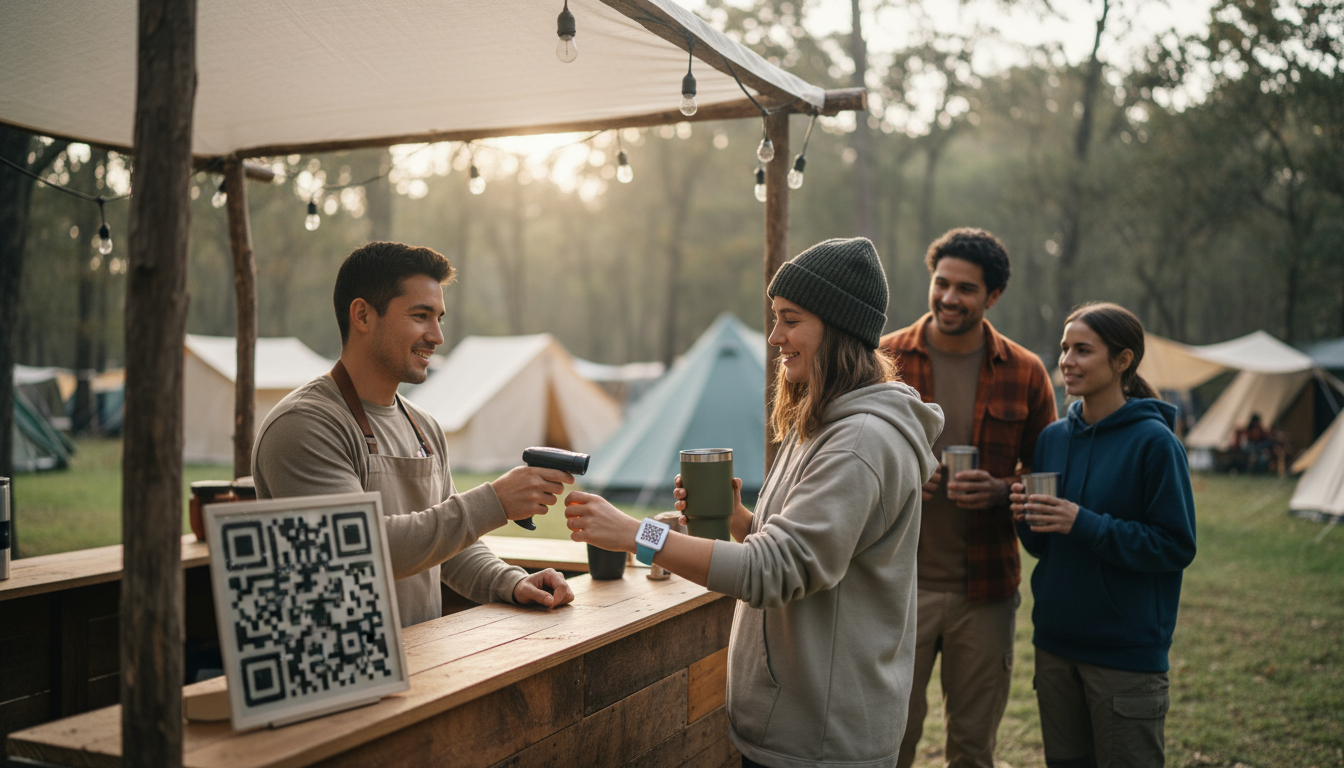
Picture this: the dawn crowd shuffles from RV to café, phones in hand, craving caffeine before the day’s hike—yet your Wi-Fi is barely a flicker. One quick scan of a weather-proof QR code, however, and they’re browsing a digital menu that loads even offline, paying in seconds, and walking off with lattes you’ve already priced to match their length of stay. New arrivals pay full fare, weekly guests see a friendly 10 % break, and your month-long snowbirds get the best deal of all—no awkward coupons, no staff calculations, no line stretching out the door.
Turn spotty campground signal into a friction-free cash register.
Let AI trim your food waste while tenure discounts pad your nightly revenue.
Make every latte a loyalty reward—and every QR scan a data point you actually use.
Key Takeaways
The following points distill the entire strategy into quick, actionable insights you can share with your team before breakfast service starts. Read them once, and you’ll know exactly why tenure-based pricing and offline QR ordering beat every old-school register and paper menu you’ve ever tried.
– One QR scan shows the café menu and takes payment, even with weak or no Wi-Fi.
– Prices get better the longer a camper stays: normal, weekly, then monthly rates.
– AI changes prices during the day to sell slow items and cut food waste.
– Tiny web pages and caching let the menu live on the phone after the first scan.
– Tokenized payments hide card numbers and keep data safe.
– Staff need quick drills, clean QR stickers, and a spare tablet for guests without phones.
– Begin with one sticker and one discount; expand after feedback.
– Watch check size, waste, and upsell clicks to measure success.
Taken together, these takeaways form a repeatable playbook: delight guests with better deals the longer they stay, shave costs by letting AI move excess inventory, and protect every transaction with enterprise-grade security—all without relying on rock-solid Wi-Fi. Use them as your north star while diving into the details below.
Why Tenure-Based Café Pricing Feels Natural to Campers
Campground owners have been using length-of-stay discounts for decades, baking them into weekly and monthly site rates without ruffling feathers. Guests already expect that staying longer unlocks a better deal, and HookHub’s industry study confirms the pattern: monthly campsite rates run 20–30 % cheaper than the nightly rate multiplied by thirty (HookHub data). Extending the same logic to lattes, muffins, and breakfast burritos feels less like a gimmick and more like a consistent perk. That consistency strengthens trust in your pricing and creates a seamless narrative across every touchpoint.
Psychologically, the café discount reinforces the idea that “this park rewards commitment.” Instead of surprise fees, guests see transparent savings spelled out in an at-a-glance chart on the digital menu. A long-stay RVer, sipping a discounted cappuccino, becomes your ambassador when the neighbor rolls in—and suddenly the tenure-based menu drives both word-of-mouth marketing and incremental revenue without extra ad spend.
QR Tech That Thrives Even When Your Signal Doesn’t
Remote parks worry that any mobile ordering system will choke on weak Wi-Fi. Yet the U.S. Forest Service demonstrated otherwise when it rolled out a Scan & Pay program in Mendocino National Forest; visitors could complete transactions offline and show confirmation later (Forest Service pilot). The secret lies in lightweight, cached webpages delivered through a Progressive Web App (PWA) that stores the entire menu locally after the first scan.
Replicating that success is largely about thoughtful setup. Keep each page under 150 KB, host images in next-gen formats, and pre-cache the menu so guests can browse even when bars drop to zero. Weather-proof stickers placed at eye level on picnic tables and cabin fridges reduce mis-scans, while a solar-powered charging station near the café turns a potential pain point—dead phones—into a branded amenity. Add a low-cost tablet at the counter and you’ve closed the loop for anyone without a smartphone or with accessibility needs.
From Arrival to Checkout: A Guest Journey That Sells Itself
Dynamic pricing engines do the heavy lifting behind the curtain, but the guest experience must feel effortless. On day one, the QR menu shows standard prices alongside a small banner that says “Stay six nights for 10 % off.” The subtle nudge plants a seed for longer bookings. By day three, the system reads the reservation via PMS API, automatically slides the guest into the mid-stay band, and highlights the savings right on the header: “You’re on day 4—save 10 % today!”
By week’s end, the long-stay discount kicks in, and that same header flashes “15 % loyalty rate unlocked.” No coupons to remember, no codes to enter. Guests simply scan, order, and pay through a tokenised gateway that never stores card data on your servers. The changeover happens in milliseconds, preserving the friction-free checkout flow that keeps the line moving and the espresso shots pulling.
AI Pricing: Less Waste, More Revenue
Artificial-intelligence engines thrive on patterns, and cafés generate plenty—time of day, day of week, weather, inventory levels, and now length of stay. BAZU’s July 2025 analysis of retail cafés found a 30 % reduction in food waste when AI nudged prices in real time (BAZU report). Imagine pairing that power with LOS data from your PMS: muffins that risk staling at 2 p.m. get a flash discount for long-stay guests browsing in real time, clearing shelves without hurting margins.
At the same time, the AI engine surfaces upsell prompts—add a s’mores kit to any coffee order on cool evenings or bundle granola bars with trail maps before sunrise. Each accepted upsell becomes another data point, teaching the algorithm when and how tenure tiers affect purchase behavior. Over a month, you’re not just selling more; you’re learning exactly what each guest segment craves and when.
Staff Confidence Turns Technology Into Hospitality
A brilliant system fails fast if employees can’t explain it. Begin every rollout with a mock order drill so staff understand the screens guests will see. One team member per shift should monitor incoming mobile tickets on a dedicated tablet, calling names when orders are ready and double-checking discount tiers for accuracy.
Nightly side-work sheets should now include wiping QR stickers, confirming legibility, and swapping any that look weather-worn. Weekly five-minute huddles let staff share feedback—Is the mid-stay banner obvious? Are guests confused about pickup?—and those insights flow back into quick copy tweaks or menu wording changes. Empowered staff don’t just manage the tech; they elevate it into genuine service.
Privacy, Security, and Peace of Mind
Tokenisation keeps card numbers out of your ecosystem, reducing PCI scope and sleepless nights. A short privacy notice on the ordering screen tells guests exactly what data you collect—arrival date, campsite number—and why it improves their experience, building trust instead of suspicion. Guests, therefore, feel empowered knowing they retain control over their personal information.
Back-office dashboards should feature role-based access, ensuring seasonal staff see only what they need. Schedule software updates during low-traffic windows, back up transaction logs daily to the cloud, and you’re bulletproofing operations without slowing service. Security done right is invisible hospitality.
Tracking Results That Matter
Launch day is exciting, but year-one metrics prove success. Track average check size by stay length; if long-stay guests gravitate toward hearty breakfasts, promote a “Snowbird Sunrise Bundle.” Compare waste levels pre- and post-launch, aiming for that 30 % reduction.
Layer QR order data into Google Analytics to see which upsells convert, then feed anonymised trends into camp-store inventory so popular café snacks appear on retail shelves. Quick pop-up specials—rainy-day soup, hot-day smoothie—test the AI pricing rules and keep your menu feeling alive. Over time, these insights allow you to fine-tune the algorithms for each incoming season.
Common Pitfalls and Simple Fixes
Some guests will arrive without smartphones, so keep a counter tablet ready and train staff to hand it over with a smile. Stickers can fade in the summer sun, so laminate them and schedule monthly spot-checks to replace any that look worn. If guests seem unsure which discount tier is active, display a bright banner—“You’re on day 8—save 15 %!”—to remove all guesswork.
Most missteps trace back to unclear communication or neglected hardware. Build a weekly checklist—QR inspection, software patch confirmation, battery health on the solar station—and you’ll catch glitches before guests do. Preventative maintenance here is cheaper than reactive damage control later.
A One-Sticker Start That Scales
Begin with a single café table: print a scannable sticker, load a lightweight menu, and create just one price rule—standard versus seven-plus nights. Run it for two weeks, gather guest and staff feedback, then expand to more tables, more tiers, and eventually the pool bar or camp store. Starting small keeps costs minimal and lets your team build confidence.
Each new placement multiplies the data you gather and the loyalty you cement. Within a year, you’ll have a network of QR touchpoints, an AI engine dialed to your exact demand rhythms, and a guest base that feels recognized every time they order. This staged growth protects cash flow while reinforcing consistent service standards.
A smarter latte is only the beginning. The same QR technology, AI insights, and automated workflows that streamline your café can transform every touchpoint across your park—from after-hours check-ins to mid-stay upsells and departure surveys. If you’re ready to turn guest data into dependable revenue and free your staff to focus on hospitality, scan your next opportunity with Insider Perks. Our team blends marketing, advertising, AI, and automation into one cohesive strategy built for outdoor hospitality. Let’s map out what tenure-based pricing—and every other innovative idea you’ve been toying with—could look like at your property. Reach out today, and we’ll brew a plan as custom as your best roast.
Frequently Asked Questions
Q: Will the QR-code ordering system still work if my park’s Wi-Fi is unreliable?
A: Yes; the menu is delivered as a Progressive Web App that caches pages locally on the guest’s phone after the first scan, so they can browse, place orders, and even complete tokenised payments offline, with the transaction syncing automatically once a signal returns.
Q: What basic hardware do I need to launch tenure-based pricing in my café?
A: Most parks get started with weather-proof QR stickers, a tablet or two for staff and phone-free guests, and a low-cost label or receipt printer that ties into your existing POS; everything else—pricing logic, payment processing, and PMS integration—lives in the cloud.
Q: How does the system know how long a guest has been in the park?
A: The software pulls arrival and departure dates from your property-management system via API, assigns each reservation to the correct discount band in real time, and displays the appropriate price tier automatically on the guest’s device and your kitchen screen.
Q: Is it complicated to integrate this with my current POS or PMS?
A: Most modern POS and campground PMS platforms already expose REST or Zapier-style connectors, so implementation usually involves mapping three fields—reservation ID, stay length, and payment status—taking a consultant a day or two rather than a full custom build.
Q: How do I handle guests who don’t carry smartphones or prefer to pay cash?
A: Keep a countertop tablet logged into the same menu and allow staff to take card or cash at the register; the tenure tier still applies because the system recognises the site number or reservation code entered during checkout.
Q: Won’t offering discounts to long-term guests cut into my café profits?
A: Field data shows that tenure discounts increase overall ticket frequency and average length of stay, so even with a 10–15 % markdown your incremental volume, reduced waste, and upsell conversions more than offset the lower per-item margin.
Q: How secure is tokenised payment processing in an outdoor setting?
A: Card data never hits your servers; it is converted into a single-use token on the guest’s device, processed through a PCI-compliant gateway, and stored only as a hashed reference, which keeps you outside most of the heavy PCI audit scope.
Q: What is a realistic timeline from concept to first live scan?
A: Parks that have their menu and PMS credentials ready typically move from vendor contract to pilot launch in four to six weeks, allowing two weeks for design and printing of stickers, one week for staff training, and a final week for soft-opening tests.
Q: How do I update the menu or pricing if a product runs out midday?
A: Managers can log into a cloud dashboard from any device, mark an item as out of stock or adjust its price, and the change is pushed instantly to every cached menu the next time a phone regains even a weak signal, preventing mismatched orders.
Q: Are there legal concerns with dynamic or variable pricing in food service?
A: As long as your pricing tiers are published transparently, apply equally to all guests within the same tenure band, and you avoid protected-class discrimination, the practice aligns with standard retail discount law in every U.S. state and most Canadian provinces.
Q: How do I measure success after rollout?
A: Track four key metrics—average check by stay length, food-waste percentage, guest satisfaction scores, and café revenue per occupied site—and compare them to a pre-launch baseline; positive movement in at least three of the four inside 90 days signals the program is working.
Q: Can I expand the same QR-based tenure pricing to my camp store or pool bar?
A: Absolutely; once the infrastructure is in place, adding new menus or outlets is as simple as cloning the pricing engine, swapping product SKUs, and printing fresh QR stickers, giving you a unified guest experience across all on-property outlets.
Q: What happens if a guest disputes a charge made while offline?
A: The system logs a time-stamped order confirmation on the device and the server, so you can reconcile any discrepancies quickly; if a refund is warranted, it is processed through the same tokenised gateway, keeping both sides protected.
Q: How do I reassure guests about the data we collect through scans?
A: Display a concise privacy notice on the first screen that explains you capture only reservation dates and order history to apply discounts and improve service, and note that no personal payment data is stored by the park, which builds trust and complies with GDPR and CCPA.