

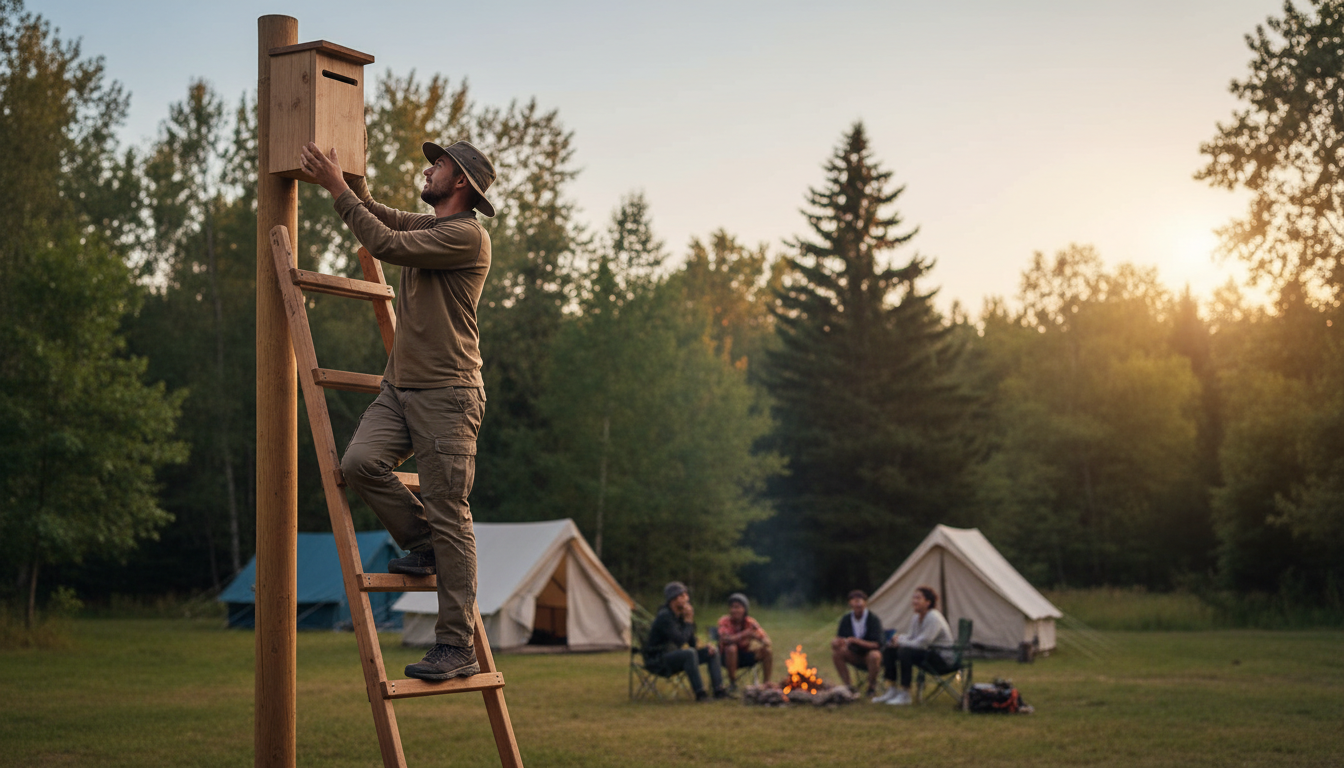
Your guests come for quiet nights under the stars—not for mosquito swarms and the chemical fog you spray to fight them. What if the most efficient, eco-friendly pest-control team already flutters overhead, ready to devour hundreds of insects per hour… as long as you give them a safe place to roost?
Enter the bat box—part wildlife amenity, part marketing magnet. Installed correctly, these cedar condos slash mosquito complaints, cut pesticide costs, and add a unique “wow” factor to evening programming. Installed poorly, they can overheat, stay empty, or even harm the very allies you’re courting.
Ready to turn nocturnal bug-zappers into your newest five-star feature? Keep reading to learn the insulation tweaks, pole heights, and cluster tricks that Minnesota’s 2025 field trials say make the difference between vacant real estate and a thriving maternity colony—and discover the guest-engagement perks that follow when the first silhouettes burst from the boxes at dusk.
Key Takeaways
– Bats eat lots of mosquitoes—one bat can munch 600 bugs in one night, so bat boxes mean fewer bites and less spray
– Good boxes stay cool; use multi-chambers, light paint in sunny spots, and add foam or water jackets so bats don’t overheat
– Mount 4 or more boxes 12–15 ft high on poles or buildings, face some to sun and some to shade, and keep a clear 10-ft flyway
– Place boxes near water and dim, warm lights; night flowers under boxes bring even more insects for bats to eat
– Check boxes twice a year, fix cracks, and clean wasp nests; do big repairs in winter when bats have left
– Staff need gloves, a rehabber’s phone number, and a “look, don’t touch” rule—rabies risk is under 0.5 % when handled right
– Bat boxes cost less than yearly pesticides and can pay for themselves in two seasons; some insurers even cut premiums
– Signs and short “bat talks” turn dusk fly-outs into a fun show that boosts guest reviews and social-media shares
– Guano (bat poop) fertilizes plants and can be sold as a quirky souvenir, adding a small new revenue stream
– Always check local wildlife rules before building; following simple permits and safety plans keeps regulators and guests happy.
The Science That Makes Bats Your Best Pest Crew
Field data from the 2025 pilot program at 15 Minnesota campgrounds (DNR report) showed a measurable drop in pesticide use when multi-chamber bat boxes housed established colonies. Campgrounds that clustered boxes saw maternity roosts form in under two seasons, correlating with fewer mosquito complaints in guest surveys. One little brown bat can devour 600 mosquitoes nightly—scale that by a colony, and the payoff compounds fast.
Laboratory work by O’Keefe and Bakken highlighted why some installations fail: dark, single-walled boxes can spike to lethal 45 °C, frying the very pest-control staff you’re hiring. Their foam-insulated, water-jacket prototypes (lab-tested design) stayed below 30 °C for days, proving that smart thermal design protects bats and ensures occupancy. A 2025 conservation review added a biodiversity caution, noting 76 % habitat overlap between common and rare species and urging operators to use location-specific screening tools.
Is a Bat-Box Program Right for Your Property?
Start with a simple financial comparison: lumber, hardware, and one afternoon of staff time versus an annual pesticide contract and the guest-service labor that comes with fogging complaints. In many campgrounds, the payback window on bat boxes lands under two seasons, and glamping resorts see an extra dividend—eco-credentials influence 63 % of upscale travelers, giving you a marketing hook that justifies premium nightly rates. Those numbers resonate with owners once they’re laid out side-by-side in a simple spreadsheet.
Risk remains minimal if you put smart protocols in place. Rabies prevalence in wild bats is under 0.5 %, and trained staff armed with gloves, a local rehabber’s phone number, and a short “observe, don’t touch” script keep odds even lower. A recent analysis highlights that passive roost structures are a safer solution for both humans and bats, a point that resonates with insurers and regulators alike.
Designing Boxes Bats Actually Choose
Thermal management is step one. Aim for a multi-chamber design with at least 3,000 in³ of internal volume, roughened cedar walls for grip, and exterior paint that matches local climate: light colors in full sun, darker stains where shade dominates. Operators in hotter zones can integrate the O’Keefe–Bakken water-jacket reservoir, an inexpensive upgrade that has already kept boxes under lethal thresholds in controlled trials.
DIY or commercial? Either route works if you verify specs with a temperature-simulation app before building or purchasing. Plug in latitude, box color, and insulation thickness, then tweak variables until interior forecasts stay between 25 °C and 35 °C for most of the season. Those extra minutes at a laptop save years of vacant roosts and wasted lumber.
Placement and Installation That Drive Occupancy
Minnesota’s field manual recommends clustering at least four boxes 12–15 ft above ground on poles or building façades—not trees—to limit predators and provide consistent solar exposure. Orient two boxes toward the morning sun and the others in partial shade, giving bats a thermal buffet that matches shifting weather. Maintain a clear ten-foot flyway by trimming branches and routing footpaths a respectful distance from the roost face.
Landscape and lighting matter just as much. Locate boxes within 1,000–1,500 ft of open water, plant night-blooming natives like evening primrose beneath flight paths, and switch walkway bulbs to warm, fully shielded LEDs. Your insect prey population rises, skyglow falls, and bats find a buffet without getting blinded by stadium lighting—a win-win for guests stargazing after s’mores.
Keep Them Humming: Inspection and Upkeep
Two quick visual checks each year—one in early spring, another in late summer—spot loose screws, cracked seams, or wasp nests before they snowball. Deep maintenance waits for mid-winter, when bats are absent and your ladder work won’t disturb nursing mothers. A laminated log sheet tracks date, weather, bat counts, and fixes, creating a data trail that informs future placements.
Train at least one staffer in ladder safety and wildlife-safe handling so you’re not scrambling for contractors. Separate gloves and simple tools for each box reduce pathogen spread, including white-nose syndrome spores. These protocols add minutes, not hours, to upkeep but save headaches, fines, and negative headlines down the line.
Turning Guano and Silhouettes Into Guest Magic
Interpretive signs near viewing decks do double duty: they educate guests and preempt fear with the fact that each bat devours hundreds of mosquitoes nightly. Follow up at dusk with a ten-minute “bat talk,” then invite campers to watch the emergence cloud streak across the sky—phones come out, social feeds light up, and your property name tags along for the viral ride. Parents love adding a citizen-science bat count to the kids’ club agenda, and you gain fresh engagement metrics to share in newsletters.
Guano adds another story. Mount boxes over mulch beds so droppings fertilize landscaping instead of splattering RV roofs; weekly rakes keep paths spotless. Collected in small pouches, the dry, pellet-like fertilizer doubles as a quirky gift-shop souvenir that turns waste into a circular-economy talking point—and a new revenue stream.
Safety, Permits, and Peace of Mind
Before you order lumber, call your state wildlife agency to confirm passive roost structures are allowed; most embrace them, but a quick check wards off compliance snags. Post discreet notices at trailheads and in welcome packets: “Bats are protected wildlife; please observe but do not touch.” That single sentence reduces liability while reinforcing your conservation ethos.
Keep a wildlife rehabilitator’s number taped inside the maintenance shed, stock separate gloves for each box, and consider pre-exposure rabies vaccines for key personnel. When a grounded bat turns up, staff know the script, and the risk stays microscopic. Guests notice professionalism, and regulators see a hospitality operation that treats wildlife as an asset, not an afterthought.
Measuring ROI and Bragging Rights
Track pesticide volume month-over-month and compare against guest satisfaction scores in the same window. Properties in the Minnesota pilot cut chemical expenses by double-digit percentages while NPS and ADR crept upward—proof that bats bolster both ecology and the bottom line. Add a line item for social-media impressions from “zero-mosquito” reviews and dusk emergence videos; those organic posts often outrank paid ads in reach and authenticity. Some operators even negotiate lower insurance premiums by folding bat-box protocols into broader ESG strategies.
To keep the momentum, schedule quarterly reviews of guano yield, maintenance logs, and marketing metrics, then fold highlights into shareholder or ownership reports. This data-driven storytelling sharpens future funding pitches for additional conservation projects. Over time, the compound effect of credibility, guest satisfaction, and reduced chemical spend builds a moat competitors struggle to cross.
Bats can handle the mosquitoes; Insider Perks can handle the buzz. When you’re ready to turn guano metrics into Instagram moments, automate post-stay surveys that spotlight bite-free experiences, and target eco-minded travelers with AI-sharpened ads, our team is here. Reach out to Insider Perks and let’s pair nature’s finest pest control with marketing, advertising, and automation strategies that keep every site—from tent pad to glamping dome—booked solid.
Frequently Asked Questions
Q: How long after installation can we expect bats to occupy the boxes?
A: In most regions you should see the first scouting visits within a few weeks of spring emergence, but full maternity colonies often take one to two seasons; clustering four or more boxes near water and offering varied sun exposures shortens that timeline, as shown in Minnesota’s 2025 campground trials.
Q: How big a dent in mosquito numbers will a bat colony actually make for our guests?
A: A single little brown bat can consume roughly 600 mosquitoes per night, so a 100-bat colony removes tens of thousands of insects during peak hours and field data link that reduction to fewer guest complaints and measurable drops in pesticide use.
Q: Do we need a wildlife permit before putting up bat boxes at a private campground?
A: In most states passive roost structures are allowed without a formal permit, but a quick phone call to your state wildlife agency confirms compliance and documents due diligence for insurers and franchise auditors.
Q: What is the real rabies risk to staff or campers?
A: Fewer than half of one percent of wild bats carry rabies, and that already tiny risk becomes negligible when staff follow a no-touch policy, keep leather gloves on hand for emergencies, and post simple “observe, don’t handle” notices for guests.
Q: Will guano create mess or odors near RV pads and glamping tents?
A: Guano pellets are dry, odor-light, and fall straight down; mount boxes over mulched landscape beds or non-traffic zones, rake weekly, and you gain free fertilizer without splatter on roofs, picnic tables, or sidewalks.
Q: When is the best time of year to install boxes?
A: Late winter through early spring is ideal because you can mount hardware without disturbing roosting mothers, give fresh cedar a few weeks to weather, and have the structures ready for the first scouts that appear as temperatures rise.
Q: How much does a proper bat box program cost compared with annual pesticide contracts?
A: Materials for four multi-chamber cedar boxes, mounting poles, and staff labor typically run under $1,000, a figure many parks recoup in less than two seasons through reduced chemical purchases and the marketing bump from eco-friendly messaging.
Q: What if bats never move into our boxes?
A: Revisit the three big variables—temperature range, proximity to open water, and predator-free flight paths—make adjustments like repainting for better solar gain or adding a second cluster, and occupancy rates usually climb within the next breeding cycle.
Q: Are commercial bat boxes worth the premium over DIY builds?
A: Either option works if interior temperatures stay between 25 °C and 35 °C; commercial models save staff time and often include lab-tested insulation, while well-built DIY units deliver comparable performance at lower cost provided you follow validated plans and run a quick temperature-simulation check.
Q: Can the boxes stay up year-round in cold northern climates?
A: Yes, a properly caulked, multi-chamber design withstands freeze-thaw cycles, and leaving boxes up through winter is standard practice because most bats migrate or hibernate elsewhere, allowing maintenance crews to inspect empty structures during the off-season.
Q: Will the presence of bats conflict with our night-time lighting for paths and amenities?
A: Bats avoid intense, blue-white light but tolerate warm, fully shielded LEDs; retrofitting fixtures to 2,700 K bulbs and aiming them downward both preserves stargazing ambience for guests and keeps flight corridors attractive to bats.
Q: Do bat boxes attract unwanted wildlife like wasps or rodents?
A: Occasional wasp nests can form in unoccupied chambers, but twice-a-year inspections let staff scrape them out quickly, and tight entrance gaps (¾ inch) are too narrow for rodents, making non-bat residents rare and easy to manage.
Q: How far from guest activity areas should we mount the boxes?
A: Twelve to fifteen feet high on a pole or building façade that sits at least ten feet from regular footpaths gives bats a clear flyway while still placing emergence views within comfortable spectator distance for evening programming.
Q: Can a bat box program lower our insurance premiums?
A: While not universal, some carriers factor reduced chemical usage and documented wildlife-safety protocols into ESG or green-property discounts, so presenting a written bat-box plan with maintenance logs can open discussions that shave points off liability or environmental risk riders.
Q: How should we handle guests who are frightened of bats?
A: A brief interpretive sign or dusk “bat talk” that highlights their mosquito-eating role, low rabies incidence, and protected status usually shifts perception from fear to fascination, and positioning viewing decks as an optional activity ensures skittish guests can simply opt out without impacting their stay.