

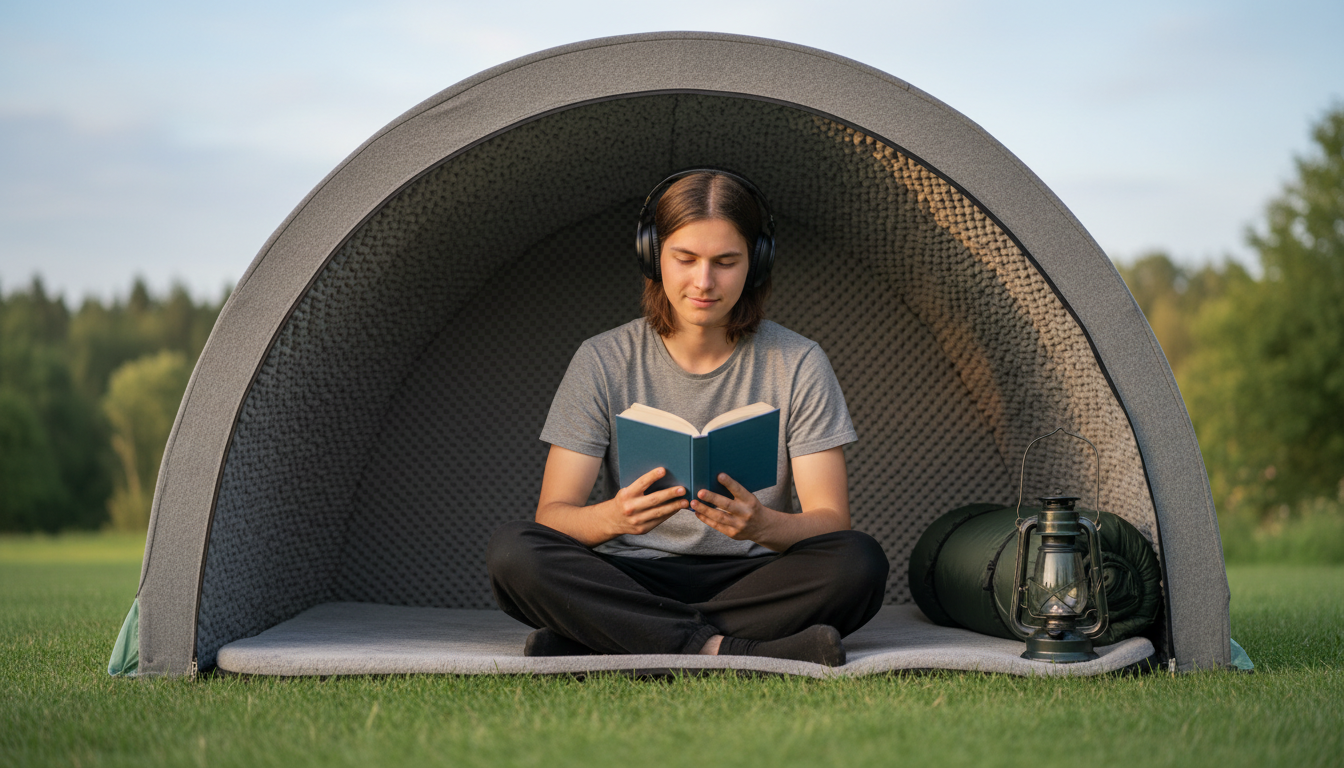
The laughter from the pool, the thrum of an idling diesel, the evening guitar jam—great ambience for most guests, but an instant overload for the one-in-five campers who struggle with noise. They’re the families packing up early, the veteran who can’t escape a flashback, the parent shielding a child with autism. Keep losing them and you’re turning away roughly 21 % of the market—plus every friend they would have recommended.
Key Takeaways
• About 1 out of 5 campers find loud sounds uncomfortable, so quiet spaces matter for business
• A “quiet pod” is a small, calm room that blocks noise and helps guests relax
• Put the pod in a naturally quiet spot (behind trees or a hill, away from roads) and keep the path wheelchair-friendly
• Use tough, weather-safe walls plus thick foam and wool inside to shrink noise by 10 or more decibels
• Fill the pod with soft seats, blackout curtains, weighted blankets, dimmable warm lights, and silent fresh-air vents
• Build one pod first, watch how guests use it, then add more; a paid “Serenity Package” can pay off costs in about a year
• Train staff to notice when someone feels overwhelmed and gently guide them to the pod; let guests book time with signs or QR codes
• Quieter stays bring happier reviews, longer visits, and extra income for the campground.
What if you could transform a single vacant corner of your property into a hush-calm refuge that converts decibels into new bookings? Quiet pods lined with sound-soaking fabrics, weighted blankets, and dimmable lights are becoming the next “must-have” amenity—cheap to build, quick to reposition, and easy to upsell. Stick with this guide and you’ll learn:
• The exact noise-buffer layouts festivals are copying in 2025
• Materials that survive rain, UV, and rowdy high season without losing their hush
• Phased roll-out tactics that pay for themselves before you add shelter number two
Ready to turn silence into your loudest competitive edge? Let’s design the space every sensory-sensitive camper—and their travel tribe—will rave about.
The Silent Growth Opportunity
Peak-season readings routinely hit 70 dB on busy decks and loops, a volume louder than a household vacuum. For the 21 % of campers reporting social-interaction or communication challenges and the 18 % with some hearing impairment, those decibels feel like a wall blocking entry to your brand. The 2025 KOA North American Camping Report, summarized by Vacavia research, confirms that sensory barriers keep a sizeable guest segment sidelined.
Addressing that barrier isn’t charity—it’s smart revenue strategy. Lowering noise exposure by even 10 dB can extend average length of stay for sensory-sensitive families, boost five-star reviews, and widen your referral funnel. Festivals realized this first: in 2025, organizers curated calm corners and sensory-friendly sessions to capture audiences who once stayed home, a playbook noted by Ticket Fairy’s quiet-zone report. Operators who bring that same thinking to campgrounds tap an already-primed market eager for inclusive outdoor escapes.
What Sensory Sensitivity Sounds Like on Site
At ground level the triggers stack fast: an idling Class A before sunrise, metal latches on a dumpster lid, karaoke echoing from the pavilion. Small children squeal at the splash pad while a generator cycles back on. Each layer nudges decibels higher until vulnerable guests shut down, pace around, or retreat to their vehicles.
Overload cues aren’t always verbal. A parent might cup a child’s ears, a veteran could request an early checkout, a guest may abandon the communal fire pit mid-sentence. Traditional “quiet hours” help, yet noise spikes still slip through. A dedicated acoustic pod allows distressed guests to reset instantly, preventing negative reviews born of retreating to the parking lot.
Placing the Pod: Let the Land Muffle the Noise
Terrain is your cheapest soundproofing. Position the shelter behind a berm, a thick tree stand, or even a line of parked maintenance carts to shave 5–8 dB before construction begins. Mindful-camping guides highlight that simple orientation tweaks yield measurable hush, an insight echoed in Habitatista’s noise-control tips. Keep the pod at least 150 feet from the main road and angle its entry away from communal patios to avoid line-of-sight sound paths.
Accessibility matters just as much. Plot a 36-inch-wide, 5 %-grade path so wheelchairs reach the refuge without detours. Solar bollards and subtle wayfinding signs reduce nighttime stumbling while maintaining dark-sky compliance. By hiding the pod in plain sight—quiet but convenient—you maximize usage and minimize impulse complaints.
Building a Weather-Proof Quiet Box
Exterior durability dictates long-term hush. Marine-grade vinyl, fiber-cement panels, or rot-resistant cedar stand up to UV, hail, and kid-powered scooter collisions without warping acoustics. Elevate the structure six to eight inches on concrete piers or composite decking; the gap stops splash-back noise and keeps insulation dry during spring downpours. Seasonal inspections of seals and gaskets take minutes yet prevent storm-soaked mineral wool from going limp.
Inside the wall cavity, pair closed-cell foam with mineral wool for an STC north of 45 even after repeat freeze-thaw cycles. A modest 12-inch roof overhang keeps panel joints dry, preserving the Noise Reduction Coefficient you paid for. Add cork flooring: it’s slip-resistant, cushions steps, and earns eco-cred in your marketing copy. Six months of Midwest storms later, the pod stays as quiet as opening day.
Designing Interior Calm
Acoustic science meets spa ambiance once guests step through the door. Heavy blackout drapes, plush beanbags, and a movable felt partition soak up mid- and high-frequency chatter while letting families rearrange the space. Weighted lap pads, noise-attenuating headphones, and soft tactile cubes sit on labeled shelves; machine-washable covers cycle through housekeeping with color-coded tags so replacements snap back in minutes. Vacuum wall panels weekly to maintain absorption and knock out allergens in one pass.
Ventilation and lighting make or break sensory refuge. Silent trickle vents hidden behind baffles feed fresh air without a whir, while phase-change cushions wick heat away from quickly overheating guests. Warm 2700 K LEDs behind opaque diffusers eliminate glare, and dimmers let parents dial brightness down during meltdowns. Power outlets sit in acoustic corners ready for super-quiet heaters on frosty mornings. The room feels cocooned, not claustrophobic.
Rolling Out Pods Without Breaking Cash Flow
Start small and track everything. One prototype pod gives you occupancy data, decibel readings, and guest surveys before a full-scale rollout. Salvaged barn wood or retired theater curtains transform into cost-effective sound traps, trimming first-unit spend by up to 30 %. Off-season scheduling in three waves—shell, interior finishes, furnishings—spreads invoices and builds in learning loops for each successive unit.
Revenue recoup can be quick. Bundle a “Serenity Package” at $15 per night including a reserved hour in the pod and priority late checkout. A 30 % uptake at moderate occupancy pays the build cost inside twelve months. Add private yoga or guided meditation at off-peak times and watch ancillary revenue climb. State wellness-tourism or accessibility grants sweeten the ROI even before the first reservation.
Training Staff, Guiding Guests
Front-line empathy seals the experience. Train employees to spot early overload—hands over ears, eyes darting, abrupt withdrawal from activities—and calmly escort guests to the pod. Provide a scripted one-liner: “We have a quiet space just for moments like this; may I show you the way?” A caring escort can flip a potential complaint into a glowing review.
Communication tech keeps the peace scalable. List the pod in pre-arrival emails complete with a 360-degree tour so anxious travelers visualize relief before they pack. QR codes on signage allow 30- or 60-minute bookings, while a simple traffic-light LED outside the door shows availability at a glance. Text guests a two-question microsurvey within an hour of use; real-time feedback flags acoustic leaks long before they hit Tripadvisor.
Checklist: From Concept to Calm
Launching a quiet pod isn’t an ad-hoc project; it’s a sequence of deliberate actions that stack efficiency, guest satisfaction, and ROI in your favor. By mapping the journey from site selection to staff training, you avoid costly do-overs and keep momentum high among stakeholders who want fast, verifiable wins. Think of this phase as the bridge between aspirational amenity planning and the on-the-ground reality your maintenance crew, housekeepers, and front-desk team must live with every day.
Equally important is documenting the process so lessons learned on Unit One inform Units Two and Three. Simple tools like decibel logs, guest-use heat maps, and punch-list apps turn the roll-out into a repeatable playbook instead of a one-time experiment. The checklist below distills that playbook into bite-sized actions you can hand to any supervisor and trust the outcome will still feel seamless to guests.
1. Scout a terrain-buffered, ADA-reachable site and chart a level path.
2. Frame the shell in weather-proof panels, insulate with closed-cell foam and mineral wool, elevate on piers.
3. Install silent vents, dimmable warm LEDs, cork flooring, and washable sensory aids.
4. Publish clear quiet-hour and pod-usage policies across email, app, and on-site signs.
5. Train staff on overload cues, escort scripts, and color-coded cleaning tags.
6. Track bookings, microsurvey feedback, and revenue to iterate before scaling.
The pod is built, the hush is real—now make sure the right campers hear about it. Insider Perks can amplify your new quiet-zone story with AI-driven ads that pinpoint sensory-sensitive travelers, automated email flows that upsell Serenity Packages, and dashboard analytics that prove every decibel’s worth in dollars. Ready to turn peaceful into profitable? Book a quick strategy call with Insider Perks and let’s fill your calendar—quietly but completely.
Frequently Asked Questions
Q: How much space should I allocate for a quiet pod so it feels roomy yet still fits on an average campsite corner?
A: Most operators find an interior footprint of 8 × 10 feet (about the size of a small bedroom) comfortably seats a family of four with room for beanbags, shelves, and a wheelchair turning radius; factoring in the roof overhang and a 36-inch ADA path, you only need roughly 12 × 14 feet of land, which is smaller than a standard back-in RV pad and easy to tuck behind trees or a berm.
Q: What does one fully outfitted pod typically cost and how fast can it pay for itself?
A: Using mid-grade cedar or fiber-cement panels, closed-cell foam, mineral wool, cork flooring, furnishings, and basic smart lighting, most parks spend $6,500–$9,000 for the first unit; bundling it into a $10–$20 nightly “Serenity Package” or offering pre-booked private sessions usually recoups that investment in 9–14 months at 30 % utilization, and faster if you qualify for accessibility or wellness grants.
Q: Will I need a building permit or special inspections before installing a pod?
A: Because the structures are under 120 square feet, freestanding, and elevated on piers, many jurisdictions treat them like accessory sheds, requiring only an over-the-counter permit or simple zoning confirmation; you’ll still need to show ADA access and, in some states, an electrical inspection if you hard-wire outlets or HVAC, so check local codes early to avoid surprises.
Q: How do I guarantee the pod meets ADA accessibility standards?
A: Keep the entry threshold under ½ inch, provide a 36-inch-wide door that swings out, pour or grade a 5 %-or-less sloped path from the nearest hard surface, and furnish at least one moveable seating option with a 17–19-inch seat height; following these basics plus clear signage and lever-style handles satisfies the bulk of ADA Title III requirements.
Q: What are the best exterior materials for long-term weather and acoustic performance?
A: Fiber-cement panels or rot-resistant cedar over a 2×4 frame give you 25-plus years of UV and hail resistance, while inside, a sandwich of 2-inch closed-cell foam and 3-inch mineral wool delivers an STC around 45 without sagging after freeze-thaw cycles; finishing seams with commercial-grade acoustic caulk preserves those numbers even when the walls flex.
Q: How do I keep the interior sanitary between uses, especially with weighted blankets and sensory toys?
A: Outfit everything with removable, machine-washable covers coded by color so housekeeping can swap them in one pass, vacuum wall panels weekly using a HEPA attachment to knock out allergens, and wipe high-touch surfaces with a non-scented disinfectant; a 10-minute turn process aligns with standard cabin cleaning workflows and keeps soft goods fresh.
Q: What safeguards stop guests from sleeping overnight or vandalizing the pod?
A: Timed smart locks synced to your reservation software, a motion-sensing LED that brightens if someone overstays, and exterior camera coverage tied into your existing security system keep misuse low; clear use-hours in the rental agreement and a traffic-light occupancy indicator outside the door reinforce expectations without feeling punitive.
Q: Can the pod run off-grid so I don’t trench power lines across the park?
A: Yes; a 200-watt roof-mounted solar panel feeding a 1-kWh lithium battery easily supports silent ventilation fans, dimmable LEDs, and device charging for a full day, with a 12-volt trickle option to top off during cloudy spells—eliminating generator hum and simplifying siting in remote corners.
Q: How should I market the amenity without highlighting a guest’s disability?
A: Frame it as a premium wellness feature—“Quiet Refuge Pod for Relaxation, Meditation, or Sensory Breaks”—in your booking engine, pre-arrival emails, and park map; this language appeals to noise-sensitive families, veterans, remote workers, and yoga enthusiasts alike, expanding demand while respecting privacy.
Q: What staff training is necessary for smooth operation?
A: A 30-minute onboarding module that teaches common overload cues (hands over ears, rigid posture, abrupt withdrawal), a simple escort script, and the colour-coded cleaning routine equips front-line employees to handle 95 % of situations confidently, turning potential complaints into five-star interactions.
Q: How can I verify the pod is actually reducing complaints and driving revenue?
A: Track three metrics: number of bookings per month via QR code or PMS, average post-stay noise-related rating in guest surveys, and incidence of early checkouts tied to sensory issues; most parks see a 40 % drop in noise complaints and a measurable boost in length of stay within one high season.
Q: Can the shelter serve another purpose during lull periods?
A: Absolutely—between peak family travel weekends, owners repurpose pods as private co-working nooks, guided meditation spaces, or pop-up retail for local artisans, simply swapping out weighted blankets for small desks or display racks, giving the asset year-round utility.
Q: Are there grants or tax incentives available for building sensory-friendly amenities?
A: Many U.S. states offer accessibility or inclusive-tourism grants ranging from $2,500 to $15,000, while Section 44 of the IRS Disabled Access Credit can cover up to 50 % of qualifying costs under $10,250 for businesses under $1 million in revenue; combining these programs often trims out-of-pocket spend to half the sticker price.