
Booking Intelligence · Included in CampVantage Premium
Every night, guests search your park, pick their dates, choose a site, start checkout — and leave. Your reservation system forgets them the moment they close the tab. Booking Intelligence remembers all of it: who they were, what they wanted, what it was worth, and how to get them back.
Reports reservations. It has nothing at all to say about the people who built a cart and walked away — not their names, not their dates, not what they were about to spend.
Your analytics
Counts sessions and pageviews. It cannot tell you the guest wanted a 40-foot pull-thru with 50-amp service for Labor Day weekend and left when they saw the rate.
Your front desk
More than this is left in abandoned carts at the average property, every month.
When a guest gets far enough into your booking to enter their name and their email, and then leaves, that is not a lost visitor. That is a named person, specific dates, a specific site type, and a specific dollar amount sitting in an abandoned cart.
Booking Intelligence captures all of it — and sends that guest a personal email about the exact stay they were looking at, while they are still deciding.
They are not cold leads. They were minutes away from paying you.
of guests we email go on to book. Typical abandoned-cart recovery in travel runs between 3% and 10%.
You see the dollar figure attached to every abandoned booking, sorted highest first.
Turn it on once. After that it runs on its own, around the clock.
When a guest returns and books, the booking is matched back to the email that brought them.
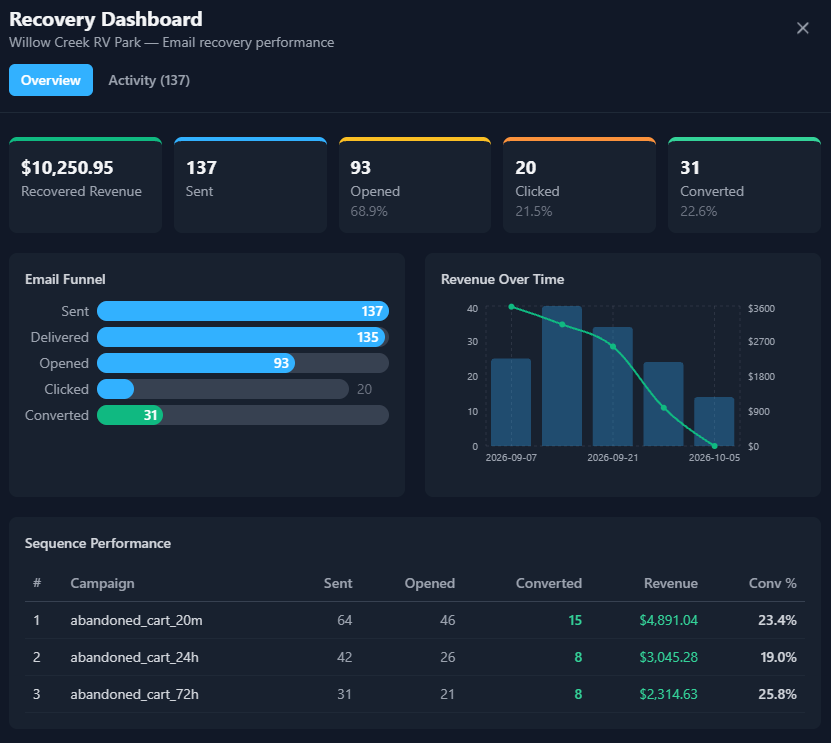
The same kind of cart, the same email — more than three times the result, depending only on how quickly it reaches the guest.
Recovery mail that arrives the next day arrives after the decision has been made. By then the guest has booked somewhere else, or shelved the trip, and no amount of good copy brings that back. Ours goes out twenty minutes after a guest goes quiet, while the tab is often still open and the trip is still real to them.
That timing is the product. It is also why two out of every three bookings we recover come from the very first email a guest receives.
Median time from switching it on to the first recovered booking. Not the first month. Not the first week. The same afternoon.
Every software company shows you its best client. The number worth paying attention to is the second one: even in the weakest quarter of properties running this, the recovery emails return more than ten times what the whole membership costs.
One property recovered
A single property, and not a typical one. We’re showing it because it’s real, not because it’s what you should expect.
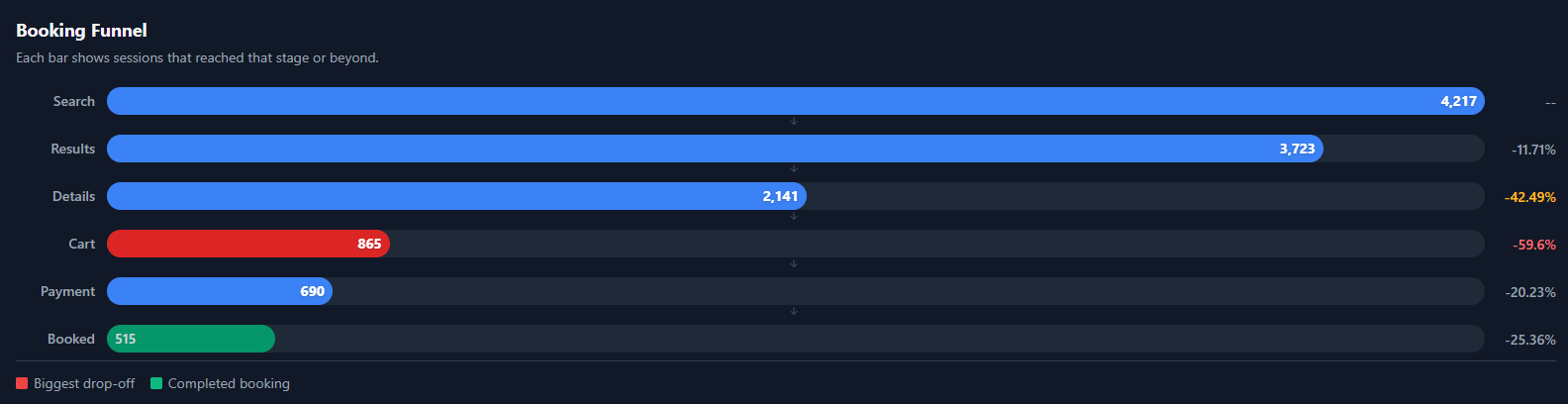
Six stages, from the first search to a confirmed reservation. Every session is placed at the deepest stage it reached, so you can see the precise step where guests stop.
The funnel shows you which stage does the most damage — a rate that shows up too late, a site type that photographs badly, a checkout that asks for too much. You can’t fix a leak you can’t see.
One switch, once. Setup is handled by our team as part of your onboarding.
They built a cart on your booking site and left. Their name, email, dates, site type and cart value are already captured.
A personal note about their stay, sent at the moment it does the most good. Guests who already booked are excluded automatically. Anyone who unsubscribes is never contacted again.
Returning bookings are matched to the email that earned them, so you see recovered revenue as a number, not a guess.
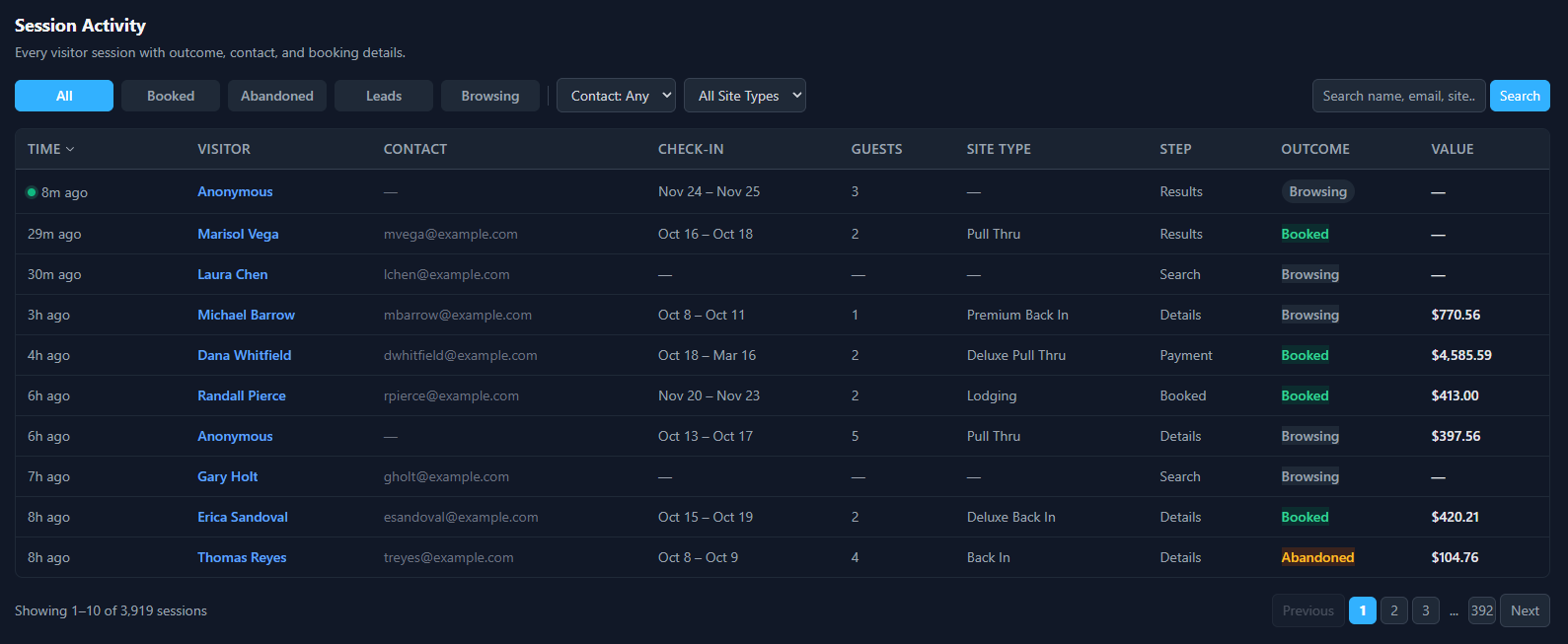
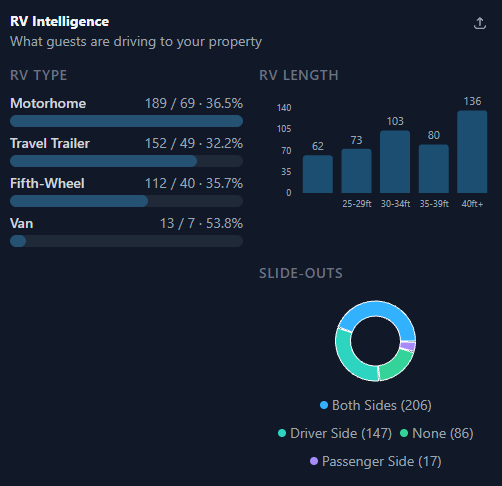
Generic analytics tools were built for online stores. They will happily tell you a “user” viewed a “product.” They have no concept of a rig, a slide-out, a pull-thru, or a dog. Booking Intelligence was built for outdoor hospitality and nothing else, so it captures what actually determines whether a guest can stay with you.
The funnel shows you which stage does the most damage — a rate that shows up too late, a site type that photographs badly, a checkout that asks for too much. You can’t fix a leak you can’t see.
Generic analytics tools were built for online stores. They will happily tell you a “user” viewed a “product.” They have no concept of a rig, a slide-out, a pull-thru, or a dog. Booking Intelligence was built for outdoor hospitality and nothing else, so it captures what actually determines whether a guest can stay with you.
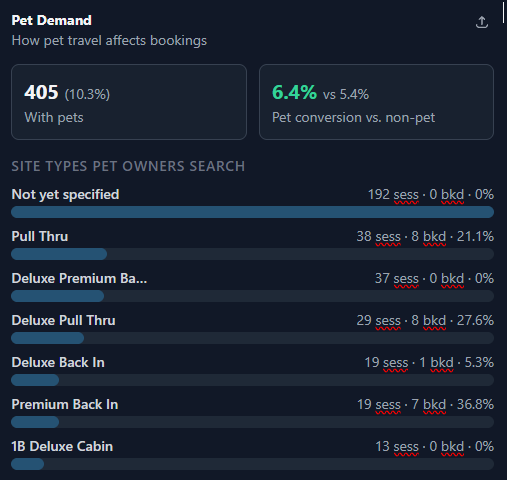
How many of your searchers travel with animals, and whether they convert better or worse than guests who don’t — broken out by the site types they’re looking at. Plus the adults and children attached to every stay they price, not a guess from a booking average.
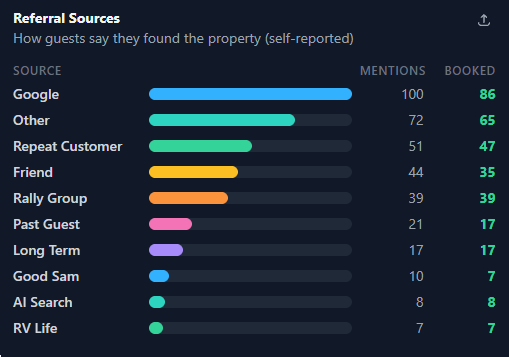
Guests tell your booking form where they heard about you — Google, a friend, a directory, a past stay.
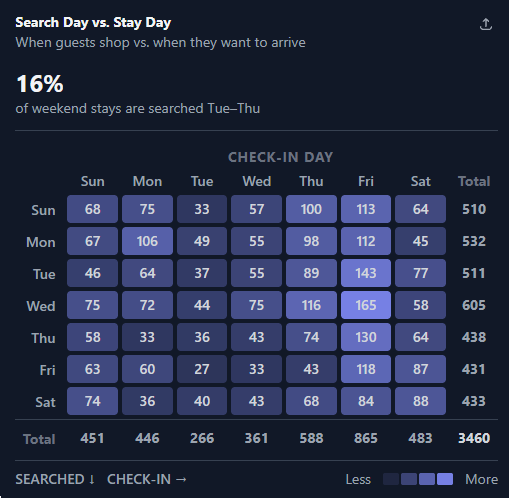
Every search carries a set of dates and a site type. Aggregate a few thousand of them and you are looking at demand for nights you have not sold yet — including nights that are still months out.
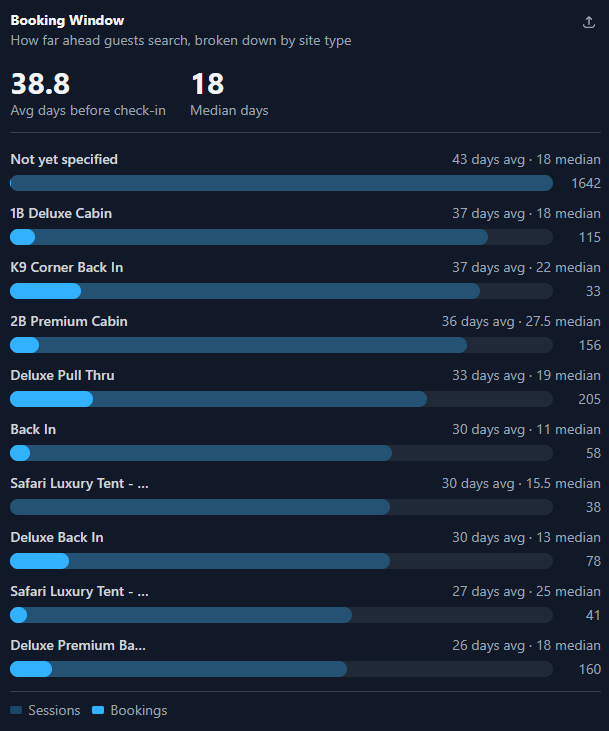
The average and median number of days between a guest searching and the night they want to arrive — broken out by site type, because a cabin guest and a weekend RV guest do not plan on the same timeline.
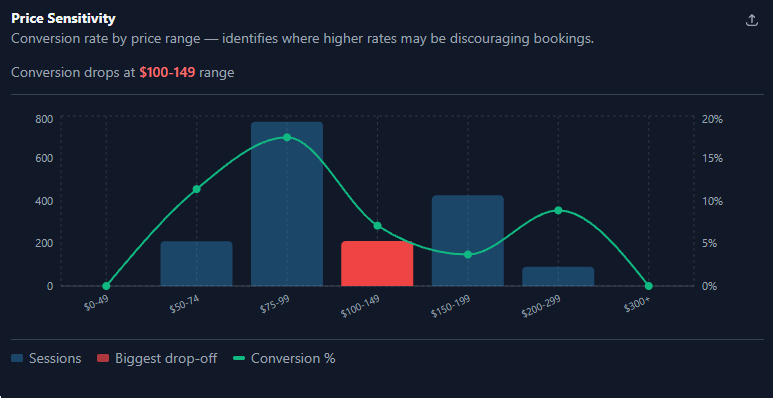
Conversion rate by price band, so you can see the exact rate range where guests stop booking.
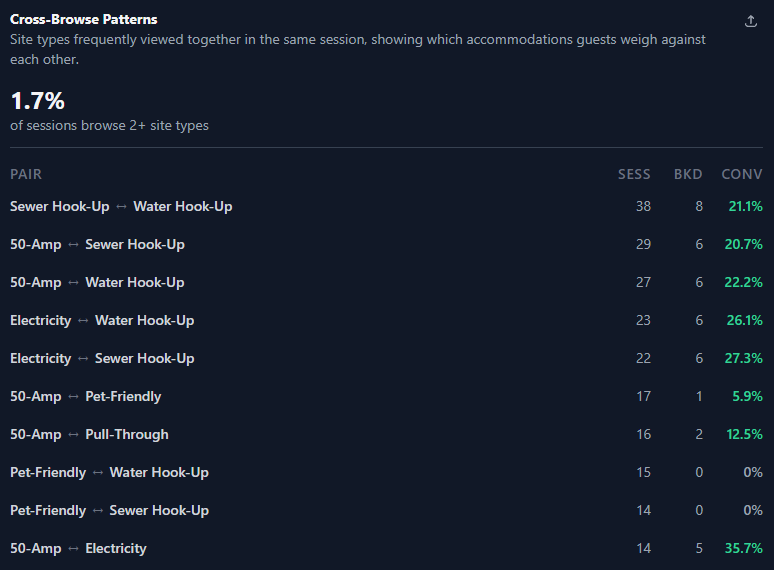
Which site types guests compare against each other inside a single visit.
Every search carries a set of dates and a site type. Aggregate a few thousand of them and you are looking at demand for nights you have not sold yet — including nights that are still months out.
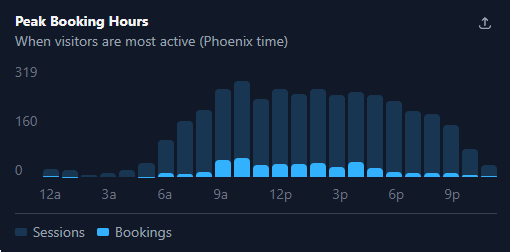
The hours your site is actually being shopped, in your park’s local time.
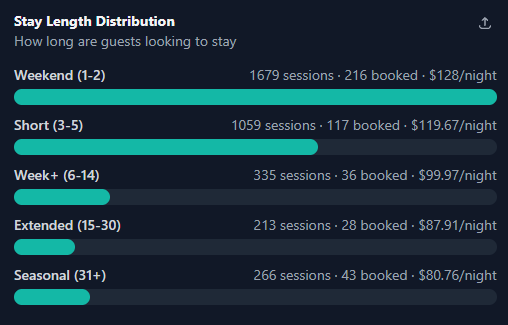
Weekend, short stay, week-plus, extended, seasonal — each with how many guests want it, how many booked, and the nightly rate.
Booking Intelligence is included. No separate charge, no per-email fee, no share of recovered revenue. Across properties running it for two months or more, the recovery emails alone return a median of twenty-one times the full membership.
Everything in CampVantage Growth, plus:
The call takes 15 minutes. We look at your park, not a slide deck.
It’s built to run alongside the booking engine you already have — no switching platforms, no changes to your checkout, nothing different for your guests. We confirm your booking engine on the strategy call, and our team handles setup during onboarding.
No. Our team handles the entire setup on your website. There is nothing for you or your reservation provider to build.
The median property recovers its first booking 2.4 hours after switching it on. Data starts collecting as soon as setup is finished.